Sleep disorders
ICD codes: G47 What are ICD codes?
Chronic sleep disorders are diagnosed when a person sleeps badly on more than three nights a week and this continues for more than a month. It is advisable to take prescription sleeping pills and sedatives for short periods only.
At a glance
- There are huge differences in how long people sleep.
- But if a person sleeps badly on more than three nights a week for more than a month, this indicates that they have a chronic sleep disorder.
- The commonest factors in disturbed sleep are stress, worries and physical symptoms.
- Women and older people suffer most from sleep disorders and chronic sleep problems.
- Prescription sleeping tablets and sedatives like benzodiazepines should only be taken for short periods.
Note: The information in this article cannot and should not replace a medical consultation and must not be used for self-diagnosis or treatment.
What is a sleep disorder?
Doctors diagnose people with a chronic sleep disorder if, on more than three nights per week over a period of more than one month, they fail to have a restful, restorative sleep.
Another key indicator is that sleep problems are affecting a person’s quality of life. People can consult with their doctor to discuss the causes of their sleep disorder and how it can be treated.
When does it count as a sleep disorder?
Non-restorative sleep is an indicator of a sleep disorder. Sleep is classed as non-restorative when someone:
- takes a long time to get to sleep
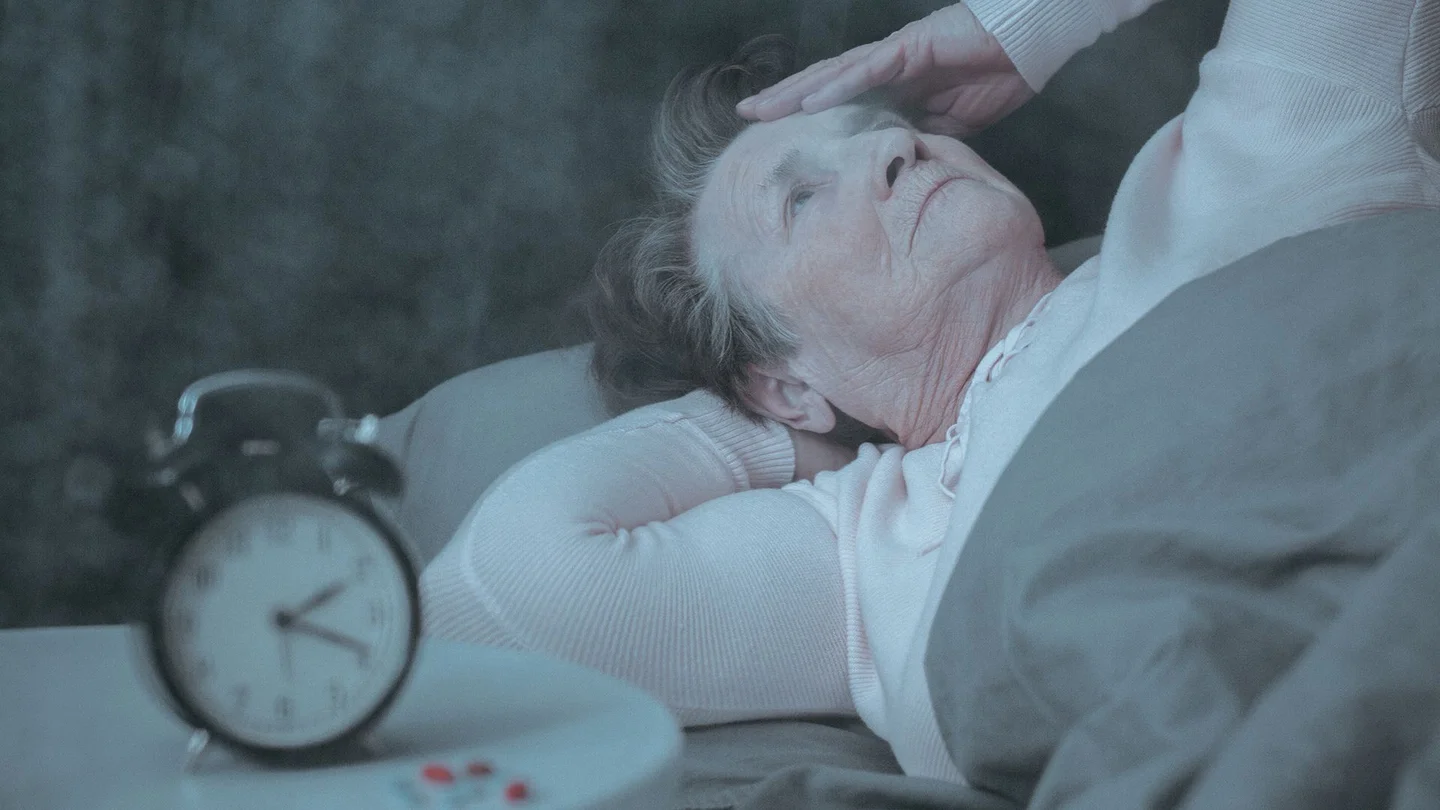
- sleeps fitfully and wakes up frequently during the night
- lies awake for long periods during the night
- wakes up earlier than usual in the morning and cannot get back to sleep
Important: Age doesn’t determine whether someone has trouble falling asleep or getting a good night’s sleep.
How much sleep is normal?
How long a person sleeps varies and depends on factors such as how old they are.
Some generally need less sleep, others more. On average, people need the following amounts of sleep each night:
- children aged 6 and up: around 9 hours
- adolescents: around 8 hours
- adults: around 7 hours
- older people over 80: around 6 hours

Here, sleep refers to total sleep time, which begins when a person falls asleep and ends when they are fully awake and get up out of bed. Any phases of being awake during this period are subtracted from the total sleep time. If it takes you about half an hour to fall asleep after turning off the light, this is completely normal and no cause for concern.
For more information about “normal” sleep, visit gesundheitsinformation.de.
What causes a sleep disorder?
Various factors can prevent people from sleeping well. Possible causes of a sleep disorder include:
- noise
- worry and stress
- stressful life events, such as the end of a relationship or serious illness
- shift work
- alcohol, drugs, caffeine
- grinding teeth (bruxism)
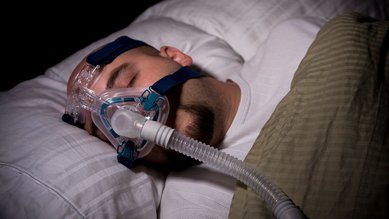
- sleep apnea – where breathing is repeatedly interrupted during sleep
- symptoms such as nocturnal urinary urgency, hot flushes, pain
- restless legs syndrome
- certain medication, such as anti-depressants belonging to the SSRI (selective serotonin reuptake inhibitor) group
Video What is obstructive sleep apnea?
The video below explains more about the symptoms, risk factors and treatment options for obstructive sleep apnea.
This and other videos can also be found on YouTube
Watch nowThe privacy policy indicated there applies.
How common are sleep disorders?
Sleeping badly is a common problem, with around one third of people experiencing difficulties falling asleep or sleeping through the night.
Sleep disorders and chronic problems sleeping can occur at any age, even in small children. However, it is more common for women and older people to have a sleep disorder.

How is a sleep disorder diagnosed?
A sleep diary or a smartphone app can help detect possible triggers for a sleep disorder: it’s important to record when sleep has not been restful and what has happened during the previous day so that connections can be made and patterns identified. The recorded data is sometimes also used by doctors to better assess the severity of sleep problems.
The doctor begins by taking a detailed medical history to pinpoint the patient’s symptoms, habits and any indications of possible causes. The doctor will ask, for example:
- whether the patient is taking medication and, if so, which type
- whether and at which times the patient consumes alcohol, drugs or drinks containing caffeine
- whether stress in the patient’s personal or professional life or any emotionally difficult events they have experienced could be a factor
- whether there are any pre-existing physical or mental illnesses
In addition to a physical examination, blood is taken to clarify whether the sleep problems could be due to an underlying illness. If so, this underlying illness is treated as a priority. Sleep disturbances can be caused, for example, by chronic renal insufficiency (poor kidney function), as well as diseases of the thyroid gland, the heart and the lungs. Problems with sleep may also occur in connection with mental illnesses, such as anxiety disorders or depression.
Serious sleep disorders and lack of sleep can be investigated by means of a sleep study conducted in a sleep laboratory. This involves monitoring and recording the patient’s sleep over one or more nights. This can help determine, for example, whether a person is getting an adequate amount of deep sleep and REM (dream) sleep and whether they have a sleep disorder.
How is a sleep disorder treated?
There is a wide range of products and methods that are used to treat sleep disorders but their efficacy has not been properly studied:
- better “sleep hygiene”: only having light meals in the hours before going to bed, reducing alcohol and coffee consumption, only using the bed for sleeping, only going to bed when actually feeling tired
- home remedies: taking a hot bath and drinking a glass of warm milk or a calming herbal tea before bed
- sleep-inducing or relaxing herbal remedies, such as valerian
- relaxation techniques: progressive muscle relaxation, autogenic training, breathing exercises, meditation, or listening to music, especially before going to sleep
- physical activity: going for a walk in the evening, doing relaxing forms of exercise such as yoga, Tai Chi or Qigong

Once a sleep disorder is diagnosed, it can be treated – for example using the treatments below:
- Cognitive behavioral therapy: this type of therapy can help change patterns of thinking and behavior that may be inhibiting the person’s sleep.
- Medication containing melatonin: this increases the concentration of melatonin – also known as the “sleep hormone” – in the blood. This medication is used, for example, if a person’s sleep-wake cycle has been disrupted due to shift work or jet lag.
- Prescription sleeping tablets from the benzodiazepine and benzodiazepine-like Z-drugs group: these promote sleep, have a sedative effect and relieve anxiety.
For more detailed information, for example on how to deal with a sleep disorder, see gesundheitsinformation.de.
- Deutsche Gesellschaft für Allgemeinmedizin und Familienmedizin (DEGAM). Insomnie bei Erwachsenen. DEGAM-Anwenderversion zur S3-Leitlinie „Nicht erholsamer Schlaf/Schlafstörungen“. AWMF-Registernr.: 063-003. 2017.
- Edinger JD, Arnedt JT, Bertisch SM et al. Behavioral and psychological treatments for chronic insomnia disorder in adults: an American Academy of Sleep Medicine systematic review, meta-analysis, and GRADE assessment. J Clin Sleep Med 2021; 17(2): 263-298.
- Institut für Qualität und Wirtschaftlichkeit im Gesundheitswesen (IQWiG). Internet- oder mobilbasierte kognitive Verhaltenstherapie für Insomnie. Evidenzbericht zur S3-Leitlinie Nicht erholsamer Schlaf / Schlafstörungen – Insomnie bei Erwachsenen: Evidenzbericht; Auftrag V20-07A. 2021.
- Institut für Qualität und Wirtschaftlichkeit im Gesundheitswesen (IQWiG). Kognitive Verhaltenstherapie für Insomnie. Evidenzbericht zur S3-Leitlinie Nicht erholsamer Schlaf / Schlafstörungen – Insomnie bei Erwachsenen; Auftrag V20-07B 2021.
- Jespersen KV, Pando-Naude V, Koenig J et al. Listening to music for insomnia in adults. Cochrane Database Syst Rev 2022; (8): CD010459.
- Riemann D, Baum A, Cohrs S et al. S3-Leitlinie Nicht erholsamer Schlaf/Schlafstörungen. Kapitel „Insomnie bei Erwachsenen“, Update 2016. AWMF-Registernr.: 063-003. Somnologie 2017; 21(2): 2-44.
- Schlack R, Hapke U, Maske U et al. Häufigkeit und Verteilung von Schlafproblemen und Insomnie in der deutschen Erwachsenenbevölkerung. Ergebnisse der Studie zur Gesundheit Erwachsener in Deutschland (DEGS1). Bundesgesundheitsbl Gesundheitsforsch Gesundheitsschutz 2013; 5/6: 740–748.
- Schwabe U, Ludwig WD. Arzneiverordnungs-Report 2020. Berlin: Springer; 2020.

In cooperation with the Institute for Quality and Efficiency in Health Care (Institut für Qualität und Wirtschaftlichkeit im Gesundheitswesen, IQWiG).
As at: