Krankheiten Cardiovascular system

The heart is a muscular, hollow organ located in the left chest. It pumps blood through the arteries and veins of the circulatory system. Cardiovascular diseases such as coronary heart disease can greatly impair our performance and quality of life. Acute cardiovascular events such as heart attacks and strokes are the most common causes of death in Germany.


Cardiovascular system

Congenital septal heart defects

Septal heart defects are defects in the septum, which is the wall separating the left and right sides of the heart. Various types of defects may occur individually or in combination.

Thrombophilia

People with thrombophilia, or a tendency to form thromboses, are at an increased risk of developing blood clots. These can block blood vessels, which may be fatal. Blood clots require treatment.

Arteriosclerosis

Arteriosclerosis occurs when deposits build up on artery walls, narrowing them. It is also known as vascular calcification. It causes many cardiovascular diseases.

Stroke

During a stroke some of the blood supply to part of the brain is cut off. This can be life threatening. To prevent serious consequences, rapid treatment is imperative.

Coronary heart disease

With coronary heart disease (CHD), the major blood vessels that supply the heart with oxygen are constricted. Shortness of breath, chest pain and nausea are possible symptoms.

Deep vein thrombosis (DVT)

Deep vein thrombosis occurs when a blood clot forms in the veins. The possible symptoms include tenderness, red skin or lower leg swelling.

Sepsis

Sepsis, also known as blood poisoning, is an uncontrolled inflammatory reaction of the body to infections. It needs to be treated very quickly in hospital.

Heart attack

A heart attack is where a coronary artery becomes completely blocked so that part of the heart muscle is no longer receiving enough oxygen. Without immediate treatment there is an acute risk of death.

Inflammation of the inner lining of the heart (endocarditis)

Endocarditis is an inflammation of the inner lining of the heart (the endocardium). Early treatment is important to avoid complications.

Myocarditis (inflammation of the heart muscle)

Inflammation of the heart muscle (myocarditis) can occur after a viral infection, for example. The condition is often mild but can be fatal.

Varicocele

Varicose veins in the scrotum, also known as varicoceles, are not rare and can affect a man’s fertility.

Heart failure

In people with heart failure, the heart is unable to pump enough blood around their body. Common signs are shortness of breath, difficulty breathing and exhaustion.

Non-specific physical disorders (functional somatic syndromes)

Many people experience persistent somatic symptoms with no clear medical cause. Functional somatic syndromes can be caused by stress and conflict.

Heart palpitations (due to paroxysmal atrial tachycardia)

Paroxysmal atrial tachycardia is when a person's heart suddenly beats very fast. It lasts for a few minutes and stops again just as quickly. The episodes are not necessarily dangerous.

Atrioventricular block (AV block)

A cardiac arrhythmia such as AV block is one reason for the heart to beat very slowly. It is caused by impaired conduction of electrical impulses in the heart. Read this article to find out more.

Cardiac arrhythmia (heart rhythm disorder)

Cardiac arrhythmias are common, especially in older people and in people with other heart problems. They don’t always need treatment.

Angina (angina pectoris)

Angina pectoris produces sudden, sharp pain in the chest. The pain can occur in connection with physical exertion or stress as well as when the body is at rest.

Metabolic syndrome

With metabolic syndrome, people have excess weight, high blood pressure and a disrupted blood sugar and lipid metabolism. A healthy lifestyle helps prevent this condition and its complications.

Atrial fibrillation

If the heart beats too fast and palpitations frequently occur, this can be due to atrial fibrillation. The condition is not immediately life-threatening but can increase the likelihood of a stroke.

Pulmonary embolism

A pulmonary embolism is when a blood vessel supplying blood to a lung gets blocked. This kind of blockage is an emergency as it can be life-threatening.

Hypertrophic cardiomyopathy

Hypertrophic cardiomyopathy is a congenital heart disease. It often causes no symptoms. However, it can sometimes be life-threatening.

Rheumatic heart disease

Auslöser der rheumatischen Herzkrankheit sind Streptokokken. Diese Bakterien verursachen akute Atemwegsinfektionen. In response, the immune system creates antibodies that may also attack and damage the heart.

Drop in blood pressure when standing up (orthostatic hypotension)

Orthostatic hypotension is a specific type of low blood pressure that normally occurs in older people. Dizziness and fainting are typical signs.

High cholesterol (hypercholesterolemia)

Experts refer to cholesterol values in the blood that exceed a certain level as hypercholesterolemia, or high cholesterol. Excessively high levels can increase the risk of cardiovascular diseases.

Peripheral artery disease (PAD)

People with PAD have restricted blood vessels in their legs or, in rarer cases, their arms. A typical symptom is pain when walking, which subsides again when resting.

Broken heart syndrome

Broken heart syndrome refers to a disruption in the functioning of the heart muscle. It is often triggered by an emotionally stressfully event, such as the death of a loved one.

High blood pressure (hypertension)

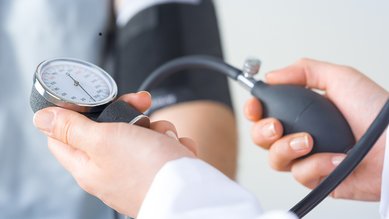
Many people have high blood pressure. But it often goes unnoticed for a long time. Having blood pressure that is always too high increases the risk of having a heart attack, stroke or kidney problems.

Dunbar syndrome

In Dunbar syndrome, a large blood vessel in the abdomen becomes compressed. It is a rare condition. Recurring stomach pains are a typical symptom.

Pleural effusion

Pleural effusion is a build-up of fluid in the pleural space, i.e. the area between the lungs and the chest wall. Shortness of breath and chest pain are typical signs.

Magnesium deficiency

Magnesium is important for bones, muscles, nerves and teeth. A balanced diet normally provides the body with sufficient quantities of magnesium. A magnesium deficiency is easily treated.

Abdominal aortic aneurysm

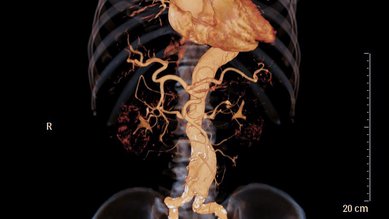
An abdominal aortic aneurysm occurs when part of the aorta in the abdomen stretches and bulges outward. It is usually harmless but, if it ruptures, it is a life-threatening emergency.

Aortic dissection

An aortic dissection occurs when blood penetrates the wall of the body’s main artery (aorta) through a tear, causing the lining of the aorta to split. Emergency surgery is often required.

Mitral valve insufficiency

Mitral valve insufficiency is the second most common heart valve disease in which the valve between the left atrium and the left ventricle leaks.

Aortic stenosis

Aortic stenosis is a narrowing of the aortic valve. The aortic valve is the valve between the left ventricle of the heart and the aorta.

Transient ischemic attack (TIA)

A transient ischemic attack often precedes a stroke. A TIA happens when part of the brain no longer gets enough blood supply. The symptoms are paralysis, visual impairment and slurred speech.

Heart valve disease

Heart valve diseases refer to damage to the heart valves over a lifetime. These defects generally arise in older people due to wear and tear.