Obstructive sleep apnea (OSA)
ICD codes: G47.3 What are ICD codes?
Someone who actually sleeps enough but is nonetheless very sleepy and feels exhausted during the day may suffer from obstructive sleep apnea (OSA). Many people with sleep apnea snore and have their breathing interrupted while sleeping – usually without noticing it. The effects can significantly impact their everyday life.
At a glance
- Many people with obstructive sleep apnea snore and have their breathing interrupted during the night – usually without noticing it.
- Snoring alone is harmless: only when breathing is interrupted does it become sleep apnea.
- Over the long term, sleep apnea increases the risk of other illnesses and can severely impact the quality of life.
- Sleep apnea occurs when the muscles in the upper airways relax.
- Estimates suggest that around 3 percent of women and 5 percent of men have obstructive sleep apnea.
Note: The information in this article cannot and should not replace a medical consultation and must not be used for self-diagnosis or treatment.
What is sleep apnea?
Many people with obstructive sleep apnea (OSA) actually sleep enough, but still feel tired and sleepy during the daytime. This is because they have breathing difficulties while sleeping and have their breathing interrupted – usually without noticing it. Over the long term, sleep apnea increases the risk of other illnesses. It can also directly and severely impact one’s quality of life.
Video What is obstructive sleep apnea?
The video below explains more about the symptoms, risk factors and treatment options for obstructive sleep apnea.
This and other videos can also be found on YouTube
Watch nowThe privacy policy indicated there applies.
What are the symptoms of sleep apnea?
People with obstructive sleep apnea usually snore very loudly. While they sleep, their breathing is usually shallow and they have breathing interruptions (apneas) that last over 10 seconds. Snoring is harmless in itself. But if the breathing is also interrupted, it is a case of sleep apnea.

Symptoms that may indicate sleep apnea:
- severe fatigue throughout the day
- difficulties concentrating
- night sweats and frequent urination
- sudden awakenings, sometimes with a racing heart and breathlessness
- a dry mouth when waking
- morning headaches
- impotence
What are the causes of sleep apnea?
Sleep apnea occurs when the muscles in the upper airways relax. This narrows the airways in the throat area, or even blocks them. Loud snoring noises then occur when breathing in and out.
If breathing is disturbed by sleep apnea, the body does not get enough oxygen. The blood pressure and pulse also fall. The breathing center in the brain is alerted by this and it triggers a waking stimulus – people with sleep apnea then briefly wake up, usually without noticing it.
This brief waking up is also known as an “arousal”. It interrupts the sleeping rhythm, the heart beats faster and blood pressure rises. Someone who repeatedly wakes up briefly due to sleep apnea may no longer get back into their restful deep sleep, and will then feel tired and groggy during the day.
Obesity and certain issues in the area of the mouth and throat may play a part in sleep apnea. These issues include, for example, enlarged tonsils, a small lower jaw, small soft palate, or unusual tongue positioning.
Nasal breathing is sometimes also disrupted. Sleeping on one’s back can favor snoring and breathing disorders. However it is rarely the only cause.
Excessive alcohol consumption, sleeping pills and tranquilizers can also help make the breathing muscles relax and exacerbate sleep apnea. The probability of developing obstructive sleep apnea rises constantly after the age of 45.
How common is sleep apnea?
According to estimates, 3 percent of women and 5 percent of men have obstructive sleep apnea.

What are the consequences of sleep apnea?
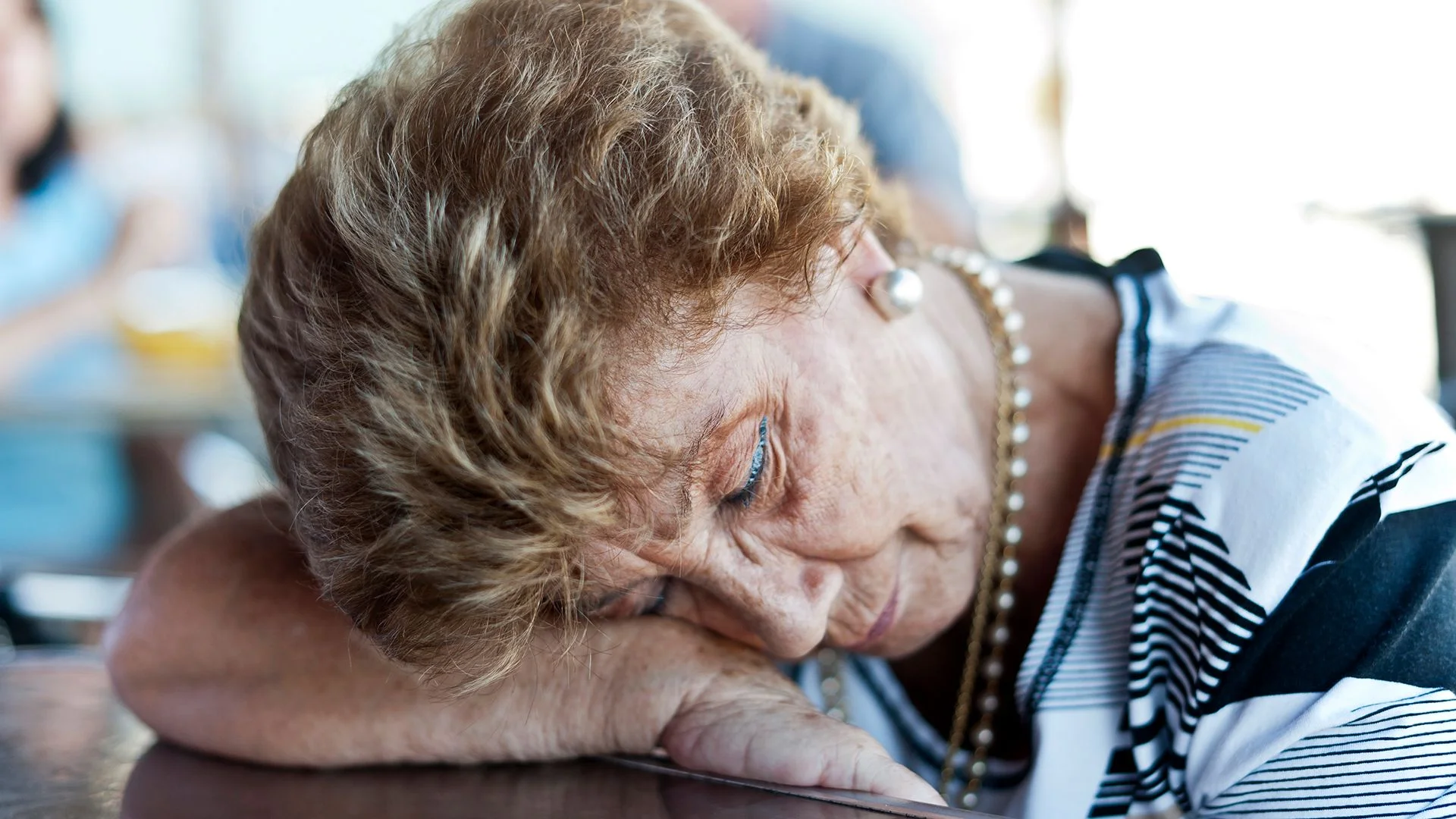
Someone with bad sleep apnea always feels groggy and tired. Sleep fails to bring much rest, and the person’s mood suffers. Because people with sleep apnea often feel less well in general, they might also tend to develop depression.
People with sleep apnea often have high blood pressure or other cardiovascular conditions. As a result, there is an increase in the risk of a stroke, a heart attack, or cardiac arrhythmia.
Interrupted breathing while sleeping does not always result in symptoms or health risks. If they are only brief and do not occur often, they do not cause daytime tiredness. They are then no reason to worry. But if these breathing disruptions and complaints persist it may be useful to consult a doctor.
How is sleep apnea diagnosed?
If doctors suspect obstructive sleep apnea, they first ask about symptoms and habits. This is then followed by a physical examination. The doctor may give the person a wearable device with which their sleep can be studied. It will record, for example, breathing, heart rate, oxygen saturation in the blood, snoring, and body position.
If the analysis highlights anomalies, additional testing in a sleep laboratory may be useful. This involves spending one or more nights sleeping in the lab. There, sleep is monitored with other recording devices and a video camera.
How is sleep apnea treated?
People who are severely overweight (obese) can reduce the severity of their sleep apnea by losing weight. Many different treatments are also available: for example devices that help breathing, positional aids, devices such as lower jaw splints, and surgery. It has been scientifically proven that some of these treatments can help.
Medication currently has no role to play in treating sleep apnea. The effectiveness of the drugs available has not been proven.
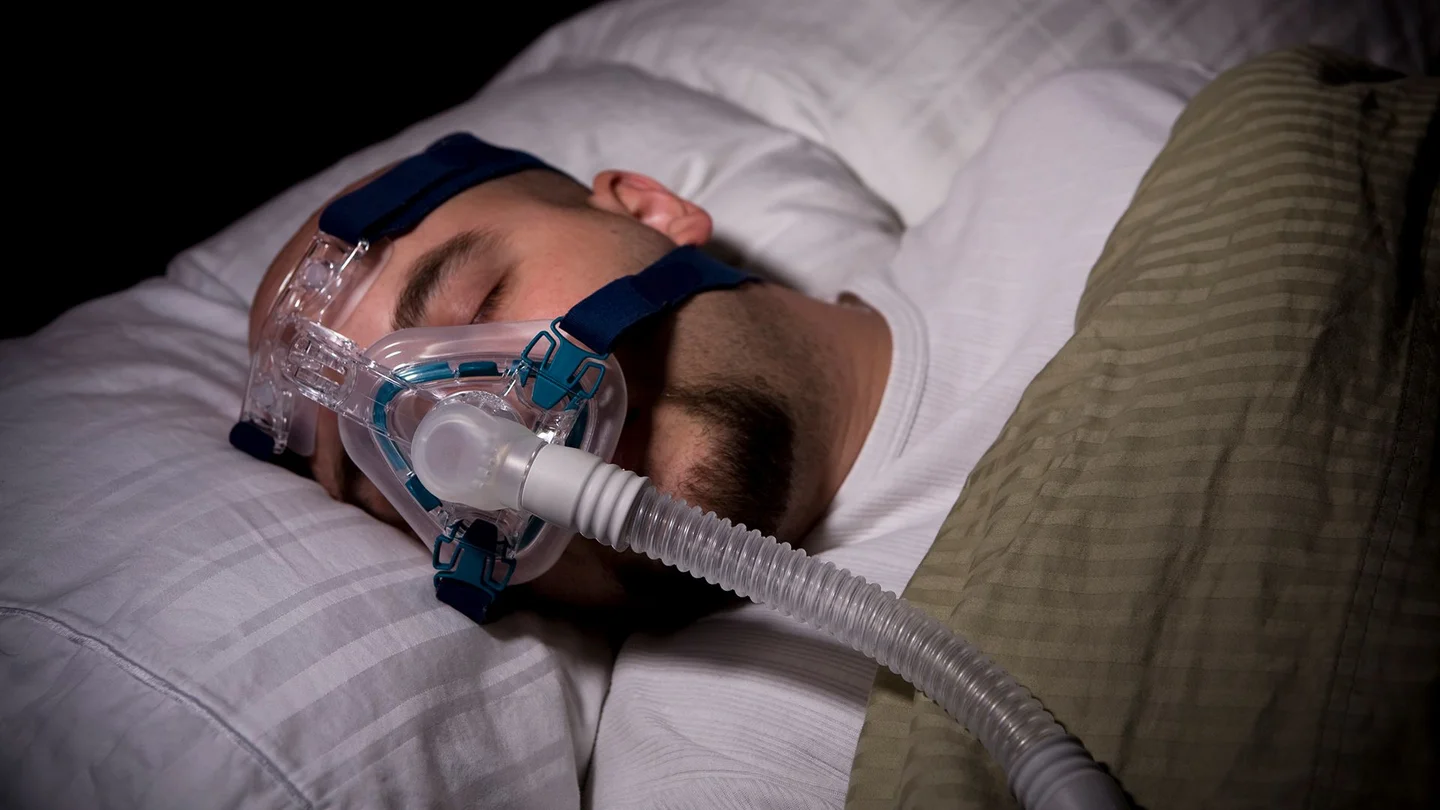
The most effective treatment for severe sleep apnea is called CPAP therapy. CPAP stands for “continuous positive airway pressure”. This treatment involves pumping ambient air at slightly high pressure into the airways during the night. Patients wear a breathing mask attached to a breathing device. The slightly higher pressure keeps the upper airways open. CPAP therapy prevents all or almost all interruptions to breathing. This can significantly improve symptoms such as daytime tiredness.
CPAP therapy, which is the best way to alleviate symptoms, needs some getting used to – not everyone wants to put up with wearing a breathing mask every night. Some people find the therapy unpleasant and restrictive.
More information about how sleep apnea is treated can be found at gesundheitsinformation.de.
What is everyday life like with obstructive sleep apnea?
Obstructive sleep apnea can heavily affect a person’s quality of life. Sufferers sleep badly, are often very tired during the day, and feel knocked out. Some people with sleep apnea unintentionally fall into so-called microsleeps. They may also have difficulty concentrating or experience memory problems.
Sleep apnea can affect relationships, as loud snoring also disrupts the partner’s sleep. The partner is then also irritable and tired during the day. Interruptions to breathing can also be worrying.
A training course can help come to terms with CPAP therapy and getting used to this treatment. Many people find it helpful to share experiences with others in a self-help group. There are now self-help groups for people with sleep apnea and their loved ones in many cities in Germany.
You will find a database of suitable self-help groups on the website of the National Contact and Information Point For Encouraging and Supporting Self-Help Groups (Nationale Kontakt- und Informationsstelle für Selbsthilfe, NAKOS).
- Balk EM, Moorthy D, Obadan NO et al. Diagnosis and Treatment of Obstructive Sleep Apnea in Adults (AHRQ Comparative Effectiveness Reviews; No. 32). 2011.
- Deutsche Gesellschaft für Schlafforschung und Schlafmedizin (DGSM). Nicht erholsamer Schlaf/Schlafstörung - Schlafbezogene Atmungsstörungen (S3-Leitlinie). AWMF-Registernr.: 063-001. 2020.
- Deutsche Gesellschaft für Schlafforschung und Schlafmedizin (DGSM). Teil-Aktualisierung S3-Leitlinie Schlafbezogene Atmungsstörungen bei Erwachsenen. AWMF-Registernummer 063-001; August 2020.
- Greenstone M, Hack M. Obstructive sleep apnoea. BMJ 2014; 348: g3745.
- Labarca G, Saavedra D, Dreyse J et al. Efficacy of CPAP for Improvements in Sleepiness, Cognition, Mood, and Quality of Life in Elderly Patients With OSA: Systematic Review and Meta-analysis of Randomized Controlled Trials. Chest 2020; 158(2): 751-764.
- Srijithesh PR, Aghoram R, Goel A et al. Positional therapy for obstructive sleep apnoea. Cochrane Database Syst Rev 2019; (5): CD010990.
- Thomasouli MA, Brady EM, Davies MJ et al. The impact of diet and lifestyle management strategies for obstructive sleep apnoea in adults: a systematic review and meta-analysis of randomised controlled trials. Sleep Breath 2013; 17(3): 925-935.
- Timkova V, Nagyova I, Reijneveld SA et al. Quality of life of obstructive sleep apnoea patients receiving continuous positive airway pressure treatment: A systematic review and meta-analysis. Heart Lung 2020; 49(1): 10-24.

In cooperation with the Institute for Quality and Efficiency in Health Care (Institut für Qualität und Wirtschaftlichkeit im Gesundheitswesen, IQWiG).
As at: