Styes and chalazia (eyelid inflammation)
ICD codes: H00 H01 What are ICD codes?
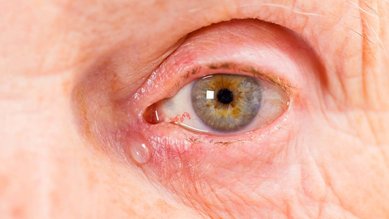
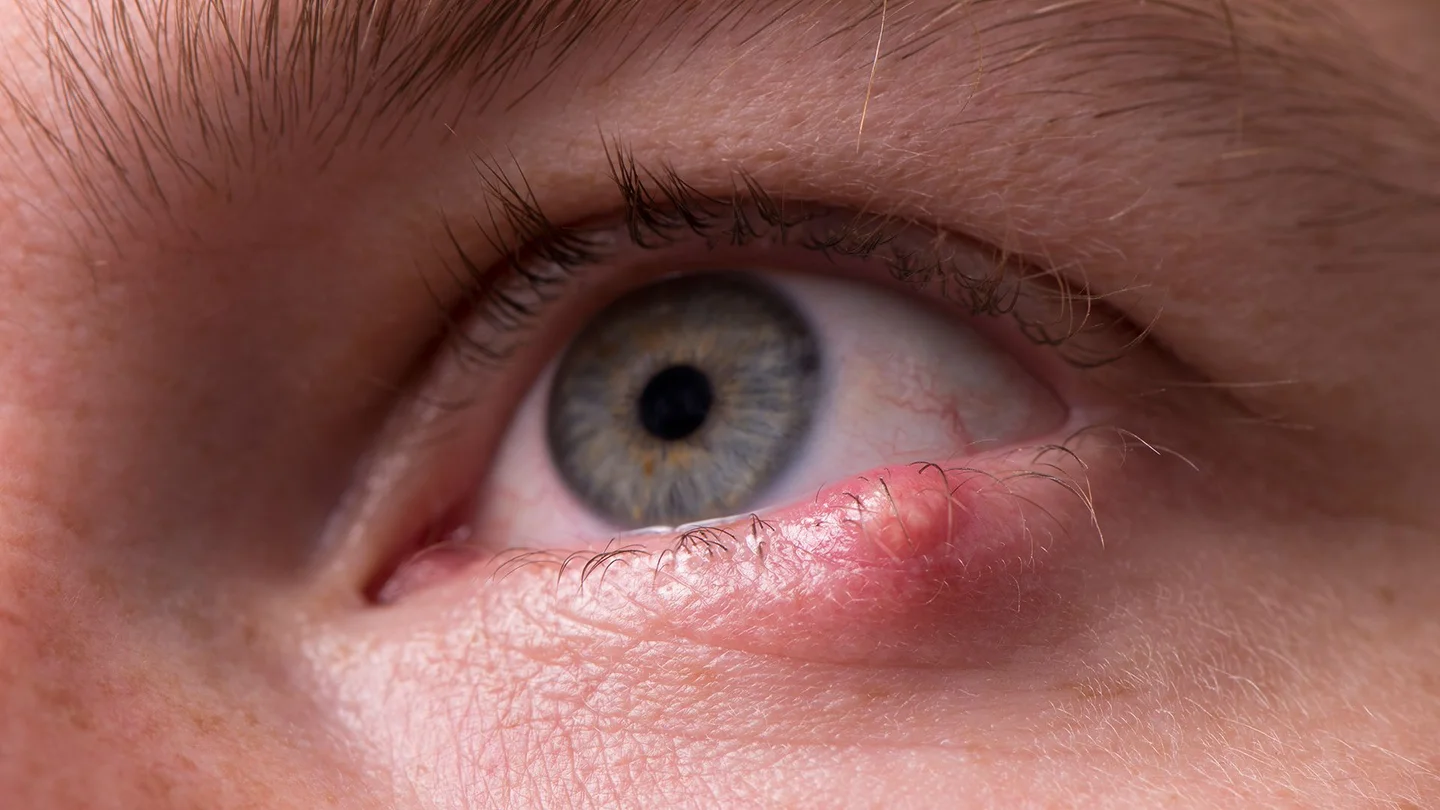
A red and swollen eyelid or a pus-filled swelling on the edge of the eyelid can indicate eyelid inflammation. This is usually a chalazion or a stye.
At a glance
- In the case of an eyelid inflammation, swelling of the eyelid occurs due to inflammation of a gland along the edge of the eyelid.
- A stye develops when a gland becomes infected with bacteria. Chalazia are usually caused by a blocked oil gland.
- In many cases, the inflammation goes away on its own.
- Eyelid inflammation is common and can occur at any age.
Note: The information in this article cannot and should not replace a medical consultation and must not be used for self-diagnosis or treatment.
What is eyelid inflammation?
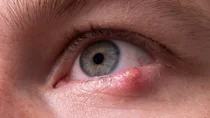
Eyelid inflammation occurs when a gland along the edge of the eyelid becomes inflamed. The inflammation causes the eyelid to swell.
If the gland is infected with bacteria, it quickly becomes painful and fills with pus. This is referred to as a stye (hordeolum).

A chalazion develops more slowly. It is not caused by a bacterial infection but rather by a blocked oil gland. A chalazion is typically not painful but usually lasts longer than a stye.
Eyelid inflammation like styes and chalazia are common and can occur in both children and adults.
How to recognize inflammation of the eyelid
Symptoms of eyelid inflammation include a red and swollen upper or lower eyelid. The swelling can be about the size of a pea. These typical signs of inflammation usually occur along the edge of the eyelid close to the eyelashes. This is therefore also referred to as inflammation of the eyelid margin.
In the case of a stye, pus collects in the middle of the swelling and can often be seen as a yellow lump. The swelling is usually sensitive to pressure and is painful.
In contrast, a chalazion is not painful and is not filled with pus. However, many people find them aesthetically displeasing. They often occur on the inner part of the eyelid.
Both types of eyelid inflammation can develop on the lower and upper eyelids.
What causes styes and chalazia?
If an eyelid gland becomes infected with bacteria, a stye can develop. The bacteria that most commonly cause styes are staphylococcus bacteria.
Unwashed hands can easily introduce bacteria into the eyes, especially in the case of contact lens wearers. It is therefore important to ensure good hygiene and to thoroughly wash the hands before putting in contact lenses.
A stye can also develop if the oil glands are blocked by dried secretions or make-up that has not been properly removed. This prevents oil and sweat from flowing out properly and promotes bacterial infections.
Styes are also more common in people with a disease that weakens the immune system like diabetes. Further risk factors include stress, hormonal fluctuations, and skin conditions like rosacea.
Chalazia are primarily caused by a blockage and chronic inflammation of an oil gland. Since the oil cannot drain off, hard inflamed tissue (granulation tissue) forms. Since chalazia are not caused by bacteria, they are not pus-filled.
What is the outlook for eyelid inflammation?
A stye develops very quickly and also disappears quickly. After approximately one week, the pus typically drains on its own and the inflammation disappears.
In the case of chalazia, the swelling develops more slowly. It usually goes down on its own but that can take several weeks to months. However, sometimes chalazia do not disappear on their own.
How is eyelid inflammation diagnosed?
Styes and chalazia can usually be immediately identified and easily differentiated. The main difference is pain. If the swelling is painful, it is usually a stye.
Eye doctors can provide a medical evaluation of this type of inflammation by examining the eyes and eyelids with a magnifying lamp (slit lamp). An eyesight test is usually also performed.
Since styes are normally caused by staphylococcus bacteria, it is not necessary to do a swab test to find out what is causing the infection. Tissue examination or blood tests are only performed in patients with a weakened immune system or in the case of suspicion of malignant skin growths.
How is eyelid inflammation treated?
A stye or chalazion usually disappears on its own. If it does not go away, minor surgery can help.
There are several treatment methods that should speed up the healing process. However, the benefits of the different treatments have not been studied in depth.
Good hygiene is important when the eyelid is inflamed. Patients should also try not to touch their face and eyes too often.
For further information on this subject, such as what to do in the event of a stye, please visit gesundheitsinformation.de.
- Berufsverband der Augenärzte Deutschlands (BVA), Deutsche Ophthalmologische Gesellschaft (DOG). Hordeolum / Chalazion. Leitlinie Nr. 10. 08.2011. Aufgerufen am 15.12.2023.
- Burk A, Burk R. Checkliste Augenheilkunde. Thieme: Stuttgart 2018.
- Cheng K, Law A, Guo M, Wieland LS, Shen X, Lao L. Acupuncture for acute hordeolum. Cochrane Database Syst Rev 2017; (2): CD011075. Aufgerufen am 15.12.2023.
- Lindsley K, Nichols JJ, Dickersin K. Non-surgical interventions for acute internal hordeolum. Cochrane Database Syst Rev. 2017 Jan 9;1(1):CD007742. doi: 10.1002/14651858.CD007742.pub4.. Aufgerufen am 15.12.2023.
- Pschyrembel Online. 2022.

In cooperation with the Institute for Quality and Efficiency in Health Care (Institut für Qualität und Wirtschaftlichkeit im Gesundheitswesen) (IQWiG).
As at: