Muscle strain
ICD codes: M62.6 What are ICD codes?
A muscle strain is one of the most common sport injuries. The muscle is overstretched, causing pain and the muscle to harden. Often, the thigh, back, or neck is affected. Read here what can be done to prevent this.
At a glance
- A muscle strain occurs most often during sport activities.
- It is an overstretching of the musculature in which the muscular structures undergo tiny injuries.
- Typical symptoms are pain that appears suddenly and a hardening of the muscles.
- Muscle strains typically heal on their own. But it can take days to weeks until the affected muscle can be fully used again.
- In the first few days after injury, the muscle should be kept still. Cooling, an elastic bandage, and elevation reduce the swelling and help with pain.
Note: The information in this article cannot and should not replace a medical consultation and must not be used for self-diagnosis or treatment.

What is a muscle strain?
A strain occurs when a muscle has been overstretched. Another word for muscle strain is pulled muscle. It often occurs during sport activities such as soccer, which involves sprints, fast stops, or changes in direction.
The myofibrils incur tiny injuries through overstretching (distension). Myofibrils are small structures in the muscle fibers that are responsible for the active shortening of the muscle.
If the muscle is overstretched even more than in a muscle strain, one or multiple muscle fibers can tear. This is referred to as a torn muscle fiber. A torn muscle is when an entire muscle tears.
What are the symptoms of a muscle strain?
Typical symptoms of a muscle strain are pain that appears suddenly and a hardening of the muscle. It occurs most often during sport activities or other physically strenuous activities. The thigh, back or neck are most often affected.

Other possible symptoms are:
- muscle cramp
- swelling
- bruising
- muscle weakness
- reduction in ability to move
A muscle strain can become very painful quickly. Bruising often occurs. It can take up to 24 hours until the swelling and bruising reach their full extent.
What are the causes of a muscle strain?
A muscle strain most often occurs when a stressed muscle is overstretched. It occurs during sport activities such as soccer, basketball, or tennis where sprints, jumps, sudden changes in direction or stops are required. Strains occur most often in the thigh or calf.
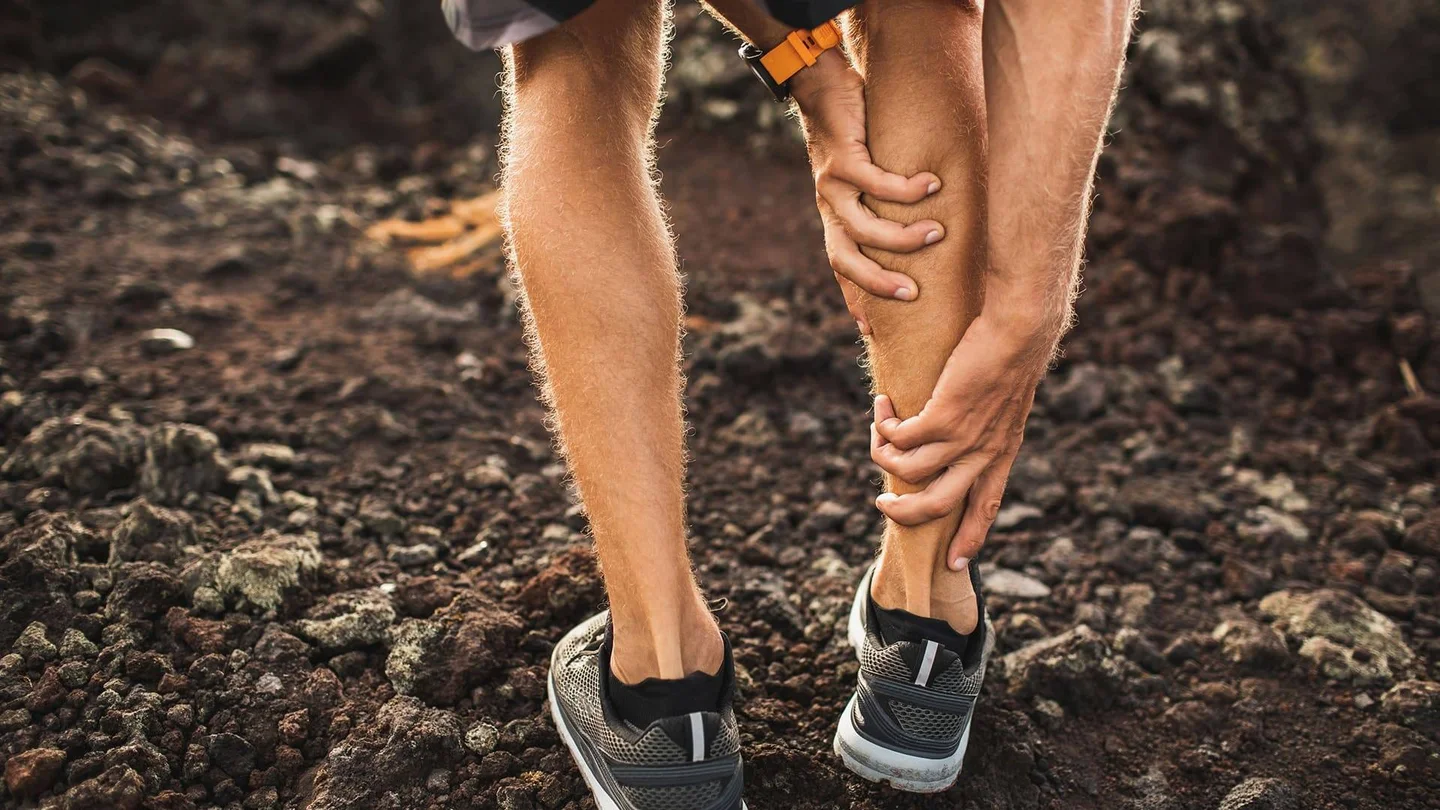
Even distance runners can experience muscle strains; typically in the calf. In particular, muscles can be strained when running up or down a hill.
Important: Muscle fatigue plays a large role in muscle strains. Injuries often occur toward the end of a game or race.
What factors contribute to a muscle strain?
Injuries often occur when muscles are not properly warmed up before they are heavily strained or before sport activities.
Muscle strains occur more often in older people, especially those who are out of shape. Strains in the calf muscle often occur in people over 40 who have not trained sufficiently before participating in strenuous activities.
A prior injury also increases the risk of a muscle strain.
How common is a muscle strain?
A muscle strain is one of the most common sport injuries experienced by professionals and amateurs. More than 90 percent of sport injuries are either muscle strains or compressions.
How does a muscle strain progress?
Muscle strains usually heal by themselves, but it may take days or weeks before the muscle can work to full capacity.

A special exercise program or physical therapy can shorten the time it takes to heal.
It is usually possible to return to daily activities 4 to 8 weeks after a muscle strain, at which time athletes can return to their typical training routine.
How can a muscle strain be prevented?
It is especially important to warm up muscles before playing sports.
Special training can lower the risk of injury. Fitness training prevents muscles from becoming fatigued too quickly. Weight training and stretching increase the strength and flexibility of the muscles.
How is a muscle strain diagnosed?
Doctors make the diagnosis based on symptoms and a physical examination. The affected area is palpitated and the muscle strength and range of movement is examined.
Imaging techniques, such as an x-ray or magnetic resonance imaging (MRI) are typically not necessary.
In the case of serious strains, however, they can be helpful in ruling out other injuries, for instance a broken bone or torn muscle.
Sometimes an ultrasound is performed to confirm the diagnosis and determine the severity of the injury.
How is a muscle strain treated?
The RICE rule is used to treat a muscle strain within the first 48 hours of injury. RICE stands for rest, ice, compression (compression bandage), and elevation. This means:
- The affected area should be kept still.
- Cooling reduces the pain and prevents further swelling. A cold compress can be used multiple times a day, for example, every 2 hours for 10 to 20 minutes. It is important that the muscles are given the chance to warm up again in between applications. A thin cloth placed between the ice and the skin protects from frostbite.
- An elastic bandage prevents the spreading of the swelling. However, the bandage must not be too tight, otherwise the flow of blood will be restricted.
- The injured muscle should be elevated. This helps prevent swelling.
If pain is intense, pain medication such as ibuprofen can be taken for a few days.
Important: The muscle must be kept still for 2 days, after which a cautious plan for movement should be started. The sooner a person affected starts moving again, the easier it is to prevent muscle stiffness and limitations in movement.
How long does it take to rehabilitate a strained muscle?
As soon as the pain allows, it is possible to start with easy, pain-free activities and exercises. They should improve movement and simultaneously protect the healing muscles.
A doctor or physical therapist can offer support in selecting suitable exercises.
Light training is usually possible again after 2 to 6 weeks. Once complete range of motion without pain is achieved, it is possible to resume with more strenuous activities.
- BMJ Best Practice. Musculoskeletal sprains and strains. Update vom 05.03.2021. Aufgerufen am 20.04.2021.
- DynaMed (Internet), Ipswich (MA). Hamstring Strain. EBSCO Information Services. 2018 (1995). Record No. T116919. Aufgerufen am 20.04.2021.
- UpToDate (Internet). Calf injuries not involving the Achilles tendon. Wolters Kluwer 2019. Aufgerufen am 20.04.2021.
- UpToDate (Internet). Quadriceps muscle and tendon injuries. Wolters Kluwer 2021. Aufgerufen am 20.04.2021.
- UpToDate (Internet). Patient education: Muscle strain (The Basics). Wolters Kluwer 2021. Aufgerufen am 20.04.2021.

In cooperation with the Institute for Quality and Efficiency in Health Care (Institut für Qualität und Wirtschaftlichkeit im Gesundheitswesen) (IQWiG).
As at: