Meniscus tear
ICD codes: M23 What are ICD codes?
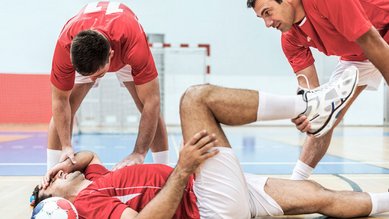
Meniscus tears are among the most common knee injuries in sports, especially in ball sports like soccer. They occur when the knee is twisted while under heavy strain. Meniscus tears caused by acute injuries typically undergo operation, but sometimes are treated with a more conservative approach, for example, with bandages.
At a glance
- The meniscus consists of two crescent-shaped cartilage discs – the inner meniscus and outer meniscus – between the femur and tibia.
- Meniscus tears are among the most common knee injuries in sports, especially in ball sports like soccer.
- Smaller meniscus tears are not always immediately noticeable.
- Treatment for a meniscus tear depends on the size and type of tear and on the symptoms.
- It is estimated that about one in 1,000 people per year suffers from a meniscus tear.
Note: The information in this article cannot and should not replace a medical consultation and must not be used for self-diagnosis or treatment.
What is a meniscus tear?
A meniscus tear occurs when the knee is twisted while under heavy strain. They are among the most common knee injuries in sports, especially in ball sports like soccer.
Meniscus tears due to traumatic injuries (“traumatic” meniscus tears) primarily occur in younger people. and undergo operation in most cases. Sometimes, they can be treated conservatively, for example, with strengthening exercises, painkillers, and bandages. Treatment depends on the size and type of tear and on the symptoms.
What are the symptoms of a meniscus tear?
If the tear is an acute, injury-related meniscus tear, the knee hurts, in particular, when twisted and bent. It may also swell. Some people hear a pop or crack when the meniscus tears. The symptoms experienced depend on the type and size of the tear.
Smaller meniscus tears are not always immediately noticeable. The knee often first hurts after a few hours or days. Some people do not even realize their knee is injured until weeks later.
Larger meniscus tears often hurt more and cause the knee to swell. Furthermore, it is harder to move; it feels as if the knee is stuck.
Age-related meniscus tears and changes in the meniscus rarely cause discomfort. In one study, for example, it was found that 20 percent the participants aged over 40 had tears or changes in the meniscus without experiencing any symptoms. Meniscal changes or tears are even more common in knees with osteoarthritis. They occur in about 60 percent of people whose knee osteoarthritis is visible on an X-ray.
What causes a meniscus tear?
The meniscus consists of two crescent-shaped cartilage discs located between the femur and tibia.
The medial meniscus is located on the inside of the knee and the lateral meniscus is located on the outside. Both menisci stabilize the movements of the knee joint. They distribute the pressure and absorb impacts. They also provide nutrients and lubrication to the joint cartilage.
The menisci are connected to the joint surface of the lower leg bone (tibia) and the joint capsule; the medial meniscus is connected to the medial ligament. The inner meniscus is therefore less mobile and can tear somewhat more easily than the outer meniscus.
Acute meniscus tears can occur when the knee is twisted while bent, especially if the foot is flat on the ground while doing so. The forces acting on the meniscus can be so great that parts of the meniscus tear.
What are the risk factors for a meniscus tear?
Acute meniscus tears are particularly common in sports that involve braking from a fast run while changing direction. This is the case with soccer, handball, tennis, basketball and so on.
People who are missing the anterior cruciate ligament due to injury have less stable knees and are therefore at a higher risk of meniscus damage.
People with occupations that require frequent bending or kneeling are prone to wear-related meniscus damage. The risk is also higher in people who are very overweight (obese) and those who have to climb a lot of stairs. Wear-related meniscus damage is more common in men than in women.
How common are meniscus tears?
It is not known exactly how many cases of injury-related meniscus tears occur in Germany. It is estimated that one in every 1,000 people suffer a meniscus injury every year.

On the other hand, age-related signs of wear and tear on the meniscus that do not require treatment are widespread.
How long do the symptoms of a meniscus tear last?
How long it takes until the knee can be moved normally following an injury-related meniscus tear depends on the type and size of the tear and on whether the ligaments in the knee were injured. The type of treatment and the physical conditions also play an important role.
If the damaged parts of the meniscus are removed, it takes about 6 weeks before the person can walk or jog longer distances again, for example. However, it can often take several months to feel comfortable and confident performing all activities.
If the meniscus has sutures, a longer period of rehabilitation is required. In this case, it takes about four to six months until most activities can be resumed.
Some symptoms may persist even after surgery. These include mild pain when using the stairs, crouching down or kneeling.
What are the potential consequences of a meniscus tear?
If acute meniscus damage is not treated, it can cause severe pain, and lead to swelling that limits knee mobility.
A meniscus tear increases the risk of a person developing knee osteoarthritis over the long term. The risk of knee osteoarthritis also increases if damaged parts of the meniscus have been surgically removed.
How is a meniscus tear diagnosed?
To identify a meniscus tear, the doctor first asks how the injury occurred and what the symptoms are.
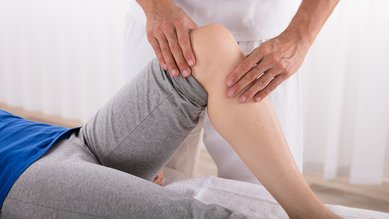
The knee is then palpated to pinpoint where it is painful or identify the parts of the meniscus that are protruding.
In addition, the knee is bent and rotated. While doing this, the doctor presses on the different areas that may hurt if the meniscus is injured. When the bent leg is extended, a snap is sometimes felt that may indicate loosened parts of the meniscus.
A magnetic resonance imaging (MRI) scan can provide an image of the meniscus.
An MRI is useful if:
- other knee injuries are suspected
- the meniscus requires surgery
Only the outer parts of the meniscus can be imaged with an ultrasound examination. X-rays are not helpful in cases of meniscal damage. However, if the doctor suspects bone injury as well, X-rays may be useful.
How is a meniscus tear treated?
Those with a meniscus tear should initially immobilize the knee until the acute pain and swelling subside. To keep swelling down, the leg should be elevated and the knee cooled for the first few days after the injury.
If possible, squatting, kneeling, twisting and major bending movements as well as other activities that put stress on the knee should be avoided until the symptoms subside.
Various treatment measures are also available.

If a meniscus tear does not cause locking or blockages in the knee, it can sometimes be treated conservatively, i.e., without surgery. The same applies to certain new injuries in which the meniscus only becomes temporarily inflamed and painful.
Conservative treatment options include:
- anti-inflammatory painkillers, such as diclofenac or ibuprofen
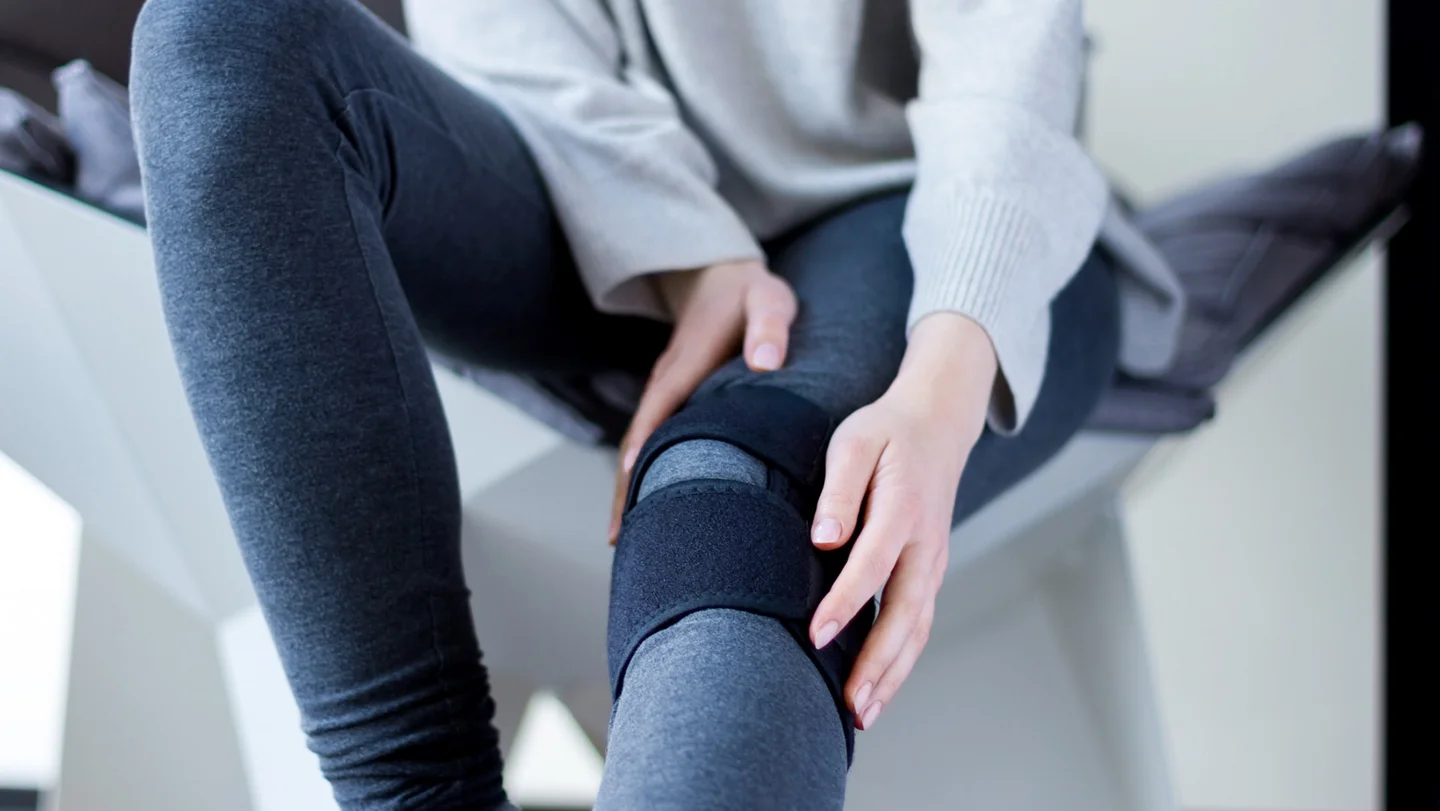
- knee bandages
- losing weight if very overweight
- exercises to strengthen muscles and improve stability, mobility and coordination
Meniscus tears are usually treated with surgery if:
- the knee can no longer be fully extended, for example, with a bucket handle tear
- the symptoms are severe and frequent
- damage to the meniscus could lead to osteoarthritis of the knee or if other parts of the knee, such as the cruciate ligaments, have also been injured
If the meniscus is surgically repaired, the damaged parts are removed by means of a joint endoscopy (arthroscopy). Frayed parts of the meniscus are cut away to smooth the surface of the meniscus. During the process, the doctor tries to preserve as much of the meniscus as possible.
For more detailed information about how to treat meniscus tears, see gesundheitsinformation.de.
What happens during rehabilitation following meniscus surgery?
For a knee to function well, the muscles must be well trained. Rehabilitation is therefore advisable after meniscus surgery.
Under the guidance of a physiotherapist, the patient begins by learning to train their muscles themselves in everyday life. In the ideal scenario, the doctor will work together with the physiotherapy team to create an individual treatment plan in advance.
If the meniscus was partially removed, it takes about a week before a person can walk normally again. Sports activities can be resumed after about six weeks.
If the meniscus has sutures, the patient must wait six weeks before placing weight on the affected leg. Otherwise, the meniscus suture could easily tear. In such cases, jogging is usually possible again after four months and ball sports after about six months.
- Brignardello-Petersen R, Guyatt GH, Buchbinder R, Poolman RW, Schandelmaier S, Chang Y et al. Knee arthroscopy versus conservative management in patients with degenerative knee disease: a systematic review. BMJ Open 2017; 7(5): e016114. Aufgerufen am 17.03.2023.
- Culvenor AG, Oiestad BE, Hart HF, Stefanik JJ, Guermazi A, Crossley KM. Prevalence of knee osteoarthritis features on magnetic resonance imaging in asymptomatic uninjured adults: a systematic review and meta-analysis. Br J Sports Med 2018 [Epub ahead of print]. Aufgerufen am 17.03.2023.
- Englund M, Guermazi A, Gale D, Hunter DJ, Aliabadi P, Clancy M et al. Incidental meniscal findings on knee MRI in middle-aged and elderly persons. N Engl J Med 2008; 359(11): 1108-1115. Aufgerufen am 17.03.2023.
- Logerstedt DS, Scalzitti DA, Bennell KL, Hinman RS, Silvers-Granelli H, Ebert J et al. Knee Pain and Mobility Impairments: Meniscal and Articular Cartilage Lesions Revision 2018. J Orthop Sports Phys Ther 2018; 48(2): A1-A50. Aufgerufen am 17.03.2023.
- Paxton ES, Stock MV, Brophy RH. Meniscal repair versus partial meniscectomy: a systematic review comparing reoperation rates and clinical outcomes. Arthroscopy 2011; 27(9): 1275-1288. Aufgerufen am 17.03.2023.
- Persson F, Turkiewicz A, Bergkvist D, Neuman P, Englund M. The risk of symptomatic knee osteoarthritis after arthroscopic meniscus repair vs partial meniscectomy vs the general population. Osteoarthritis Cartilage 2018; 26(2): 195-201. Aufgerufen am 17.03.2023.
- Pihl K, Roos EM, Nissen N et al. Over-optimistic patient expectations of recovery and leisure activities after arthroscopic meniscus surgery. Acta Orthop. 2016 Dec;87(6):615-621. Aufgerufen am 17.03.2023.
- Skou ST, Pihl K, Nissen N et al. Patient-reported symptoms and changes up to 1 year after meniscal surgery. Acta Orthop. 2018 Jun;89(3):336-344. Aufgerufen am 17.03.2023.
- Thorlund JB, Juhl CB, Ingelsrud LH, Skou ST. Risk factors, diagnosis and non-surgical treatment for meniscal tears: evidence and recommendations: a statement paper commissioned by the Danish Society of Sports Physical Therapy (DSSF). Br J Sports Med. 2018 May;52(9):557-565. Aufgerufen am 17.03.2023.
- Van de Graaf VA, Wolterbeek N, Mutsaerts EL et al. Arthroscopic Partial Meniscectomy or Conservative Treatment for Nonobstructive Meniscal Tears: A Systematic Review and Meta-analysis of Randomized Controlled Trials. Arthroscopy. 2016 Sep;32(9):1855-1865.e4. Aufgerufen am 17.03.2023.

In cooperation with the Institute for Quality and Efficiency in Health Care (Institut für Qualität und Wirtschaftlichkeit im Gesundheitswesen) (IQWiG).
As at: