Conditions Intertrigo
ICD codes: L30.4 What are ICD codes?
Intertrigo is an inflammatory condition where the skin in a fold becomes red and sore. The affected areas often weep, burn or itch. The rash is triggered by moisture and chafing.
At a glance
- With intertrigo, the skin folds become inflamed – for example in the groin and genital areas or under the armpits or women’s breasts.
- The condition is also referred to as intertriginous dermatitis.
- The dermatitis is triggered by moisture and chafing. In many cases, the skin also becomes infected with fungi or bacteria.
- Intertrigo is a common condition, especially in babies in the diaper area and in people who are bedridden.
- People who are diabetic, overweight or have a weakened immune system are also more prone to intertrigo.
- It is important to keep the skin folds dry and avoid chafing. If the skin is heavily inflamed, medical ointments usually help.
Note: The information in this article cannot and should not replace a medical consultation and must not be used for self-diagnosis or treatment.
What is intertrigo?
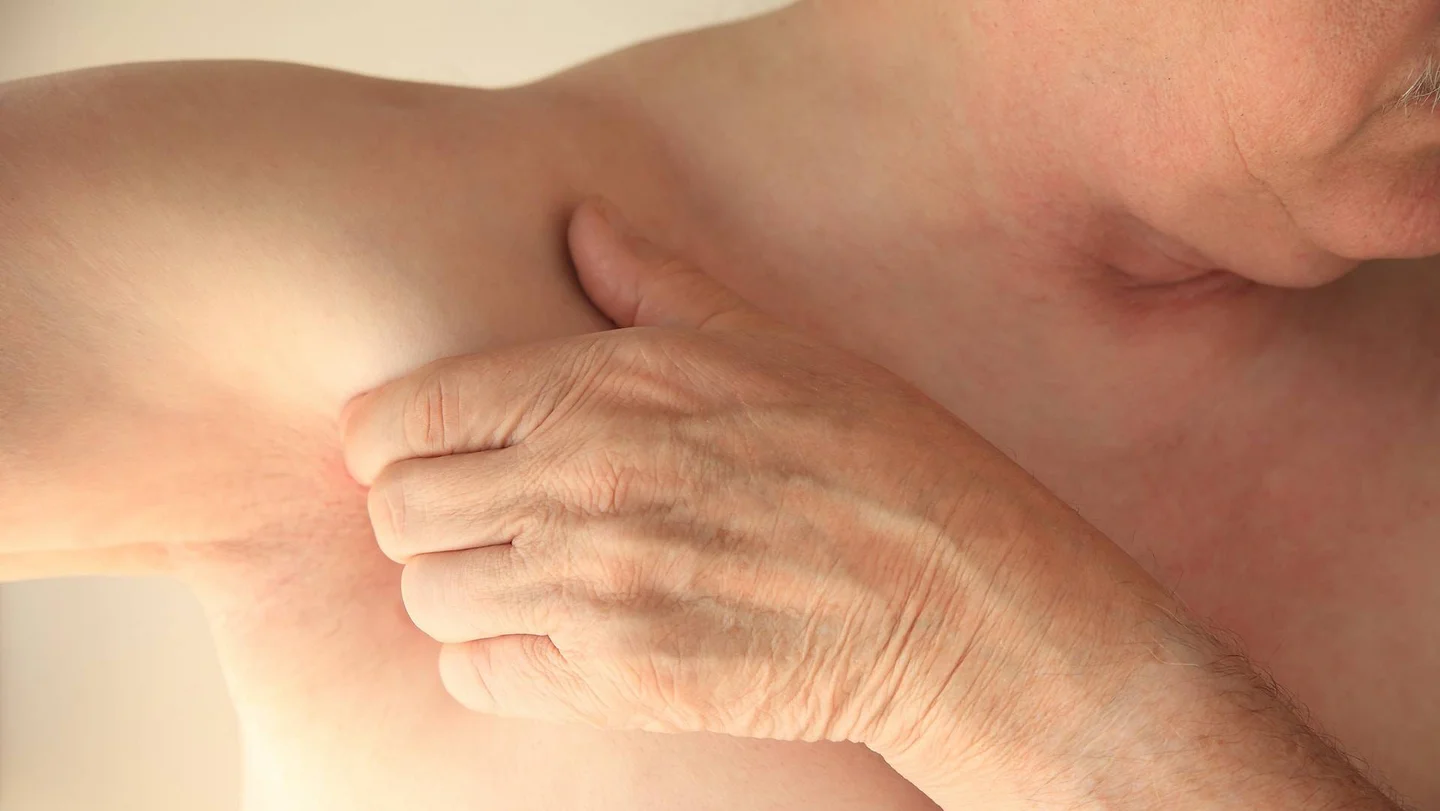
Intertrigo – also known as intertriginous dermatitis – is a rash in the skin folds. It occurs as a result of chafing and moisture. The skin becomes sore, reddened and itchy. The affected areas can also become infected, especially by the yeast fungus Candida and, in rarer cases, by bacteria.
Intertrigo frequently affects the groin and genital areas as well as the armpits. In women, it also affects the area below the breasts. However, it can essentially occur in all skin folds.
In particular, babies’ skin in the diaper area and the skin of older people who are bedridden can quickly become sore. People who are overweight/obese or have diabetes or an immunodeficiency are also more susceptible to intertrigo.
Treatment aims to keep the skin folds dry and prevent chafing. In addition, anti-inflammatory ointments are often used.
What are the symptoms of intertrigo?
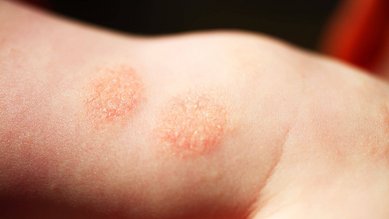
With intertrigo, the skin on both sides of a fold is reddened and sore. The affected areas can itch, burn and weep.
The inflamed rashes often appear:
- in the groin area
- between the thighs
- in the genital and perineal area
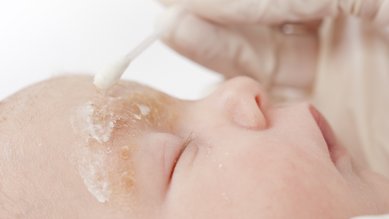
- in babies, in the diaper area (diaper dermatitis)
- between the buttocks
- in women, under the breasts
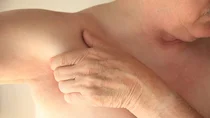
- under the armpits
- in a stomach fold, especially in people who are obese
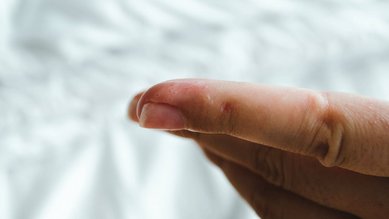
A rash can also appear between the fingers or toes, in the knee or elbow bends, in the navel, behind the ears or, in the case of infants, in the neck folds.
If the rash does not go away, the skin can develop painful cracks or start to peel.
If the sore areas also become infected with fungi or bacteria, scabs and pustules can form. In some cases, an unpleasant odor can also develop.
What causes intertrigo?
Intertrigo is caused by moisture and chafing in skin folds. The top skin layer becomes damaged and inflammation occurs.

There is usually little air flow in the skin folds. Heat accumulates and sweating quickly results in a build-up of moisture. This provides a good breeding ground for the yeast fungus Candida, which occurs naturally on the skin. As a result, the sore areas often also become infected, making the rash worse. Sometimes, the skin can also become infected with bacteria.
If the triggering factors persist, intertrigo can become chronic or repeatedly recur. If correctly treated, on the other hand, the condition usually goes away quickly.
What factors increase the risk of intertrigo?
Intertrigo is a common condition that can occur at any age, even in people who are otherwise healthy – for example after long runs, hikes or cycle rides.

However, there are certain factors that increase the risk of the condition, including:
- a warm, humid climate
- heavy sweating
- being overweight/obese
- diabetes mellitus
- smoking and alcohol consumption
- a weakened immune system
- wearing diapers
- being bedridden
- bladder weakness (urinary incontinence)
- a genetic disposition to skin conditions
How is intertrigo diagnosed?
Intertrigo is easy to diagnose with a physical examination based on the typical symptoms.
The doctor will sometimes scrape off a little skin or take a swab to test for a fungal or bacterial infection.
In rare cases, it can also be necessary to take a tissue sample (skin biopsy).
How can intertrigo be treated?
Intertrigo is basically treated by keeping the skin folds dry and preventing them from chafing.
The following skin care measures can help, for example:
- Wash the skin folds daily with mild soap, especially after exercise.
- Dry the skin well after washing, for example with a soft towel or a hair dryer on a cool setting.
- Tend to sensitive areas of skin with protective creams (barrier creams).
- Wear sweat-wicking clothing, for example made of cotton, as well as functional clothing during exercise.
- Use sweat-inhibiting deodorants and skin care products (antiperspirants) or drying powders.
- Place soft gauze strips or compresses in sore skin folds when sweating heavily.
- Allow the air to get to sore areas as often as possible.
If intertrigo is mild, such general measures often suffice for it to clear up again.
If the skin is also infected with fungi, doctors usually prescribe antimycotics that can be applied to the skin. These are ointments that combat fungal infections. In the case of a bacterial infection, antibiotic ointments are used.
Anti-inflammatory agents such as low-dose cortisone ointments are also used.
- DermNet NZ. Intertrigo. Aufgerufen am 23.06.2021.
- Metin A, Dilek N, Bilgili SG. Recurrent candidal intertrigo: challenges and solutions. Clin Cosmet Investig Dermatol. 2018;11:175-185. Published 2018 Apr 17. doi:10.2147/CCID.S127841.
- Mistiaen P, van Halm-Walters M. Prevention and treatment of intertrigo in large skin folds of adults: a systematic review. BMC Nurs. 2010; 9: 12. doi: 10.1186/1472-6955-9-12.
- Nobles T, Miller RA. Intertrigo. [Updated 2020 Sep 27]. In: StatPearls [Internet]. Treasure Island (FL): StatPearls Publishing; 2021 Jan-. Aufgerufen am 23.06.2021.
- UpToDate (Internet). Intertrigo. Wolters Kluwer 2021. Aufgerufen am 23.06.2021.

In cooperation with the Institute for Quality and Efficiency in Health Care (Institut für Qualität und Wirtschaftlichkeit im Gesundheitswesen – IQWiG).
As at: