Video appointments
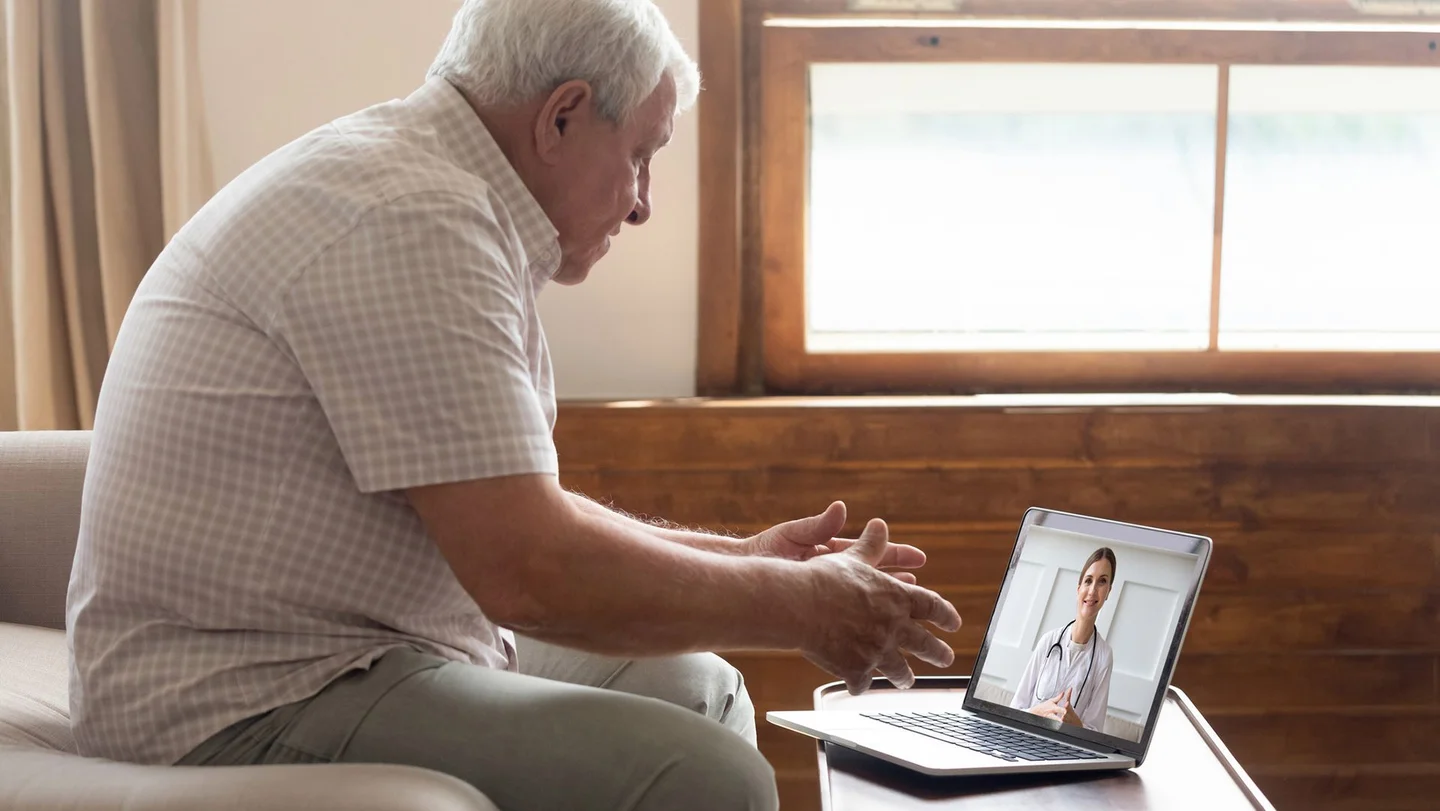
Video appointments enable doctors to be consulted online. Patients do not need any special technical equipment. A sick note or prescription can be issued during the appointment if necessary.
At a glance
- To take part in a video appointment, patients need a smart phone, tablet or computer with a camera, microphone and speaker.
- A stable internet connection is required in order to transmit good quality images and sound.
- The medical practice or a certified video service provider will provide access details for the appointment in advance.
- Patients must enter their correct name at the start of the appointment and possibly present their electronic medical data card.
- Video appointments are subject to data protection provisions.
What is a video appointment?
Patients do not have to attend their medical practice for every appointment. Whether surgical wound examinations, discussions on further treatment or psychotherapy sessions, all of these are possible in a video appointment. The process is similar to that when patients see doctors in a medical practice except that they are in different places. This saves time and eliminates the need for travel.
It is even possible to issue electronic sick leave notices and e-prescriptions during a video appointment. As with a “normal” doctor’s appointment, the costs are covered by the health insurance provider.
Who can offer video appointments?
Almost all types of doctors can offer video appointments, even when treating patients for the first time. Only psychotherapists have to use an initial face-to-face appointment to make a diagnosis and offer the patient advice. Following this, certain psychotherapy methods can involve treatment using individual or group sessions provided in the form of video appointments.
It is also possible to have video appointments with physiotherapists, nutritional therapists, speech therapists, occupational therapists and midwives.
What do I need for a video appointment?
No special equipment is required for video appointments. All that patients need is a PC, laptop, tablet or smartphone – most of the latest models are suitable providing they have a camera, a microphone and a speaker or a headphone port.
A sufficiently fast and stable internet connection is required in order to transmit good quality images and sound.
How is a connection established?
Patients can use a standard internet browser for the video appointment.
Doctors who offer video appointments must register with a certified video service provider. This is obliged to comply with certain technical specifications and regulations on data protection.
Patients are provided with personal dial-in details for the agreed appointment in advance. No special online account is required.
What is the procedure for a video appointment?
Start by arranging a date and time for the video appointment with your doctor.
You will then be informed how to establish the connection for the video appointment, for example via a link from the video service provider. You will also receive a personal dial-in code for the appointment.

Use the dial-in code to log in to the internet address provided about ten minutes before the appointment and enter your correct name so that your doctor knows who you are.
A short, automatic technical test is performed, then you are taken to a virtual waiting room.
Your doctor will then connect with you for the video appointment. If you have never attended the medical practice or have not been there for a long time, you will be asked to present your electronic medical data card.
The actual appointment will then begin and the images transmitted will enable the doctor to obtain a better idea of your situation than in a telephone appointment.
If necessary, you can even obtain e-prescriptions or an electronic sick leave notice for up to seven days (unknown patients for up to three days) during the appointment.
Once the video appointment is finished, log off from the website.
What about data protection?
Medical practices that offer online appointments must inform their patients about data protection before their first video appointment. You may be asked to provide written consent for the use of the video service.
Your doctor must also make you aware of all general prerequisites. These not only include the required technology, but also general conditions such as good lighting and a quiet, undisturbed environment. It is important for video appointments to be able to be as confidential as normal appointments. Family caregivers and care workers can attend the appointment at your request.
The video service provider selected by the medical practice ensures that the content of the video appointment is transmitted end-to-end encrypted and using the latest technology. The provider must also ensure that the content cannot be viewed or saved.
The doctor can only record the video appointment with your consent.
- gematik GmbH. E-Rezept - Neue Perspektiven. Aufgerufen am 25.01.2023.
- GKV-Spitzenverband. Videosprechstunde, -betreuung/ telemedizinische Leistung per Video. Aufgerufen am 25.01.2023.
- Kassenärztliche Bundesvereinigung KdöR. Praxisinfo: Online in die Praxis mit der Videosprechstunde. Aufgerufen am 25.01.2023.
- Kassenärztliche Bundesvereinigung KdöR. Patienteninformation: So funktioniert die Videosprechstunde. Aufgerufen am 25.01.2023.
- Kassenärztliche Bundesvereinigung KdöR. Anlage 31b - Vereinbarung Videosprechstunde. Aufgerufen am 25.01.2023.