Skip navigation
gesund.bund.de - Reliable information for your health gesund.bund.de - Reliable information for your health
  • Deutsch
  • English
  • Türkçe
  • Русский
  • عربي
Sprache Language Dilim Язык اللغة
Search
  • Display format Display format
  • Sign language Sign language
  • Simple language Simple language
  • Bookmark list Bookmark list (0)
 
Skip navigation
  • Healthcare

    • Healthcare

    • The healthcare system
    • Health literacy
    • Help and advice
    • Patient rights
    • Self-help
    • Services and benefits

    • Health insurance
    • Benefits for those with health insurance
    • Prescription drugs
    • Prevention and screening
    • Out-of-hospital intensive care
  • Care

    • Topics

    • Long-term care insurance
    • Care benefits
    • Family carers
    • Everyday care and home life
  • Digital health

    • Digitization in healthcare

    • Health and digitization
    • Telemedicine
    • Digital applications

    • Electronic health record (ePA)
    • Electronic medical data cards (eGK)
    • Health apps (DiGA and DiPA)
    • E-prescriptions
    • Electronic sick leave notice
  • Healthy living

    • Staying healthy

    • Diet and exercise
    • Saving lives and helping people
    • Managing addiction
    • Environment and health
    • Life stages

    • Growing up healthily
    • Workplace health
    • Pregnancy and birth
    • Health in old age
  • Conditions

    • Topics

    • Respiratory system
    • Eyes
    • Circulatory and lymphatic systems
    • Reproductive organs
    • Ear, nose and throat
    • Skin
    • Cardiovascular system
    • Hormones
    • Immune system
    • Head and nervous system
    • Psyche
    • Muscles, bones and joints
    • Kidneys and urinary tract
    • Digestion and metabolism
    • Teeth and gums
    • Special topics

    • Allergies
    • coronavirus
    • Infections and infectious diseases
    • Cancer
    • Conditions A–Z
  • Services

    • Information

    • Emergency numbers
    • ICD and OPS codes
    • Conditions A–Z
    • Glossary
    • Infection radar
    • Media library
    • Search functions

    • Doctor search
    • Hospital search
    • Pharmacy search
 
  • Display format Display format
  • Sign language Sign language
  • Simple language Simple language
  • Bookmark list Bookmark list (0)

Prostate stones

Read out loud

These functions require cookies. Go to Settings

  • Content

  • At a glance
  • Definition
  • Symptoms
  • Causes
  • Prevalence
  • Diagnosis
  • Treatment
  • Sources

ICD codes: N42.0 What are ICD codes?

Prostate stones are small calcium deposits in the prostate that are very common in men from middle-age onwards, but are usually harmless. If they cause pain or problems when urinating, they can be treated.

At a glance

  • Prostate stones are small calcium deposits in the man’s prostatic gland.
  • They are very common in men from middle-age onwards, but are usually harmless.
  • They sometimes cause a frequent need to urinate, pain or problems when passing urine.
  • If they are causing problems, prostate stones can be removed via the urethra with a fine surgical instrument (endoscope). Antibiotics are an option if there is an infection.

Note: The information in this article cannot and should not replace a medical consultation and must not be used for self-diagnosis or treatment.


Prostatasteine: Ein älterer Herr steht in einem Park, im Hintergrund ist ein Weg zu sehen. Er trägt Sportkleidung und wirkt fit und zufrieden. Prostatasteine: Ein älterer Herr steht in einem Park, im Hintergrund ist ein Weg zu sehen. Er trägt Sportkleidung und wirkt fit und zufrieden.

What are prostate stones?

Prostate stones are small calcium deposits that can build up in a man’s prostatic gland, particularly from middle-age onwards. Some men just have one stone, while others have several.

Prostate stones are typically between half a millimeter and five millimeters in size, so comparable to poppy seeds or millet seeds.

They should not be confused with kidney stones, which occur in the kidneys, ureter or bladder, for example.

Prostate stones are usually harmless and are only discovered by chance, for example during an ultrasound scan. However, they can sometimes cause problems.

Prostatic calculi (prostate stones) are mostly harmless and are only discovered by chance, for example during an ultrasound scan.

Which symptoms can occur with prostate stones?

In some men, prostate stones cause problems such as

  • urinary urgency, especially during the night
  • difficulties urinating
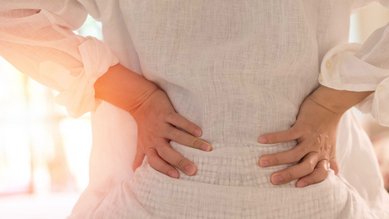
  • pain in the pelvis, lower back, penis or perineum area between the scrotum and the anus

Prostate stones can be colonized by bacteria and they are then believed to help cause chronic inflammations of the prostate (chronic prostatitis) and urinary tract infections.

It is unclear whether prostate stones also help cause erection problems or pain when ejaculating. To date there is no evidence of this link.

How are prostate stones formed?

Prostate stones are often made up of calcium phosphate, which also occurs in the bones and teeth.

Prostate stones seem to be favored by normal aging processes. But how the stones form is as yet unclear. There are two theories: firstly, deposits might form in the secretion of the prostate gland which then calcify due to inflammations. Secondly, a urine blockage in the prostatic gland might also help the stones form.

How common are prostate stones?

Prostate stones occur in many men, mainly from the age of 50 onwards. However, there are no precise figures as to how common they actually are.

They are often found in men whose prostate is being examined, for example, due to a benign prostate enlargement (benign prostatic hyperplasia) or a chronic prostate inflammation. The precise connection between these conditions and the prostate stones, however, has not yet been fully explained. Calcification in the prostatic gland is also often found in men with prostate cancer.

How are prostate stones diagnosed?

Prostate stones are usually only discovered by accident, for example as a result of urological testing when an abnormal prostate change is suspected. For instance the stones are easy to detect with an ultrasound probe inserted into the anus (transrectal ultrasound). The stones are also made visible by a computed tomography (CT) scan of the pelvis or an X-ray of the kidneys and urinary tract.

How are prostate stones treated?

In most cases, no treatment is needed for prostate stones. The body sometimes just flushes them out with the urine. However, targeted treatment is available if they cause discomfort.

In most cases, no treatment is needed for prostatic calculi (prostate stones). However, targeted treatment is available if they cause discomfort.

If there is a bacterial infection doctors administer antibiotics. In cases of chronic inflammation or larger prostate stones, the deposits can be removed via the urethra using a fine surgical instrument (endoscope) inserted from outside. In the process, prostate tissue is also removed if the prostate is enlarged. This procedure is called a transurethral resection of the prostate (TURP).

  • Cao JJ, Huang W, Wu HS, Cao M, Zhang Y, Jin XD. Prostatic Calculi: Do They Matter? Sex Med Rev. 2018 Jul;6(3):482-491. doi: 10.1016/j.sxmr.2017.10.003. Epub 2017 Nov 20. PMID: 29157875.
  • Hyun JS. Clinical Significance of Prostatic Calculi: A Review. World J Mens Health. 2018 Jan;36(1):15-21. doi: 10.5534/wjmh.17018. Epub 2017 Sep 25. PMID: 29076299; PMCID: PMC5756803.
  • International Society for Sexual Medicine. What are prostatic calculi (prostate stones)? Do they affect sexual function? Aufgerufen am 09.02.2021.

Badge

In cooperation with the Institute for Quality and Efficiency in Health Care (Institut für Qualität und Wirtschaftlichkeit im Gesundheitswesen) (IQWiG).

As at: 25.02.2021


Did you find this article helpful?
Thank you for your feedback!
Thank you for your additional comments!
Sorry, your response could not be submitted due to a technical error.

Get informed Recommended articles

Benign prostate enlargement

A benign enlarged prostate is usually harmless, but can be distressing. Whether and what kind of treatment is an option depends on the specific symptoms. 

Find out more

Kidney stones and ureteral stones

Kidney stones form as small, solid deposits in the renal pelvis. They often occur in people aged between 40 and 60. Larger stones can cause pain.

Find out more

Prostate cancer

Prostate cancer is the most common type of cancer in men. Around 60,000 men get prostate cancer every year in Germany.

Find out more

Back to top
Logo - Bundesministerium für Gesundheit Logo - Bundesministerium für Gesundheit

gesund.bund.de A service from the Federal Ministry of Health.

Useful links

  • Topic overview
  • User advice
  • Website overview

Services

  • Help and advice
  • Accessibility
  • Report an accessibility barrier

About us

  • About gesund.bund.de
  • Quality assurance
  • Our partners
  • Contact

Important emergency numbers

  • Fire and ambulance services 112 112
  • Non-emergency medical assistance 116117 116117
  • Emergency numbers

Certifications

  • afgis-Qualitätslogo mit Ablauf 2026/03: Mit einem Klick auf das Logo öffnet sich ein neues Bildschirmfenster mit Informationen über Bundesministerium für Gesundheit (BMG) und sein/ihr Internet-Angebot: gesund.bund.de/
  • Logo DNGK 2025-2026
  • BIK - BITV-konform (geprüfte Seiten), zum Prüfbericht

© Copyright 2026 Bundesministerium für Gesundheit Data protection Legal notice