Podology
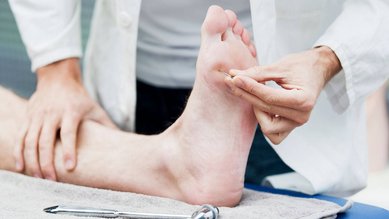
The field of podology (medical foot treatment) focuses on foot health. Podologists treat pathological changes to the skin and the toenails. This not only enables them to alleviate existing issues but also to prevent further damage or wounds from occurring.
At a glance
- The field of podology treats problems with the feet in the case of nerve damage or illnesses such as diabetes.
- Podological treatment can help with changes to the skin and nails, for example in the case of thickened skin or ingrowing toenails.
- Unlike cosmetic foot care, medical foot treatments are not about beautification, but about treating pathological changes.
- A medical prescription is required for health insurance providers to cover the costs of podological treatment. Adults are normally required to contribute a co-payment.
What is podology?
Podology (medical foot care and treatment) helps treat pathological changes to the feet. Podological treatments are performed by podologists. This is a protected professional title, meaning that it can only be used by people who have received specialist training.
Medically prescribed medical foot treatment may only be provided by people certified in this healthcare profession. Such treatment is not only intended to alleviate existing problems but also to prevent damage to the foot from occurring or getting worse.
Important: Unlike with podological treatment, cosmetic foot care involves caring for and beautifying healthy feet. No professional certification is required to offer cosmetic foot care.
When is podological treatment required?
One of the most important reasons for podological treatment includes diabetes-related changes to the feet. This is also referred to as diabetic foot syndrome or simply diabetic foot.
Diabetic foot is caused by diabetes damaging nerves and blood vessels. If nerves are damaged, the foot’s sense of feel can deteriorate, reducing people’s perception of pressure or pain. This often results in pressure sores and severely thickened skin. People also fail to notice minor injuries. Furthermore, damage to the blood vessels means that the circulation in the feet is poorer than it should be. The result of this is that wounds take longer to heal or do not heal properly.
If a diabetic foot is not detected and treated at an early stage, persistent and deep wounds can arise. In serious cases, tissue can die and the affected toe or part of the foot can have to be amputated. In many cases, timely podological treatment makes it possible to avoid such amputations.
Other medical conditions that cause nerve damage can also result in similar problems to diabetic foot syndrome. These include paraplegia and neuropathies. Podological treatment can also be advisable in these cases.
Examples of further reasons for podological treatment include:
- pathologically thickened skin
- corns
- warts
- changes to the toenails, such as thickening or ingrown nails
- fungal nail infection
- issues resulting from misalignments of the toes
What does podological treatment involve?
The podologist starts by examining the feet and creating a personal treatment plan. This considers the diagnosis and the existing problems.
The actual podological treatment is then performed. Skin treatments can include the removal of thickened skin and calluses, for example. Corns, warts and cracks can also be treated. These measures aim to avoid skin damage such as deep cracks and wounds to the skin or inflammation.
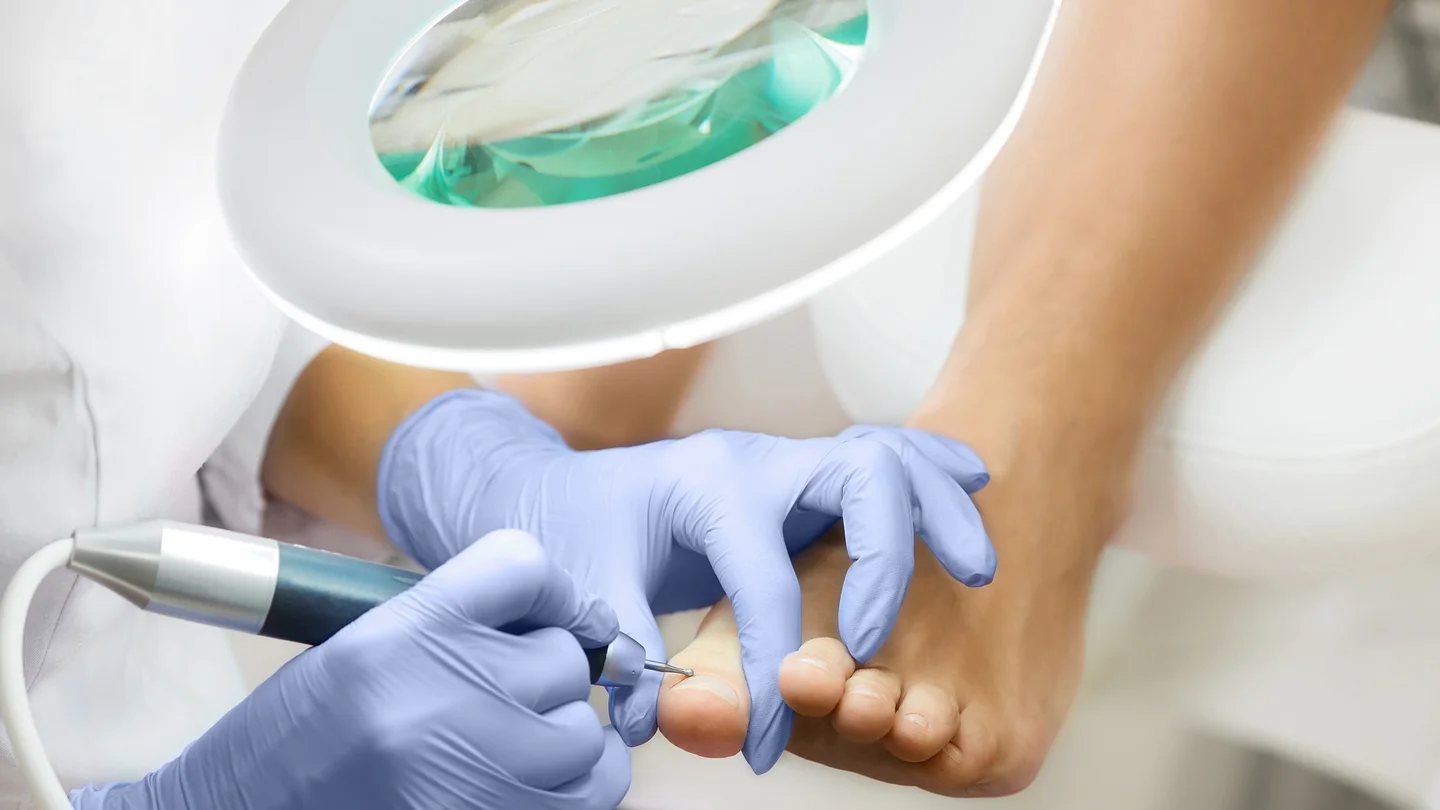
Pathological changes to the toenails can also be treated using podological measures. Examples of these include correctly cutting the nails and treating thickened toenails, for example through filing or drilling.
Podologists are also able to treat involuted (curled) or ingrown toenails. This can be done using nail braces, for example, which aim to promote correct nail growth and restore the nail’s normal shape. Individual nail braces made from metal or plastic are used.
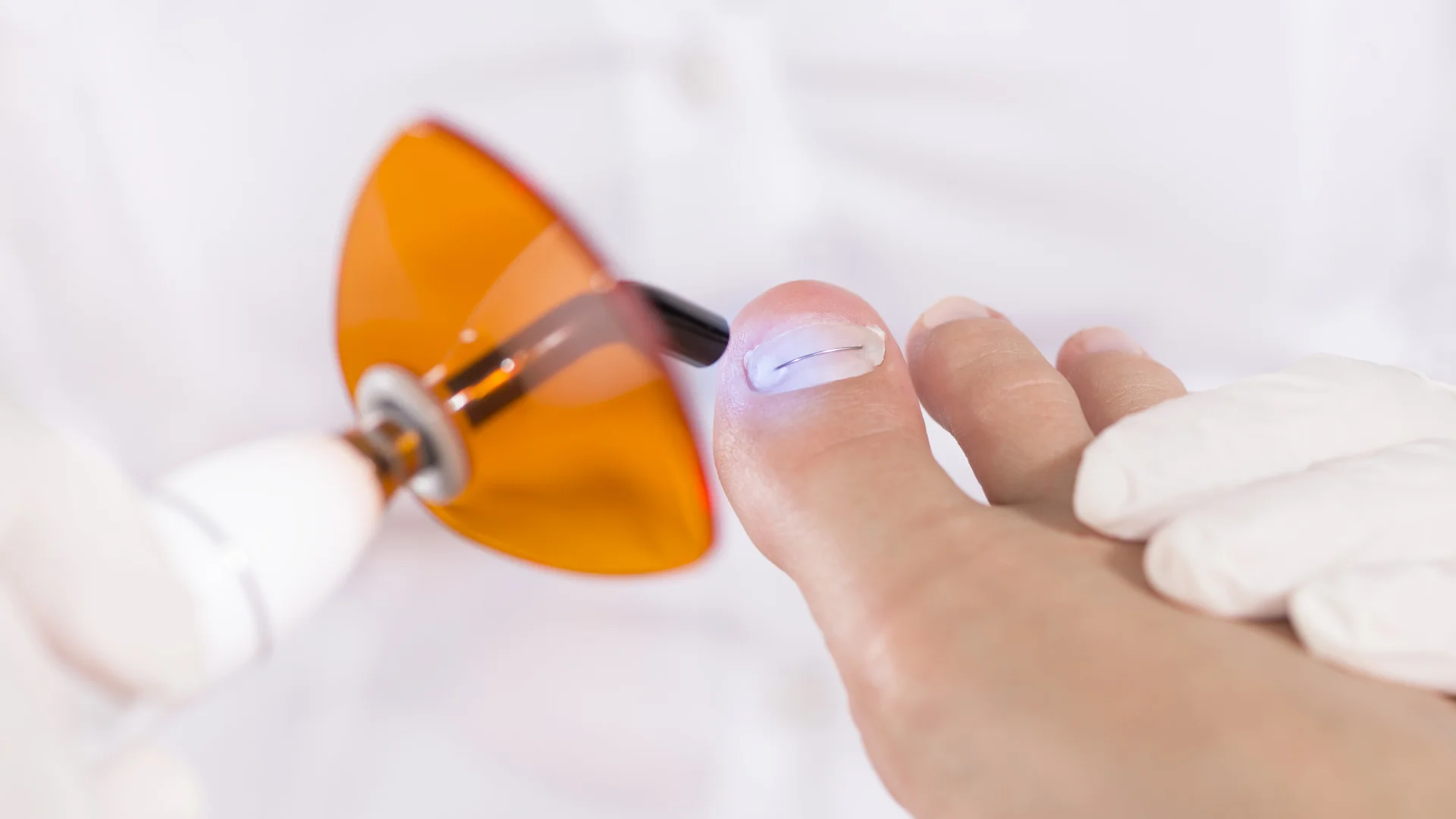
قد يساعد العلاج بأقواس تقويم الأظافر في علاج أظافر القدم الناشبة.
Depending on the precise problem, several other special podological treatments are also available. These include:
- fitting pads and making special silicone pads (orthoses) to alleviate areas of friction and pressure
- applying special bandages, for example sterile (germ-free) bandages or bandages intended to alleviate parts of the foot
- Foot stretches and exercises, for example in the case of misalignments
Podologists also provide advice. This can include tips on the right footwear and suitable insoles or on correct foot care at home.
How can I obtain podological treatment and who covers the costs?
With certain medical conditions that can cause damage to the feet, a doctor can prescribe podological treatment. In such cases, statutory health insurance providers will cover the costs of the treatment. The therapeutic services directive from the Joint Federal Committee (Gemeinsamer Bundesausschuss, G-BA) stipulates when a prescription can be obtained.
At present, statutory health insurance providers will pay for podological treatment if it is required due to one of the following medical conditions:
- Diabetic foot syndrome
- Certain forms of nerve damage (sensory or sensorimotor neuropathy)
- Paraplegia
- Ingrown toenails (nail brace treatment)

Unless exempt from co-payment, insurance holders must contribute a co-payment of 10 percent of the treatment costs plus 10 euros per prescription.
The rules on cost coverage can differ for people with private insurance. The level of costs that will be paid for a specific therapeutic measure depends on the insurance policy taken out.
Many podological treatments can also be obtained without a prescription. In such cases, patients must pay for the treatment themselves.
Further information on the precise conditions associated with podology prescriptions can be found in our “therapeutic services” article.
Where can I obtain podological treatment?
Podological treatments are offered by the following institutions, among others:
- Podological practices or group practices
- Foot clinics, such as specialist practices for diabetes
- Medical care centers
- Hospitals
How can I find a suitable podological practice?
Podological practices can be found in the list of therapeutic service providers published by the National Association of Statutory Health Insurance Funds (GKV-Spitzenverband). The cost of the treatments provided by all of the practices listed can be covered by statutory health insurance providers.
Patients can also find a podologist near them by entering their zip code on the website of the German Association of Podology (Deutscher Verband für Podologie (ZFD) e.V.)
- Bundesministerium der Justiz. Gesetz über den Beruf der Podologin und des Podologen (Podologengesetz - PodG). Aufgerufen am 18.03.2024.
- Deutscher Verband für Podologie (ZFD) e.V. Berufsbild des Podologen. Aufgerufen am 18.03.2024.
- Deutscher Verband für Podologie (ZFD) e.V. Das Aufgabengebiet von Podologen. Aufgerufen am 18.03.2024.
- Gemeinsamer Bundesausschuss G-BA. Heilmittel-Richtlinie. Richtlinie über die Verordnung von Heilmitteln in der vertragsärztlichen Versorgung - HeilM-RL. Aufgerufen am 18.03.2024.
- Gemeinsamer Bundesausschuss G-BA. Pressemitteilung. G-BA erweitert Verordnungsfähigkeit von medizinischer Fußpflege. 2020. Aufgerufen am 18.03.2024.
- gesundheitsinformation.de. Podologie (medizinische Fußpflege). Aufgegrufen am 18.03.2024.
- GKV-Spitzenverband. Heilmittelerbringerliste. Aufgerufen am 18.03.2024.
- Orthopädie-Technik Schädlich GmbH. Orthosen. Aufgerufen am 18.03.2024.
- PKV-Serviceportal. Physiotherapeut, Logopäde & Co. Aufgerufen am 18.03.2024.
- Schmidt et al. Podiatry impact on high-low amputation ratio characteristics: A 16-year retrospective study. 2017. Aufgerufen am 18.03.2024.
- Schweizerischer Podologen-Verband SPV. Verbandtechnik in der Podologie. Aufgerufen am 18.03.2024.
- Verband Deutscher Podologen (VDP) e.V. Abgrenzung der Tätigkeitsfelder Podologie und Fußpflege. Aufgerufen am 18.03.2024.
- Verband Deutscher Podologen (VDP) e.V. Anlage 1 - Leistungsbeschreibung Podologische Therapie. Aufgerufen am 18.03.2024.
- Verband Deutscher Podologen (VDP) e.V. Tätigkeit eines Podologen. Aufgerufen am 18.03.2024.

Reviewed by the German Association of Podology (Bundesverband für Podologie e.V.)
As at: