Self-help for people from a migrant background
Intercultural self-help seeks to enable people from a migrant background to exchange information and experiences and to provide one another with mutual support to deal with chronic health conditions, disabilities or addiction problems. There are, for example, specific self-help offerings for people from different cultural backgrounds.
At a glance
- Intercultural self-help offers various opportunities for people from a migrant background to support one another with health-related issues.
- Intercultural self-help offerings are geared towards the various needs of people from a migrant background.
- Self-help contact and information points serve as professional advice centers to help people find an intercultural self-help group, online services or other self-help offerings.
What is intercultural self-help?
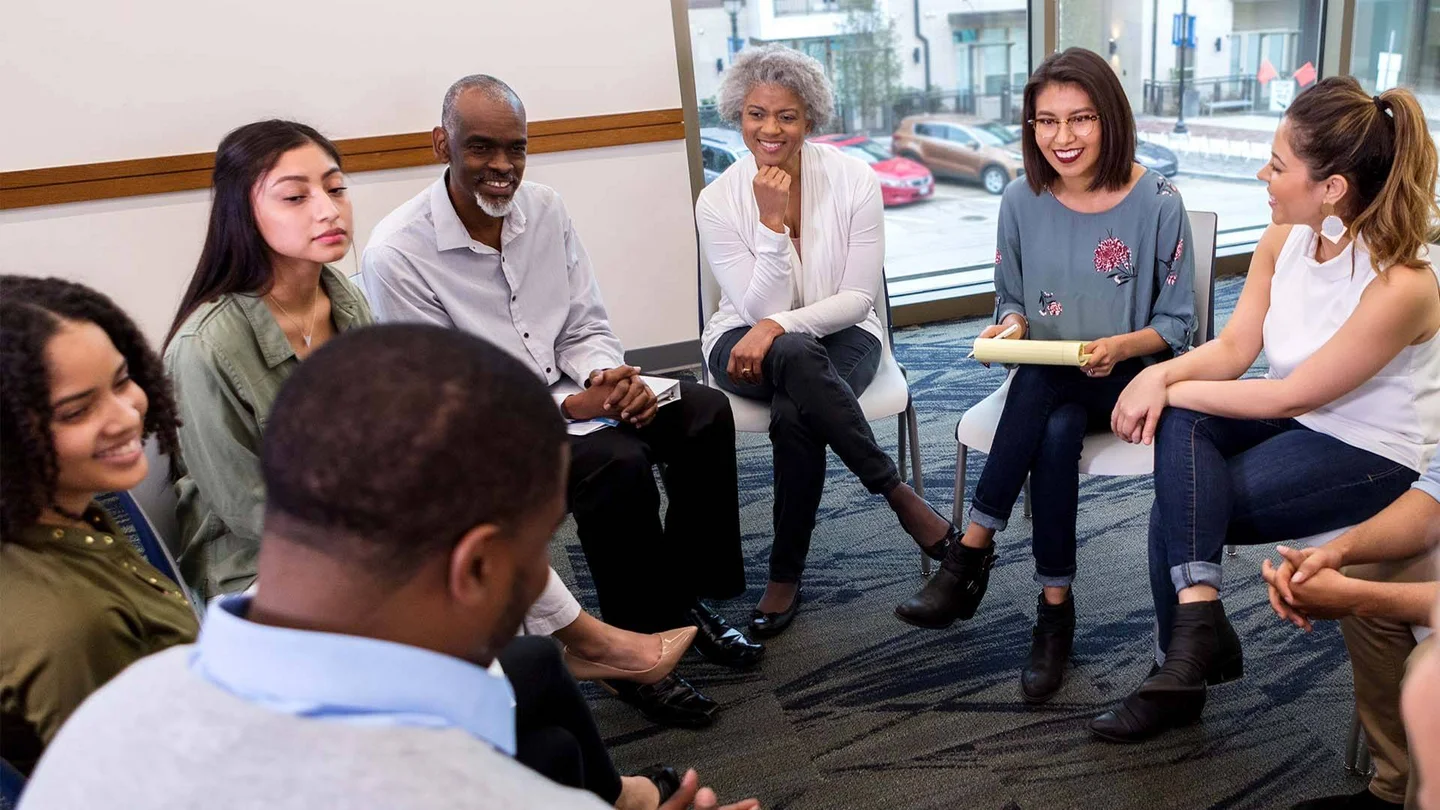
Over one quarter of people living in Germany are from a migrant background. However, very few people from other nationalities are to be found in self-help groups. Many people who come to Germany from other countries and cultures are not familiar with the self-help concept. Due to language barriers or differences in social norms, they may have reservations about joining a self-help group. Various initiatives in the area of intercultural self-help are aiming to change this situation. They need partners from various cultural groups to help them achieve their goal of enabling people from a migrant background to share their knowledge and experience and to provide each other with mutual support in dealing with chronic health conditions and disabilities.

Intercultural self-help can take various forms – for example, as part of existing groups set up by migrant organizations (such as cultural or mosque-based associations), in groups set up by established self-help associations, or on a more informal basis (e.g., organized by local community groups). The focus is on allowing people to share information and experiences, as well as providing them with information and advice. There are groups in which a specific language is spoken and intercultural groups where interpreters provide assistance if necessary.
What are the unique features of intercultural self-help groups?
Every culture has its own way of dealing with the issues of health and illness. In some cultures, for example, illness is understood as a form of externally imposed fate or destiny. People from some cultural backgrounds don’t speak to anyone outside of their family about illness. Personal problems or worries are only discussed in private. As some countries don’t have any self-help services such as those available in Germany, many migrants are unaware of the processes, underlying premises and benefits of self-help.
This is where intercultural self-help comes in. To raise awareness of the self-help concept, individual associations or self-help groups contact cultural associations, religious communities or other migrant meeting points and provide them with information about the self-help options that are available. If others from the same cultural background share their positive experiences with self-help, this can also help raise awareness of self-help offerings. Many self-help contact and information points now provide information in various languages to help people from a migrant background to navigate their way through the “jungle” of the German healthcare system.
There are also offerings aimed specifically at people from a migrant background, such as intercultural self-help groups dedicated to various topics. These take account of the unique customs and needs of the culture in question. For example, they are sensitive to the way in which people from that cultural background talk about illness, pain or grief.

How can people from a migrant background benefit from joining a self-help group?
Self-help groups provide a meeting place for people with similar health conditions or similar life situations. The groups are a source of information and advice. Group members share their experiences and realize that they are not alone in facing their problems. Azra Tatarevic is a member of a self-help group for Bosnian women with anxiety and depression. She wrote about her experiences in the 2017 yearbook published by the German Association for Self-Help Groups (Deutsche Arbeitsgemeinschaft Selbsthilfegruppen e.V. – DAG SHG): “Over time, the self-help group helped us realize that, despite everything we had been through, we had to continue with our lives. It was like a second life-line for all of us, which helped us regain our courage”.
The benefits of joining a self-help group have been scientifically proven. As evidenced by a large-scale study of health-related self-help groups in Germany, joining a group like this helps people to cope more effectively with an illness, for example.
How to find an intercultural self-help group
Self-help groups for or including people from a migrant background are still relatively rare. They are most likely to be found in larger towns and cities. Self-help contact and information points serve as professional advice centers to help people find an intercultural self-help group. They also help people establish new groups. If you’d like to share your experiences of health-related issues with people from your own or other cultural backgrounds, don’t hesitate to get in touch with one of these contact points.
You will find the addresses of self-help contact and information points in the database of the National Contact and Information Point for Encouraging and Supporting Self-Help Groups (Nationale Kontakt- und Informationsstelle zur Anregung und Unterstützung von Selbsthilfegruppen – NAKOS).
Where can I find more information?
More information about the organization and independence of self-help services and about how the interests of people with disabilities and chronic illnesses are represented at a political level is provided in our self-help topic overview.
- Kendi kendine yardım Bremen - gesundheitsbezogene Selbsthilfe. Was ist Selbsthilfe? Aufgerufen am 30.05.2022.
- Nationale Kontakt- und Informationsstelle zur Anregung und Unterstützung von Selbsthilfegruppen (NAKOS). Selbsthilfe und Migration. Aufgerufen am 30.05.2022.
- Netzwerk Selbsthilfe Bremen-Nordniedersachsen e. V. Migration und Selbsthilfe. Wie funktionieren neue Gruppengründungen. Aufgerufen am 30.05.2022.
- Seidel G. Selbsthilfe von und mit Menschen mit Migrationshintergrund. Aufgerufen am 30.05.2022.
- Tatarevic A. 2017. Aus einem Trauma ist durch Selbsthilfe ein Traum wahr geworden. Selbsthilfegruppe für bosnische Frauen mit Ängsten und Depressionen. In: Selbsthilfegruppenjahrbuch 2017, 11-13. Aufgerufen am 30.05.2022.

Reviewed by the German National Association for Self-Help (Bundesarbeitsgemeinschaft Selbsthilfe e.V. – BAG SELBSTHILFE).
As at: