Hirsutism
ICD codes: L68.0 What are ICD codes?
Hirsutism refers to a condition in which women experience excess hair growth in a typically male pattern. Facial hair in the mustache and beard areas and hair on the chest and back are both typical symptoms. One cause of this condition is having excessively high levels of male sex hormones.
At a glance
- Hirsutism is a condition in which women have excess hair growth on their bodies.
- They often have an excess growth of facial hair, e.g. above the top lip and on the chin, as well as on the back and chest.
- Women with hirsutism usually have unusually high levels of male sex hormones in their bodies.
- The most common cause is polycystic ovarian syndrome (PCOS), a hormone disorder of the ovaries.
- Undesired hair can be cosmetically removed, for example by shaving or using light (photoepilation).
- Another option is treatment with medication, although this may take a relatively long time to work.
Note: The information in this article cannot and should not replace a medical consultation and must not be used for self-diagnosis or treatment.
What is hirsutism?
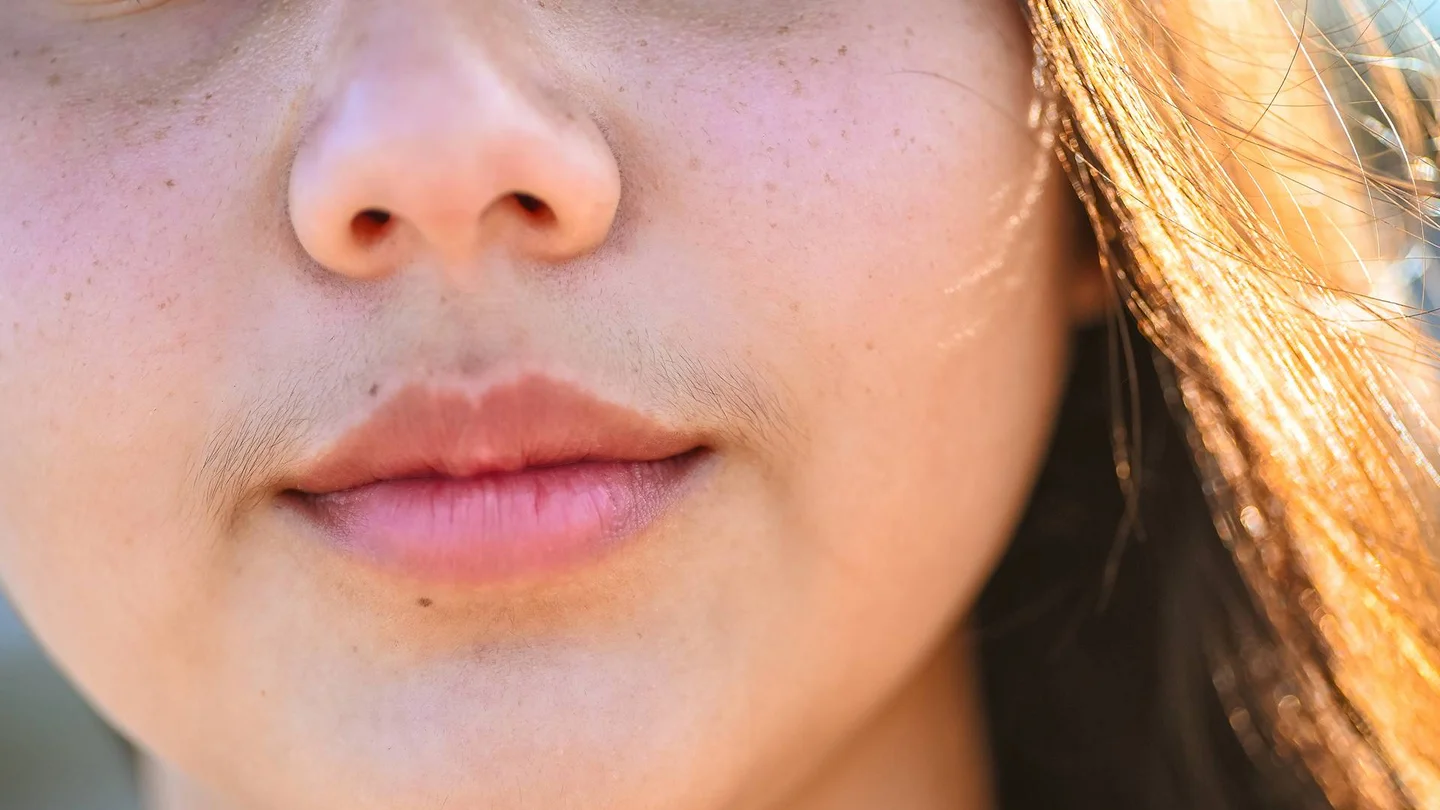
Women with hirsutism experience excess growth of body hair in a typical male hair growth pattern. For example, coarse, dark hair may grow on the chin and top lip, on the upper body or bottom (buttocks). In addition, hair growth under the arms and in the genital area is often very pronounced and more typical of male hair growth.
This excess hair growth may occur after puberty in women if their bodies begin producing excessive levels of male sex hormones. In many cases, the imbalance is due to a hormonal disorder.
Hirsutism affects around 5 to 10 percent of all women of reproductive age, i.e. between puberty and menopause.
Treatment depends on how pronounced the excess hair growth is and the degree to which the woman finds it distressing.
What are the symptoms of hirsutism?
Women with hirsutism experience excess growth of hair, especially on the following parts of the body:
- face, especially the chin and top lip (i.e. mustache and beard areas on a man)
- back
- chest
- bottom

In addition, the pubic hair often extends upwards as far as the belly or inwards onto the thighs. Underarm hair may extend down the insides of the upper arms.
In cases where hirsutism is caused by a hormonal disorder, other symptoms may also occur, such as:
- acne
- irregular periods (menstruation)
- thinning and loss of head hair
What causes hirsutism?
It is normal for women’s bodies to produce male sex hormones (androgens). However, their levels are usually much lower than in men.
The level of androgens present determines the area of the body on which each type of hair grows. They cause thicker, darker hair to grow on boys’ faces in puberty, i.e. beard growth begins. Hair growth on the rest of the body changes too.
If a woman experiences increased androgen levels, this can lead to excess growth that follows a pattern more typically seen in men.
In up to 80 percent of cases, pronounced hirsutism is caused by polycystic ovarian syndrome (PCOS). PCOS is a hormonal imbalance in the ovaries, which causes increased production of androgens, leading to excess hair growth.

Other causes of hirsutism are rarer. These include:
- side-effects of medication
- taking male hormones (androgen therapy)
- hormonal contraception with progestins (synthetic hormones)
- significant factors such as congenital adrenal hyperplasia – an inherited metabolic disorder, in which the body produces either excessively high or excessively low levels of male sex hormones
- tumors, e.g. on the kidneys or ovaries, that produce male sex hormones
- being overweight
No cause can be detected in 20 percent of women with pronounced hirsutism. This figure is up to 50 percent in women with mild symptoms.
How is hirsutism diagnosed?
A doctor will begin by looking for the typical signs of hirsutism – excess body hair, acne or noticeable thinning of the head hair.
The doctor will also ask:
- whether the woman gets menstrual periods and how often
- whether her weight has changed
- whether she is currently taking any medication
Doctors use the Ferriman-Gallwey scale to define the level of hirsutism in an individual patient. This requires an examination of various parts of the body, including the top lip, chin, chest, stomach, back, upper arms, thighs and bottom (buttocks).
A laboratory test can measure the level of male sex hormones in the blood.
How is hirsutism treated?
From a medical point of view, treatment is not normally required for mild cases of hirsutism. The level of distress caused by excess hair growth differs greatly from one person to the next but many women feel more comfortable removing the hair.
There are products and techniques that can be used at home for hair removal, for example:
- bleaching creams containing hydrogen peroxide
- depilatory (hair removal) creams
- shaving
- waxing
- epilation, i.e plucking with tweezers or extraction using an electric epilator
With each of these cosmetic techniques, the hair will grow back after a certain period of time because the roots remain intact. The skin may become irritated when they are used.
To remove hair effectively and permanently, it is necessary to attend a medical specialist. One of two methods are then available, i.e. photoepilation and electrolysis.
Photoepilation uses light to destroy the hair follicles, while electrolysis uses electricity. In both cases, there is generally little to no regrowth of hair. Side effects are also possible with these procedures.
However, women with severe hirsutism often do experience hair regrowth even after these procedures. In this case, medication may also be used.
Hormonal contraceptives containing estrogen and progestin, such as the birth control pill, may reduce the level of male sex hormones in the body. However, they are only suitable for women who are not currently trying for a baby. Other medication inhibits the absorption of androgens in the body. All of these forms of medication can have side effects. It is therefore important to discuss the risks and benefits with a doctor.
Women with hirsutism are advised to take their medication for at least 6 months. After this period, it will be clear whether the treatment is working.
Important: Excessive hair growth can take various forms. Women who find it distressing can consult a skin doctor (dermatologist) about whether treatment would be useful and, if so, in which form.
- DynaMed [Internet]. Ipswich (MA). Hirsutism and Virilization. EBSCO Information Services. Record No. T115173. 2018 (1995). Aufgerufen am 02.07.2021.
- Hafsi W, Badri T. Hirsutism. [Updated 2021 Aug 7]. In: StatPearls [Internet]. Treasure Island (FL): StatPearls Publishing; 2021 Jan-. Aufgerufen am 02.07.2021.
- Liu K, Motan T, Claman P. No. No. 350-Hirsutism: Evaluation and Treatment. SOGC Clinical Practice Guideline. J Obstet Gynaecol Can. 2017 Nov;39(11):1054-1068. doi: 10.1016/j.jogc.2017.05.022.
- UpToDate (Internet). Management of hirsutism in premenopausal women. Wolters Kluwer 2021. Aufgerufen am 02.07.2021.
- UpToDate (Internet). Pathophysiology and causes of hirsutism. Wolters Kluwer 2021. Aufgerufen am 02.07.2021.

In cooperation with the Institute for Quality and Efficiency in Health Care (Institut für Qualität und Wirtschaftlichkeit im Gesundheitswesen – IQWiG).
As at: