Back pain and lower back pain
ICD codes: M54 What are ICD codes?
Lower back pain is extremely common. The good news: the pain is normally harmless and disappears within a few days or weeks. The most effective way to prevent back pain is regular exercise.
At a glance
- There is rarely a single cause for back pain.
- There are two types of back pain: nonspecific and specific. Nonspecific back pain is not dangerous.
- Regular exercise is the most effective way to prevent recurrent back pain.
- Lower back pain usually abates within a few days or weeks even without treatment.
- Imaging, medication, shots, and surgery are rarely useful in the case of nonspecific back pain.
- Lower back pain recurs within a year in approximately one third of those affected.
Note: The information in this article cannot and should not replace a medical consultation and must not be used for self-diagnosis or treatment.

What is back pain?
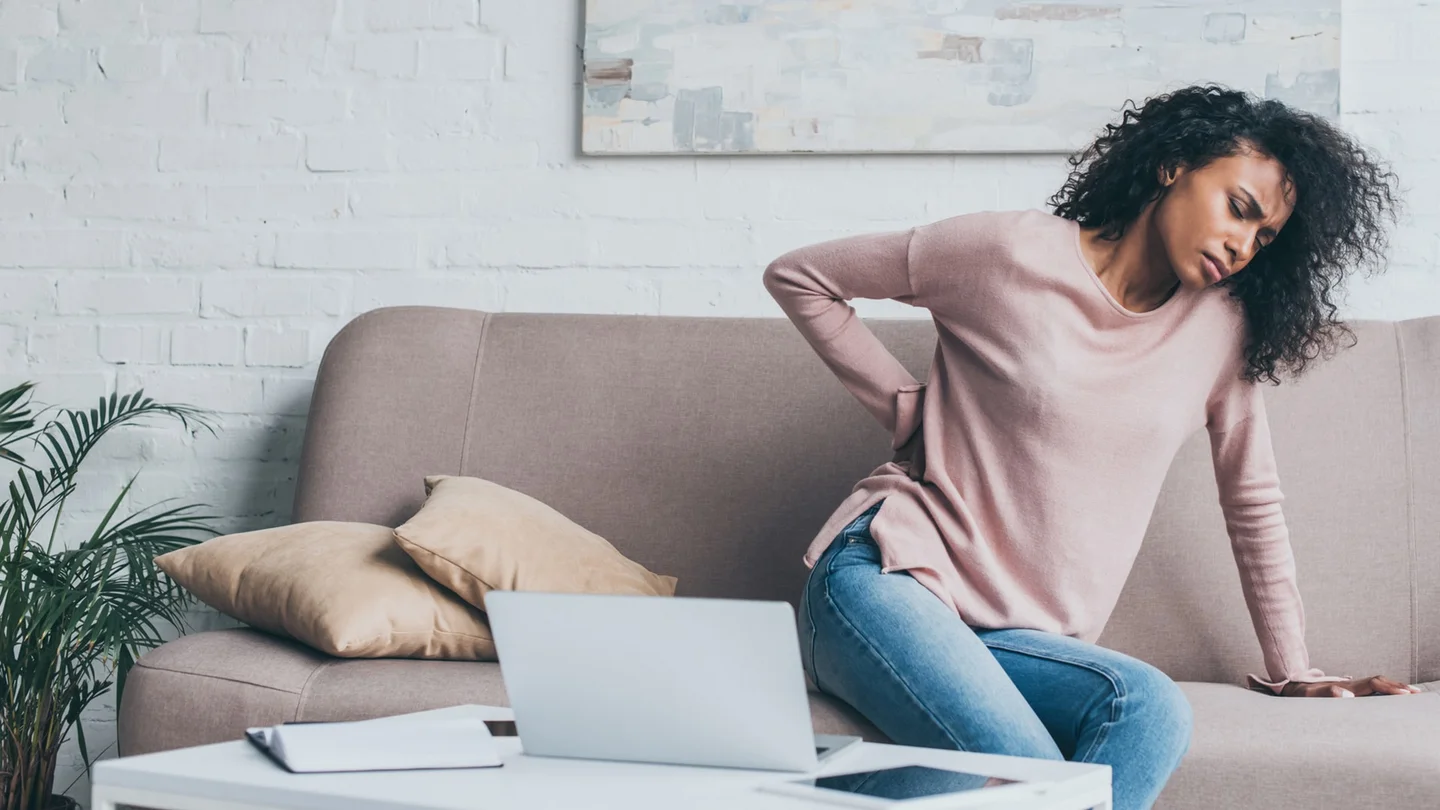
Lower back pain is extremely common, but the good news is that it is rarely dangerous. The pain usually starts suddenly and disappears after a few days or weeks. It is important to stay active when experiencing back pain. Those with back pain should continue to go about their daily activities and to exercise when possible. A protective posture, insufficient movement, and bed rest can prolong recovery.
There is almost never a single cause of back pain. “Nonspecific” pain is typically not dangerous. Lower back pain is not an indication of a back injury. That is also true for chronic or recurring back pain.
However, chronic pain can affect quality of life.
In the case of nonspecific back pain, imaging, medication, shots, and surgery are rarely useful. They entail various risks and are therefore used on a highly conservative basis.
What are the symptoms of back pain and lower back pain?
Pain in the region of the lumbar spine, i.e. in the lower region of the back between the hips and bottom of the ribs, is referred to as lower back pain or back pain. The pain is usually associated with muscle tension, often also with restriction of the range of motion.
Sudden severe pain in the lower back is referred to as lumbago.
The pain can also radiate to one or both legs. If the pain goes beyond the knee or into the foot, it is referred to as sciatica. The most common cause of this type of back pain is a slipped disc.
Although back pain and pain in the legs can occur at the same time, they do not necessarily have the same cause. If the leg pain is worse than the back pain, follows a certain nerve pathway, or occurs with other symptoms like tingling or numbness, sciatica is probably the cause.
What causes back pain?
In general, there are two types of back pain: nonspecific and specific.
In most people, there is no specific cause for their back pain. Nonspecific lower back pain can be affected or triggered by the following factors:
- a lack of exercise and weak core muscles
- abnormal biomechanical stress or unilateral stress, e.g. due to sitting for long periods of time (at a desk), unilateral or strenuous manual labor
- muscle tension (also due to abnormal mechanical stress)
- psychological factors like stress, financial or family stress, anxiety, self-doubt, or diseases like depression
- changes in pain perception in the central nervous system
- hereditary predisposition

Specific causes of lower back pain can be clearly identified. Causes include narrowing of the vertebral canal, an acute slipped disc, a broken vertebral body (e.g. due to osteoporosis), or Bechterew’s disease. Therefore, different treatments are sometimes selected for specific back pain than for nonspecific back pain.
How long does back pain last?
In most cases back pain usually resolves within several days or weeks even without treatment. However, many people have recurrent pain. Back pain recurs within a year in approximately one third of people.
Chronic lower back pain, i.e. pain that last for months, can have varying degrees of severity:
- sometimes severe, sometimes mild
- mild but constant
- severe and lasting
It is difficult to predict how acute or chronic lower back pain will develop.
How can back pain be prevented?

The most effective way to prevent back pain is regular exercise.
Targeted training of the core muscles with strength and stabilization exercises is recommended. Regular exercise is also important. People with back pain should ideally exercise several times per week. Studies have shown that exercises to strengthen the core muscles can reduce the frequency of back pain by 50%.
For more information for example about why exercise is important when experiencing back pain, visit gesundheitsinformation.de.
How is back pain diagnosed?
A general practitioner or orthopedist will ask questions to determine the cause of back pain. Possible questions include: Is this the first occurrence of lower back pain or is the pain recurrent? What is the exact location of the pain? Does the pain occur during movement or at rest?
It is also important for the doctor to know if the patient had a recent accident, takes certain medications like cortisone products, has other diseases, has other symptoms like tingling and numbness, or has paralysis. Certain types of physical and mental strain can also play a role.
During the physical examination, the muscles are palpated to identify sites of pain and tension, reflexes are tested, and mobility is checked. Based on the patient history and the physical examination, serious health problems can usually be ruled out. It is therefore not necessary to perform additional examinations like X-ray, computed tomography, or MRI.
If there is no suspicion of a serious problem, medical societies recommend against imaging. Imaging may show a supposed cause of back pain that actually has nothing to do with the problem. A misdiagnosis can result in unnecessary or incorrect treatment and scare patients.
Imaging like X-ray, MRI, or computed tomography (CT) can be useful in the case of concrete suspicion of a certain cause or disease or if symptoms persist or worsen over a period of six weeks.
How is back pain treated?
Acute back pain almost always goes away on its own. However, studies have shown that the pain goes away faster by remaining active instead of being on bed rest.
Another simple and proven measure to help alleviate acute back pain is to apply heat, for example using hot water bottles, heat packs, or heating pads. Non-steroidal anti-inflammatory drugs like ibuprofen can also sometimes help. However, they should only be taken for brief periods of time.
People with severe acute back pain should avoid heavy lifting and be careful when bending. In the case of severe pain, the psoas position can be beneficial. In this position, the lower legs are placed on a surface that is high enough so that the upper leg and lower leg form a 90 degree angle. However, it is still important to avoid lying down for long periods of time and to stay active if possible. People with back pain should go about their daily activities to the greatest extent possible and should avoid sitting still for long periods of time for example while working. Even light exercise like walking can help to reduce pain.
The best thing anyone suffering from persistent or recurrent nonspecific lower back pain can do for themselves is to stay physically active. They should not allow the pain to prevent them from doing the things that make them happy.
Many studies have shown that exercise is the most effective treatment for chronic lower back pain. The longer a person is inactive, the longer the back pain persists. Mindfulness training and relaxation exercises like Jacobson’s relaxation technique have been successful in some people.
Multimodal pain treatment or cognitive behavioral therapy can also be helpful for chronic back pain. These approaches use management strategies to help deal with pain, e.g., how to change thought patterns that can intensify pain.
What does back pain rehabilitation entail?
Chronic back pain can result in longer absences from work. In such cases, outpatient or inpatient rehabilitation may be an option. The goal is to reduce the pain so that patients can resume their normal daily routine to the greatest extent possible. Accordingly, a rehabilitation program is not only considered in the case of the risk of permanent inability to work.
Rehabilitation is often comprised of a multidisciplinary treatment program with various medical professionals like doctors, physical therapists, and psychologists working together to treat patients.
- Buchbinder R, van Tulder M, Öberg B, Costa LM, Woolf A, Schoene M et al. Low back pain: a call for action. Lancet 2018; 391(10137): 2384-2388. Aufgerufen am 23.06.2020.
- Bundesärztekammer (BÄK), Kassenärztliche Bundesvereinigung (KBV), Arbeitsgemeinschaft der Wissenschaftlichen Medizinischen Fachgesellschaften (AWMF). Nationale Versorgungsleitlinie Nicht-spezifischer Kreuzschmerz. AWMF-Registernr.: nvl-007. 03.2017. Aufgerufen am 23.06.2020.
- Chenot JF, Greitemann B, Kladny B, Petzke F, Pfingsten M, Schorr SG. Non-Specific Low Back Pain. Dtsch Arztebl Int 2017; 114(51-52): 883-890. Aufgerufen am 23.06.2020.
- Chou R, Deyo R, Friedly J, Skelly A, Hashimoto R, Weimer M et al. Noninvasive Treatments for Low Back Pain. 02.2016. (AHRQ Comparative Effectiveness Reviews; Band 169). Aufgerufen am 23.06.2020.
- Cochrane Database Syst Rev 2010; (6): CD007612. Deyo RA, Mirza SK. CLINICAL PRACTICE. Herniated Lumbar Intervertebral Disk. N Engl J Med 2016; 374(18): 1763-1772. Aufgerufen am 23.06.2020.
- Wieland LS, Skoetz N, Pilkington K, Vempati R, D'Adamo CR, Berman BM. Yoga treatment for chronic non-specific low back pain. Cochrane Database Syst Rev 2017; (1): CD010671. Aufgerufen am 23.06.2020.

In cooperation with the Institute for Quality and Efficiency in Health Care (Institut für Qualität und Wirtschaftlichkeit im Gesundheitswesen) (IQWiG).
As at: