Tick-borne encephalitis (TBE)
ICD codes: A84 A84.1 What are ICD codes?
Tick-borne encephalitis (TBE) is a viral infection transmitted by ticks. It causes inflammation of the brain and the meninges. People in high-risk areas are advised to get vaccinated.
At a glance
- Tick-borne encephalitis (TBE) is a viral infection transmitted by ticks.
- TBE is fairly rare in Germany. Only a few hundred people are infected each year.
- At most one in three people infected notice the TBE virus infection. The symptoms of mild TBE are similar to those of flu.
- About half of those infected also develop inflammation of the meninges, brain or spinal cord.
- People who live in or regularly frequent high-risk areas can get vaccinated to protect themselves from TBE.
Note: The information in this article cannot and should not replace a medical consultation and must not be used for self-diagnosis or treatment.
What is TBE?
Tick-borne encephalitis (TBE) is a form of inflammation of the brain and meninges caused by an infection with TBE viruses.
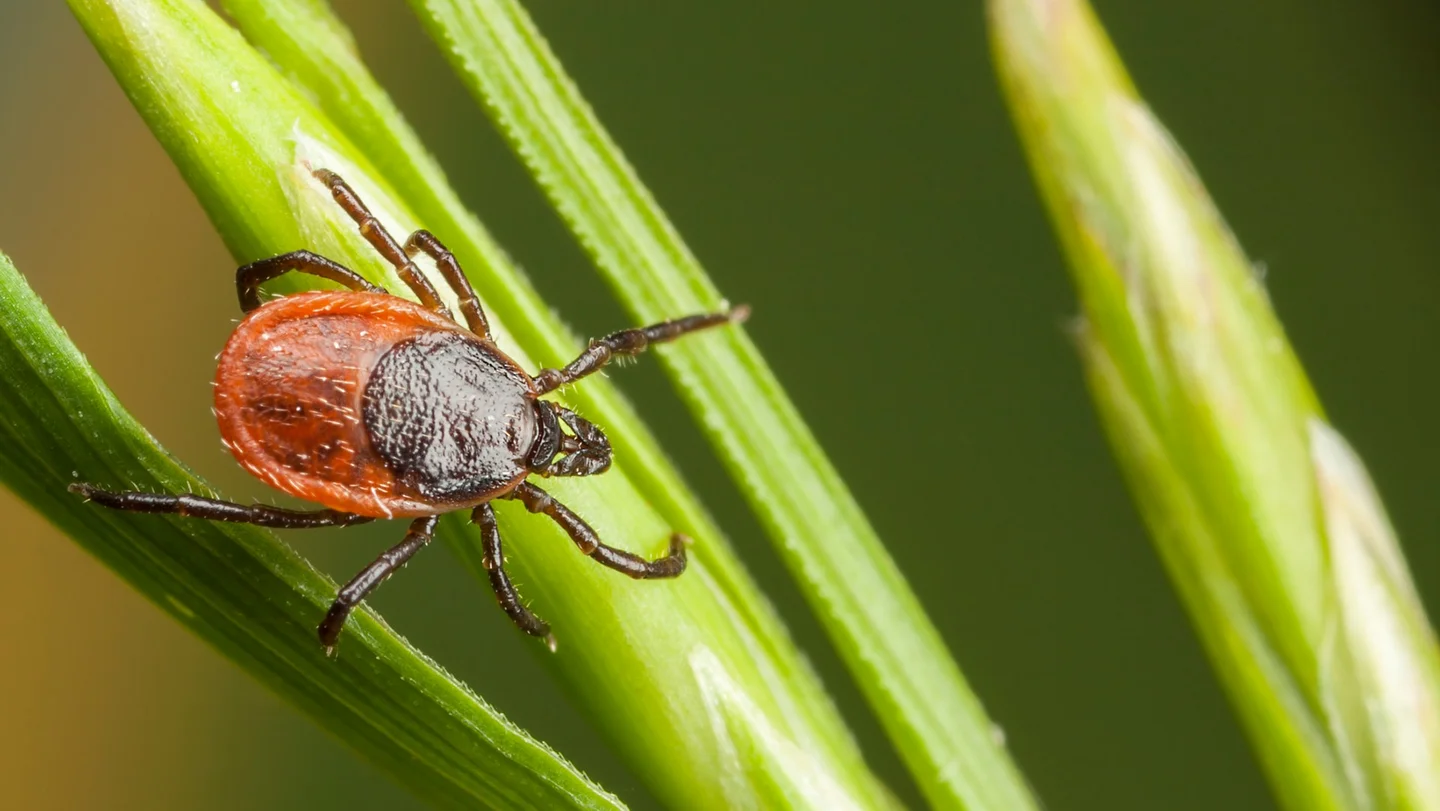
These viruses are primarily carried by small, wild rodents such as wood mice. Ticks can absorb the TBE pathogens from these animals and transmit them to humans through their bite (“tick bites”).
If people are bitten by an infected tick, the viruses can enter their blood stream and cause TBE.
The German name “Frühsommer-Meningoenzephalitis” literally translates as “spring meningoencephalitis” and gives the impression that the condition is caused by tick bites in spring. In fact, ticks can transmit the TBE virus at any time of year.
The risk of TBE infection in Germany is highest from May to October as this is when ticks are at their most active.
Video What are the signs of TBE?
The video below explains more about the risk areas, modes of infection, and symptoms of a TBE infection.
This and other videos can also be found on YouTube
Watch nowThe privacy policy indicated there applies.
What are the symptoms of TBE?
Symptoms generally occur 7 to 14 days after infection. This is known as the incubation period. In some cases, it can last up to 28 days.
One in three people who are infected develop symptoms of illness. People infected with TBE are not contagious.

TBE symptoms generally occur in two phases:
Phase 1: mild TBE
The first indications of infection are general fatigue and flu-like symptoms such as a headache, high temperature and aching limbs. Stomach aches and vomiting are also possible.
These symptoms usually disappear after a few days. About half of those infected are then fully recovered from TBE.
Phase 2: severe TBE
The other half temporarily improve but then find that their temperature rises again and they experience inflammation of the meninges, brain or spinal cord.
The meninges are most commonly affected: Inflammation of the meninges (meningitis) seriously impacts general wellbeing and causes severe headaches and a very high temperature (fever). Children can seem listless (apathetic) or have seizures.
In about 40 percent of patients, the brain is affected in addition to the meninges (meningoencephalitis). This results in impaired consciousness and confusion.
In about 10 percent of people infected, the meninges, brain and spinal cord all become inflamed (meningoencephalomyelitis). This causes paralysis of the arms and legs. Damage to the cranial nerves manifests itself through facial paralysis and problems hearing, swallowing or speaking.
What causes TBE?
TBE viruses are transmitted to humans by “castor bean ticks” and “meadow ticks”.
Ticks are found in undergrowth, grass and bushes at a height of 30 to 60 centimeters. They do not fall from trees. In the mountains, they can survive at altitudes of up to about 1,500 meters above sea level.
Ticks become active in areas of high humidity at temperatures of around 6 to 8 degrees. Meadow ticks can even be active at temperatures of around 4 degrees.
Important: By far not every tick bite leads to a TBE infection. Even in high-risk areas, a maximum of 5 percent of the ticks are carriers of the TBE virus.
On rare occasions, a TBE infection can also be caused by consuming infected unpasteurized milk. Milk that has been sufficiently heated (pasteurized), on the other hand, does not pose a risk as this process kills all pathogens.
What is the outlook for TBE?
Many people recover from TBE after the initial phase of the illness. Some experience a second phase of illness with flu-like symptoms after about a week.
Inflammation of the meninges (meningitis), the brain (encephalitis) and, in rare cases, the spinal cord (myelitis) are characteristic of this phase.
Inflammation of the meninges generally clears up without consequence. If the brain is also inflamed, lasting damage is expected in 20 percent of cases.
Permanent damage is more frequent if the spinal cord is also affected. In severe cases, patients may be left with paralysis or epileptic seizures.
The illness can also be fatal.
Children have a higher chance of fully recovering from a severe case of TBE than adults.
Adults over the age of 60 and people with a weak immune system are at higher risk of severe TBE.
Where and how commonly does TBE occur?
On the whole, TBE is a rare condition: 475 infections were reported in Germany in 2023. In 2022, there were 565 reported cases of TBE.
Men are twice as likely as women to become infected with TBE.
In Germany, cases of TBE are found in the following regions:
- Bavaria
- Baden-Württemberg
- South Hesse
- Saxony
- South-east Thuringia
- South-east Brandenburg
There are also certain high-risk areas in:
- Central Hesse
- Saarland
- Rhineland-Palatinate
- Lower Saxony
- North Rhine-Westphalia
How great is the risk of being infected by TBE?
It is only possible to be infected in regions where there are ticks that carry the TBE virus. As only some ticks carry the virus, not all tick bites result in infection.
Even in high-risk areas like Bavaria, only about one in ten ticks carry the virus.
Furthermore, not everyone infected develops symptoms. These affect one in three people at most.
The latest information about high-risk areas for TBE in Germany can be found on the Robert Koch Institute website.
How can people protect themselves against TBE?
Severe TBE can have serious consequences such as paralysis. Effective TBE prevention is therefore extremely important – especially for people in high-risk areas.
There are two effective measures for preventing TBE:
- immunization
- avoiding tick bites
Vaccination against TBE
The Robert Koch Institute’s Standing Committee on Vaccination (Ständige Impfkommission – STIKO) recommends vaccination for people who live in or regularly frequent high-risk areas for TBE and are susceptible to tick bites.
The recommendation particularly applies to people who frequently spend time in forests or meadows (e.g. due to their job). There is also a travel vaccination for high-risk areas outside Germany.

Immunization occurs in line with the following schedule:
- Primary immunization involves three vaccine doses. After these, 99 percent of those vaccinated are protected against TBE for at least 3 years.
- Booster vaccines are recommended every 3 to 5 years depending on people’s age and the vaccine used.
- People who have recovered from a TBE infection are still advised to boost their immunization protection with a vaccine 3 to 5 years after their illness as infection does not offer permanent protection.
- Children can be vaccinated once they are over 12 months of age.
- Health insurance providers generally cover the cost of TBE vaccinations for people who live in or travel to high-risk areas. Employers cover the cost for people in certain occupations, such as forestry workers.
The vaccine is directly injected into the muscle and is generally well tolerated. Around 10 in every 100 people experience temporary pain, redness and swelling at the injection site. Flu-like symptoms are also possible.
Answers to frequently asked questions about the TBE vaccine can be found on the Robert Koch Institute (RKI) website.
Video How do vaccinations work?
The video below explains how a vaccination works.
This and other videos can also be found on YouTube
Watch nowThe privacy policy indicated there applies.
Avoiding tick bites
The general protective measures include:
- ensuring clothing is tucked in
- avoiding undergrowth
- applying insect repellent to the body
Other practical tips on how to protect yourself against tick bites and TBE can be obtained from the Federal Center for Health Education (Bundeszentrale für gesundheitliche Aufklärung – BZgA) (in German only).
How is TBE diagnosed?
In suspected cases of TBE, doctors will start by asking the following:
- Have you been in a high-risk area for TBE?
- Can remember being bitten by a tick?
- Do you have or have you had flu-like symptoms such as a headache and high temperature?
Infection with TBE viruses is confirmed by testing the blood or cerebrospinal fluid (liquor) in a laboratory.
In the event of infection, special antibodies that target the virus can be found.
In some cases, a magnetic resonance imaging (MRI) scan of the brain or spinal cord is also performed to detect inflammation caused by the virus.
How is TBE treated?
There is no special treatment for TBE, i.e. there are no drugs that can directly combat the virus.
Doctors can solely treat the symptoms of the infection to alleviate these and help the body recover.
TBE treatment options include:
- painkillers, especially to alleviate headaches
- antipyretic (fever-reducing) medication
- anti-epileptic drugs if seizures occur
Drugs containing cortisone should be avoided as they can weaken the body’s natural immune defenses.
Important: Anyone with a suspected TBE infection should be hospitalized and clinically monitored. This is because their condition can rapidly deteriorate, resulting in a need for intensive care treatment.
What rehab options are there for TBE?
People who suffer from severe TBE often require medical rehabilitation (rehab) after their treatment.
Physiotherapists and speech therapists help patients reduce the after-effects of TBE.
How do you correctly remove a tick?
Anyone who finds a tick on their body should remove it as quickly as possible. As it is impossible to know whether a tick is infected, ticks should generally be removed.
When removing a tick, proceed calmly and systematically so that as little of it as possible remains in the wound:
- Never use oil or glue.
- Use tweezers, a tick hook or a tick removal card from a pharmacy.
- Try to grasp the tick on its head and mouth parts right against your skin – do not grasp its body.
- Avoid squashing the tick.
- Pull the tick out straight and relatively slowly.
- Thoroughly disinfect the puncture site.
- Deutsche Gesellschaft für Neurologie e.V. (DGN). Frühsommer-Meningoenzephalitis (FSME). S1-Leitlinie. AWMF-Registernummer 030 – 035. 01.2020.
- DynaMed (Internet), Ipswich (MA). Tick-borne Encephalitis. ESBO Information Services. Aufgerufen am 16.03.2023.
- Institut für Qualität und Wirtschaftlichkeit im Gesundheitswesen (IQWiG). Frühsommer-Meningoenzephalitis (FSME). gesundheitsinformation.de. Aufgerufen am 16.03.2023.
- Robert Koch-Institut (RKI). Antworten auf häufig gestellte Fragen zur FSME-Impfung. Aufgerufen am 16.03.2023.
- Robert Koch-Institut (RKI). Antworten auf häufig gestellte Fragen zu Zecken, Zeckenstich, Infektion. Aufgerufen am 16.03.2023.
- Robert Koch-Institut (RKI). RKI-Ratgeber. Frühsommer-Meningoenzephalitis (FSME) und verwandte Virusenzephalitiden (TBE, tick-borne encephalitis). Aufgerufen am 16.03.2023.
- Robert Koch-Institut (RKI). FSME: Risikogebiete in Deutschland. Epidemiologisches Bulletin. 9/2022.

Reviewed by the German Brain Foundation (Deutsche Hirnstiftung e.V. – DHS)
As at: