How defenses can be strengthened
There is a large range of products for improving one’s defenses. But for very few of them is there any reliable evidence that they are effective. A healthy lifestyle, however, contributes directly to the strengthening of one’s defenses.
At a glance
- The purpose of the immune system is to protect against pathogens.
- Our defenses get weaker with age.
- The right diet, exercise, adequate sleep and stress avoidance are natural ways of generally helping the immune system and strengthening one’s defenses.
- Vaccinations train the defenses and also provide targeted protection against dangerous pathogens.
Note: The information in this article cannot and should not replace a medical consultation and must not be used for self-diagnosis or treatment.


What should people know to begin with?
The immune system protects against foreign substances or organisms in the environment. These include pathogenic bacteria and viruses, for example the recent SARS-CoV-2 coronavirus. Interest in subjects like hygiene, avoiding infections and strengthening the defenses increases in the autumn and winter months, in particular. Many people wonder how they can improve their defenses.
If this questions is put into an online search engine, there will be thousands of links to products and supplements that claim to strengthen the immune system and protect against various illnesses. However there is often no scientific proof for the claims they make. On the contrary, studies show that simple lifestyle changes such as healthy, balanced eating, plenty of exercise, adequate relaxation to counter everyday stress, healthy sleep and, last but not least, vaccines have a positive effect on the immune system, so they can strengthen one’s defenses.
How does the immune system work?
The immune system largely consists of two components, the innate and adaptive immune response.
The skin, mucous membranes, lungs and gut are the body’s so-called barrier organs. In these organs there are many innate immune system cells: the barrier organs prevent microorganisms from penetrating the body. If germs get past these barriers, other components (immune cells and proteins) of the innate immune system in the inside of the body respond to any intrusive pathogens. In this context, experts speak of the non-specific immune response.
In contrast, the so-called adaptive immunity is specific. This means that specific immune cells and defense substances (antibodies) identify a particular pathogen and quickly attack it. This part of the immune response is capable of learning and can be trained using vaccines.
Video What are antibodies?
The following video explains what antibodies are and what they do.
This and other videos can also be found on YouTube
Watch nowThe privacy policy indicated there applies.
The importance of the defenses usually only becomes apparent when they are weakened, for instance by lack of sleep, general stress or infections.

Like other organs, the human immune system also undergoes an aging process. This means that the defenses get weaker as a person grows older, and they become more susceptible to infections. These aging phenomena cannot be entirely prevented or held up. However, throughout our lives simple measures can maintain the defenses for longer.
Video How do immune responses work?
Watch this video to discover how the immune system responds when pathogens penetrate the body.
This and other videos can also be found on YouTube
Watch nowThe privacy policy indicated there applies.
Why does stress weaken the defenses?
When stress prevails and persists over a period of time, it has a negative effect on the immune defense, and increases susceptibility to inflammatory illnesses and infections. Antibody production can also decrease when stress is long-term, and this causes the immune defense to deteriorate and vaccines to become less effective.
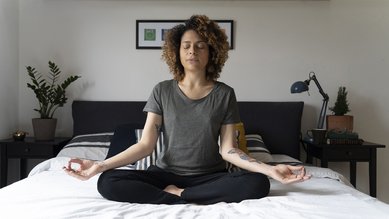
A well-known cause of long-term stress is exam time in school, at work, and in further education. This type of mental stress over long periods can lead to inflammations that affect the immune defense and increase the risk of chronic illness. To prevent this, long-term stress should be avoided. However, the extent to which relaxation techniques such as mindfulness-based stress reduction are useful in strengthening the immune system has not been definitively resolved.
How can diet strengthen the immune system?
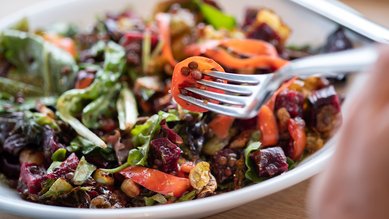
A balanced, healthy diet does not just promote healthy flora in the intestine, it gives the body an adequate supply of key vitamins and minerals that the immune system needs. These particularly include vitamins B1, B6, B12, vitamins C and D, folic acid, niacin, and the minerals zinc, selenium and iron. But taking additional food supplements to cover the daily requirement is not normally necessary.
It is less well-known that other nutrients such as fibers, certain protein elements, Omega-3 fatty acids and probiotics also have a positive effect. For example, the protein element tryptophan promotes the defenses in the intestinal mucous membrane, while Omega-3 fatty acids, fibers and probiotics, of which yogurt is one, work against inflammations.
Does exercise strengthen the immune defenses, too?
Physical activity also has an influence on how the immune system works. A lack of activity plays a part in immune cells not adequately getting to all the organs via the circulatory system. Various studies suggest that an active lifestyle with regular exercise slows down the aging of the immune system, reduces inflammatory reactions, and improves the defense against viruses and bacteria.

So regular activity and physical fitness are recommended as a measure to help strengthen the defenses.
Important: By exercising in the fresh air, a person can “kill two birds with one stone”: the skin forms vitamin D outdoors if it is exposed to sunlight and its UV radiation. This vitamin is also important for a strong immune defense.
What role does sleep play for the defense system?
A very common problem nowadays is that of sleep disorders. People with sleep disorders are very often plagued by general stress and over-thinking. In these cases experts advise plenty of relaxation to balance out the stress. But what is easily forgotten is that sleep also plays a major role in maintaining and strengthening the defenses. During sleep, the body regenerates the immune system and the hormone balance, flushes out the day’s ballast from the brain and nervous system, and regulates the metabolism. Sleep also plays a vital part in learning and memory.
Sleep also acts against infections. Up to now, this has been best researched in people suffering from a chronic lack of sleep. According to studies, they suffer more from illnesses that are caused by chronic inflammatory reactions, such as diabetes, vascular calcification (arteriosclerosis), and disorders of the nervous system.
How do vaccinations help the defenses?
Vaccinations that, in Germany, are recommended by the Standing Committee on Vaccination (Ständige Impfkommission – STIKO) of the Robert Koch Institute (RKI) are another way of strengthening one’s defenses. The purpose of a vaccination is to protect against particular pathogens. It prevents infections from those pathogens, or makes any infection far milder.
A good example is the flu vaccine that is recommended for everyone over the age of 60: the vaccine generates an “immunological memory” that causes the immune system to activate quickly and effectively to protect against the virus if there is any contact with the latest flu virus.
What conclusion can be drawn?
Many people want a strong immune system to avoid the common cold, to get through the annual flu season, and to make it unscathed through the COVID-19 pandemic. To achieve this, there is no need for food supplements, because all the nutrients we need are adequately provided by a healthy, balanced diet. There are also various life areas that also affect the defenses but which are often forgotten: stress avoidance, adequate sleep and exercise, and spending time outdoors also help the immune system to do its work.
- Besedovsky L et al. The Sleep-Immune Crosstalk in Health and Disease. Physiol Rev 2019. 99(3): 1325–1380. Aufgerufen am 13.01.2021.
- Bulut O et al. Overcoming immune dysfunction in the elderly: trained immunity as a novel approach. International Immunology 2020. 32(12): 741–753. Aufgerufen am 13.01.2021.
- Da Silveira MP et al. Physical exercise as a tool to help the immune system against COVID‑19: an integrative review of the current literature. Clinical and Experimental Medicine 2020. 1–14. Aufgerufen am 13.01.2021.
- Doherty R et al. Sleep and Nutrition Interactions: Implications for Athletes. Nutrients 2019. 11(4): 822. Aufgerufen am 13.01.2021.
- Dragoş D & Tănăsescu MD. The effect of stress on the defense systems. Journal of Medicine and Life 2010. 3(1): 10–18. Aufgerufen am 13.01.2021.
- Dugan HL et al. Aging and influenza vaccine-induced immunity. Cellular Immunology 2020. 348: 103998. Aufgerufen am 13.01.2021.
- gesundheitsinformation.de. Das angeborene und das erworbene Immunsystem. Aufgerufen am 13.01.2021.
- Galmés S et al. Current State of Evidence: Influence of Nutritional and Nutrigenetic Factors on Immunity in the COVID-19 Pandemic Framework. Nutrients 2020. 12: 2738. Aufgerufen am 13.01.2021.
- Hapke U et al. Chronischer Stress bei Erwachsenen in Deutschland. Bundesgesundheitsblatt – Gesundheitsforschung –Gesundheitsschutz 2013. 56:749–754. Aufgerufen am 24.11.2020.
- Iddir M et al. Strengthening the Immune System and Reducing Inflammation and Oxidative Stress through Diet and Nutrition: Considerations during the COVID-19 Crisis. Nutrients 2020. 12: 1562. Aufgerufen am 13.01.2021.
- Pera A et al. Immunosenescence: Implications for response to infection and vaccination in older people. Maturitas 2015. 82(1): 50–55. Aufgerufen am 13.01.2021.
- Robert Koch-Institut. Impfkalender (Standardimpfungen) für Säuglinge, Kinder, Jugendliche und Erwachsene; 2020/21. Aufgerufen am 13.01.2021.
- Turner L et al. Immune dysregulation among students exposed to exam stress and its mitigation by mindfulnesstraining: findings from an exploratory randomised trial. Nature Scientific Reports 2020; 10: 5812. Aufgerufen am 13.01.2021.
- Wessels I, Rink L. Micronutrients in autoimmune diseases: possible therapeutic benefits of zinc and vitamin D. J Nutr Biochem. 2020. 77:108240. Aufgerufen am 13.01.2021.
- Weyh C et al., Physical Activity and Diet Shape the Immune System during Aging. Nutrients 2020. 12: 622. Aufgerufen am 13.01.2021.

Reviewed by the German Society for Immunology (Deutsche Gesellschaft für Immunologie e.V.)
As at: