Rosacea
ICD codes: L71 What are ICD codes?
Many people struggle with facial redness, pustules, and small visible blood vessels. This might be due to a common inflammatory condition of the facial skin known as rosacea. Learn what can help and how to identify possible rosacea triggers.
At a glance
- Rosacea is a disease that causes chronic inflammation of the facial skin. It is not contagious.
- The degree of severity can vary and it can appear on the cheeks, chin, forehead, and nose.
- The causes of rosacea are not fully understood.
- Many of those affected discover over time what triggers their rosacea flare-ups.
- Rosacea typically only develops after the age of 30.
- The disease affects approximately two to five percent of all adults in Germany.
Note: The information in this article cannot and should not replace a medical consultation and must not be used for self-diagnosis or treatment.
What is rosacea?
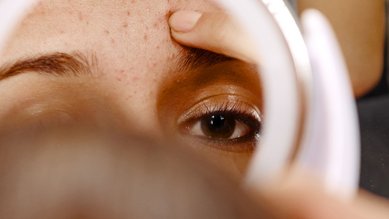
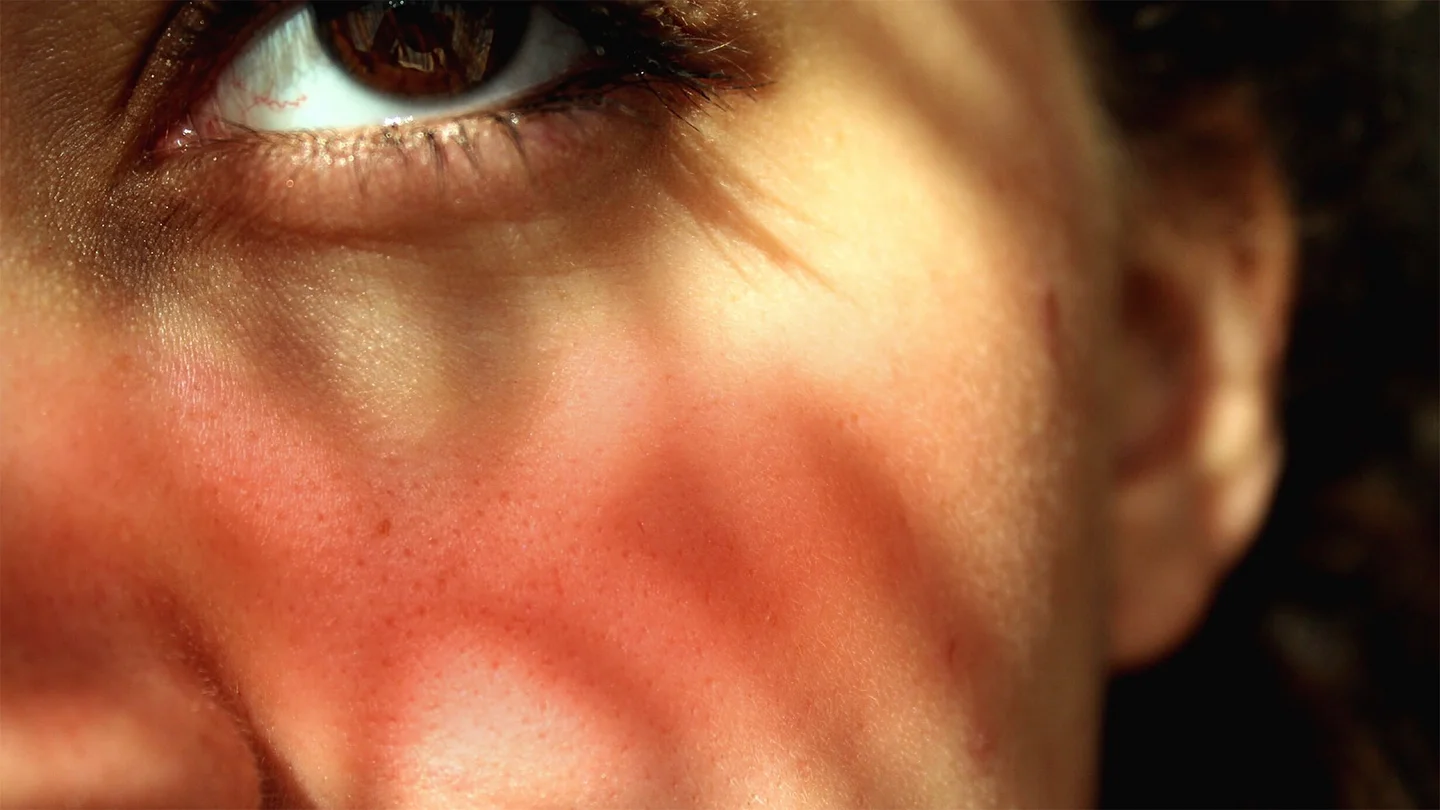
Redness, visible small blood vessels, and pustules on the face: these are typical signs of rosacea, a common inflammatory condition of the facial skin that often comes and goes.
Those affected often do not know that their facial redness is caused by a disease. Like other visible skin diseases, rosacea can affect a person’s well-being and confidence. However, it is possible to alleviate symptoms and prevent rosacea flare-ups.
What are the symptoms of rosacea?
The degree of severity can vary and rosacea can appear on the cheeks, chin, forehead, and nose.
There are four types of rosacea with different symptoms:
- Type 1 includes facial redness sometimes with visible small blood vessels.
- Type 2 includes facial redness as well as papules and pustules.
- Type 3 includes thickening of the skin and inflammatory nodules, primarily on the nose.
- Type 4 includes inflammation of the eyes and eyelids, sometimes without any noticeable dermatological symptoms.
Rosacea can also cause the skin to be dry and susceptible to swelling and to peel, burn, or itch. The skin of those with rosacea is more sensitive than healthy skin.
The disease can manifest differently and there are many combination forms. The skin of the neck, chest, and scalp can sometimes also become inflamed.
What causes rosacea?
The causes of rosacea are not yet fully understood. The following are thought to play a role:
- Inflammatory and immune reactions
- Changes to the blood vessels in the skin
- Family history
- Impaired protective function of the skin
- Oversensitivity to certain mites (hair follicle mites) or bacteria
Flare-ups can be triggered by sunlight, extreme heat or cold and stress, among other factors.
The long-term use of cortisone products can also cause symptoms similar to rosacea. However, the risk of steroid rosacea is very low when used properly.
How common is rosacea?

Rosacea typically begins after the age of 30. The disease affects approximately two to five percent of all adults in Germany. It is more common in women than in men, and people with fair skin are more susceptible. Many people with chronic facial redness do not realize that they have a skin disease.
What course does rosacea take?
Rosacea often comes and goes, i.e., phases with significant skin changes are followed by phases in which the skin recovers or the inflammation disappears.
The skin can change over time and other symptoms can arise. In many cases though, the symptoms remain the same for a long time.
In men in particular, the nose can become bulbous over time resulting in a condition known as rhinophyma.
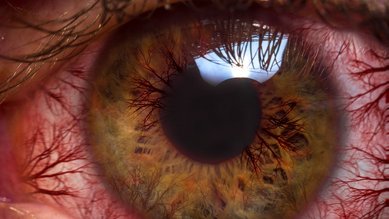
Rosacea can affect the eyes in various ways. They can be red and itchy, can water, and can be sensitive to light. If the sebaceous glands in the eyelids become blocked, the eyes can also become dry. Inflammation of the conjunctiva, edge of the eyelid, and the cornea is also possible. This can be painful and feel like there is a foreign object in the eye.
How can rosacea be prevented?
Many people with rosacea notice over time that certain triggers cause new flare-ups. In general, anything that causes facial redness can also intensify rosacea. Typical triggers include:
- alcohol
- hot drinks
- cosmetics and irritating soaps
- skin lesions
- certain medications like vasodilators
- spicy seasonings and foods
- sunlight
- extreme heat or cold
A rosacea diary can help to identify possible triggers. Knowing possible triggers makes it possible to avoid at least some of them.
For more information about preventing rosacea, visit gesundheitsinformation.de.
How is rosacea diagnosed?
Dermatologists diagnose rosacea based on characteristic skin changes. If the eyes are also affected, ophthalmologic examination is often recommended.
How is rosacea treated?
Treatment depends on the type and severity of the disease. If the symptoms are mild, a good skin care regimen is often sufficient. Appropriate sun protection and soap-free cleaning products with a low pH value are recommended. In addition, irritants should be avoided. Skin-compatible cosmetics can be used to cover up skin changes.
Medications to be applied to the skin, e.g. creams, gels, or lotions with the active ingredients azelaic acid, brimonidine, ivermectin, or the antibiotic metronidazole, are typically used in the case of significant skin changes. Again, the medication to be used depends on the type of rosacea.
If the symptoms are severe or if externally applied medications are not effective, the antibiotic doxycycline can be taken to inhibit inflammation. In addition to medication, rhinophyma can also be treated with surgery.
What is everyday life like with rosacea?
Rosacea is normally harmless but the facial redness can have a significant emotional impact on those affected, for example when people stare or think that the “red nose” is due to excessive alcohol consumption. Unlike acne, for example, the skin disease is not particularly well known. Therefore, it can be helpful to speak openly about rosacea with family, friends, and colleagues.
Make-up with good coverage can help to conceal the redness. However, some cosmetics can aggravate rosacea. Therefore, it is important to test various products. A dermatologist can provide guidance.
- Augustin M, Herberger K, Hintzen S, Heigel H, Franzke N, Schäfer I. Prevalence of skin lesions and need for treatment in a cohort of 90 880 workers. Br J Dermatol 2011; 165(4): 865-873. Aufgerufen am 17.10.2024.
- National Rosacea Society (USA). Information For Patients. 2023.
- Rebora A. Papulopustular rosacea. In: Williams H, Bigby M, Diepgen T, Herxheimer A, Naldi L, Rzany B (Ed.). Evidence-based Dermatology. London: Blackwell Publishing; 2008. S. 105-110.
- Van Zuuren EJ. Rosacea. N Engl J Med 2017; 377(18): 1754-1764. Aufgerufen am 17.10.2024.
- Van Zuuren EJ, Fedorowicz Z, Tan J et al. Interventions for rosacea based on the phenotype approach: an updated systematic review including GRADE assessments. Br J Dermatol 2019; 181(1): 65-79. Aufgerufen am 17.10.2024.

In cooperation with the Institute for Quality and Efficiency in Health Care (Institut für Qualität und Wirtschaftlichkeit im Gesundheitswesen – IQWiG).
As at: