Skip navigation
gesund.bund.de - Reliable information for your health gesund.bund.de - Reliable information for your health
  • Deutsch
  • English
  • Türkçe
  • Русский
  • عربي
Sprache Language Dilim Язык اللغة
Search
  • Display format Display format
  • Sign language Sign language
  • Simple language Simple language
  • Bookmark list Bookmark list (0)
 
Skip navigation
  • Healthcare

    • Healthcare

    • The healthcare system
    • Health literacy
    • Help and advice
    • Patient rights
    • Self-help
    • Services and benefits

    • Health insurance
    • Benefits for those with health insurance
    • Prescription drugs
    • Prevention and screening
    • Out-of-hospital intensive care
  • Care

    • Topics

    • Long-term care insurance
    • Care benefits
    • Family carers
    • Everyday care and home life
  • Digital health

    • Digitization in healthcare

    • Health and digitization
    • Telemedicine
    • Digital applications

    • Electronic health record (ePA)
    • Electronic medical data cards (eGK)
    • Health apps (DiGA and DiPA)
    • E-prescriptions
    • Electronic sick leave notice
  • Healthy living

    • Staying healthy

    • Diet and exercise
    • Saving lives and helping people
    • Managing addiction
    • Environment and health
    • Life stages

    • Growing up healthily
    • Workplace health
    • Pregnancy and birth
    • Health in old age
  • Conditions

    • Topics

    • Respiratory system
    • Eyes
    • Circulatory and lymphatic systems
    • Reproductive organs
    • Ear, nose and throat
    • Skin
    • Cardiovascular system
    • Hormones
    • Immune system
    • Head and nervous system
    • Psyche
    • Muscles, bones and joints
    • Kidneys and urinary tract
    • Digestion and metabolism
    • Teeth and gums
    • Special topics

    • Allergies
    • coronavirus
    • Infections and infectious diseases
    • Cancer
    • Conditions A–Z
  • Services

    • Information

    • Emergency numbers
    • ICD and OPS codes
    • Conditions A–Z
    • Glossary
    • Infection radar
    • Media library
    • Search functions

    • Doctor search
    • Hospital search
    • Pharmacy search
 
  • Display format Display format
  • Sign language Sign language
  • Simple language Simple language
  • Bookmark list Bookmark list (0)

Nursing home costs when absent – when is a reduction possible?

Read out loud

These functions require cookies. Go to Settings

  • Content

  • At a glance
  • Introduction
  • Prolonged absence
  • Discount
  • Self-funded residents
  • Sources

The costs of a nursing home are reduced in the event of prolonged absence, for example due to a resident being in hospital. This article explains from when and to what extent a reduction is possible.  

At a glance

  • Residents are sometimes away from a nursing home for a prolonged period, for example due to being in hospital.
  • The law stipulates that nursing home operators must reduce some of the costs for the home in the event of prolonged absence. 
  • Prolonged absence means that a resident is away from the nursing home for more than 3 full days.
  • The legally regulated cost reduction only applies to people who receive benefits from long-term care insurance or a social welfare authority. The same applies to the entitlement to the place in the home in the event of absence. 
  • Self-funded residents should contractually establish rules on absence.
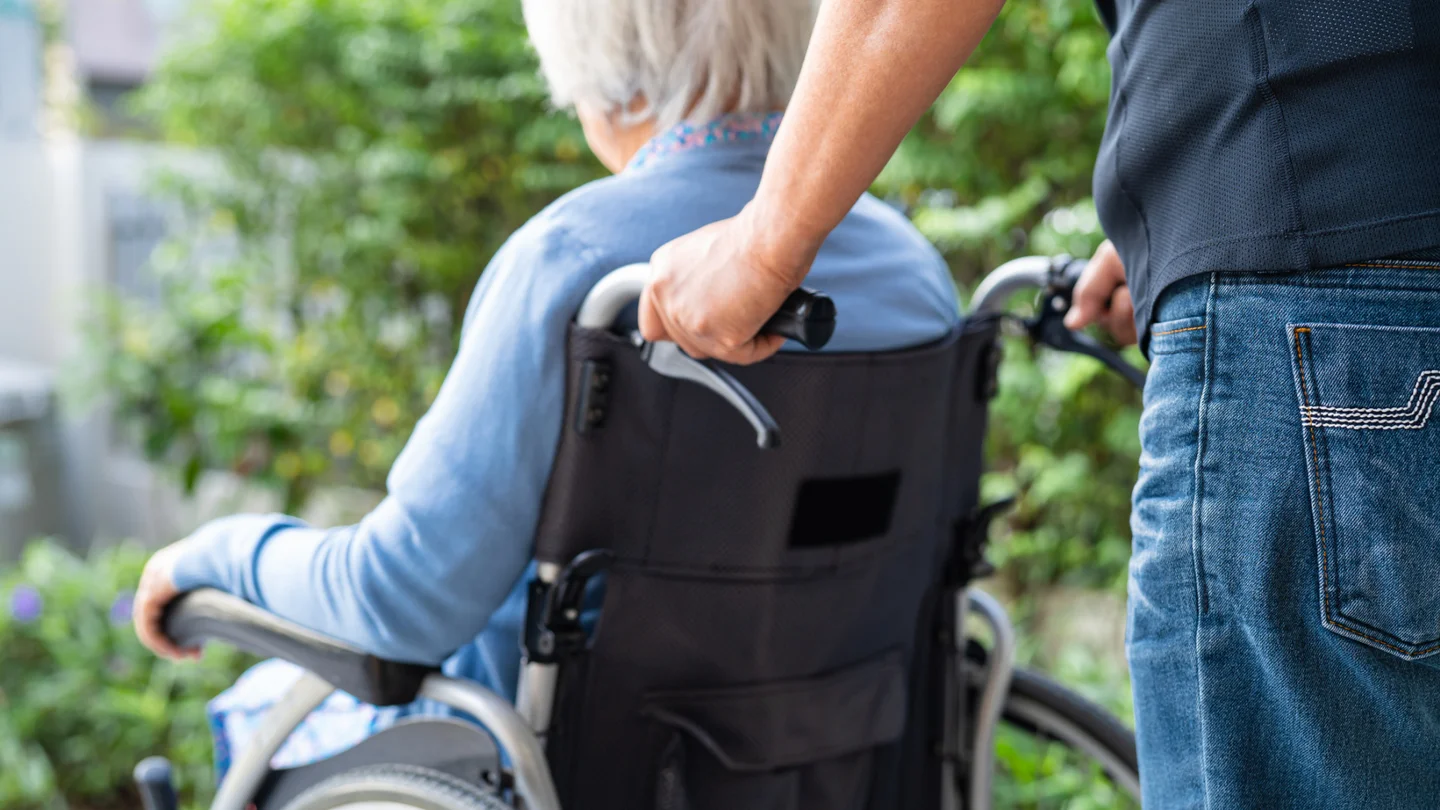
Eine Seniorin sitzt in einem Rollstuhl, der von einem Mann geschoben wird. Eine Seniorin sitzt in einem Rollstuhl, der von einem Mann geschoben wird.

Nursing home costs when absent

Various costs are incurred in relation to residential care in a nursing home, for example for care, accommodation and meals. However, people can sometimes be absent from a nursing home for a prolonged period. There can be various reasons for this, including them having been admitted to hospital or a rehab facility but also them visiting family or going on vacation.

In such cases, the law stipulates that the cost of certain fee components must be reduced for people who receive benefits from long-term health insurance or a social welfare authority. There are no such legal regulations for self-funded residents.

Potential reasons for a prolonged absence from a nursing home: hospitalization, rehabilitation stay, family visit or vacation.

What classes as a prolonged absence?

If residents are absent from a nursing home for more than 3 days, this is classed as a prolonged absence. An entitlement to a reduction in certain cost elements exists from the fourth day.

Days of absence solely include days on which a resident has been absent from the home for the full 24 hours from midnight to midnight. If, for example, a resident leaves the care home at 7 a.m. to go to hospital for several days, the departure day is still classed as a day of attendance at the nursing home.

Important: People who receive benefits from long-term care insurance or a social welfare authority can leave the nursing home for a maximum of 42 days a year for vacations or to visit family without losing their entitlement to the place in the home. No maximum period applies in the event of hospitalization or stays in rehab facilities. 

To what extent are the costs reduced in the event of absence?

If people who receive benefits from long-term care insurance or a social welfare authority are absent from a nursing home for more than 3 full days, the home operator must reduce the amount of certain cost components by at least 25 percent. These include the costs of accommodation, meals and care, as well as any surcharges for integrated care. Residents do not have to do anything for the cost reduction to take effect. However, it is advisable for them to check whether the home operator has correctly reduced the costs.

If a resident is absent for more than 3 full days, the nursing home operator must reduce a large part of the costs by at least 25 percent.

Other cost components are not reduced in the event of prolonged absence. These include investment costs, for example, i.e. costs for necessary renovation measures and maintenance work on the nursing home. Costs for the remuneration of trainees, known as training costs, are also still charged in the event of prolonged absences. This is because nursing homes still incur these kinds of general costs even if a resident is absent. All residents benefit from nursing home renovations, for example.

The reduction of costs by 25 percent is the legal lower limit. In some federal states, the cost reduction in the case of prolonged absence can be higher. The precise percentage is regulated in the states’ framework agreements on full-time residential care. Residents can also ask their own long-term health insurance what applies in the federal state in which they are based.

Good to know: If a nursing home only settles costs at the end of a month, days of absence are usually taken into account directly. However, most nursing homes charge for services in advance. In this case, any overpayment must be credited to a resident’s bill. This is usually done the following month. 

What applies to self-funded residents?

No legal requirements apply with regard to people who do not receive benefits from long-term care insurance or a social welfare authority and therefore self-fund the nursing home costs. In such cases, it is advisable to contractually agree upon a reimbursement of costs in the event of prolonged absence, for example on a flat-rate or percentage basis. It is also advisable to contractually agree the entitlement to the place in the nursing home in the event of prolonged absence.

  • Bundesministerium der Justiz. Sozialgesetzbuch (SGB) – Elftes Buch (XI) – Soziale Pflegeversicherung. Stand: 30.05.2024. 
  • Bundesministerium der Justiz. Gesetz zur Regelung von Verträgen über Wohnraum mit Pflege- oder Betreuungsleistungen (Wohn- und Betreuungsvertragsgesetz – WBVG). Stand: 30.11.2019. 
  • Verbraucherzentrale. Pflegeheim-Kosten: Wann werden die Kosten bei Abwesenheit gekürzt? Aufgerufen am 25.03.2025. 

Badge

Reviewed by the Consumer Advice Center of Rhineland-Palatinate (Verbraucherzentrale Rheinland-Pfalz e.V. – VZ RLP).

As at: 17.06.2025
Did you find this article helpful?
Thank you for your feedback!
Thank you for your additional comments!
Sorry, your response could not be submitted due to a technical error.

Get informed Recommended articles

Deficiencies in long-term care – who can I turn to for help?

There are various points of contact for people experiencing deficiencies in long-term care provision. A legal dispute is best avoided if possible.

Find out more

Determining the quality of care facilities

Quality is an important criterion when selecting a care facility. But how can you determine this? Read on to find out more about standards and inspection procedures.

Find out more

Full-time residential care

Full-time residential care is an option if people who are in need of care cannot be cared for at home. This article discusses points to consider in terms of costs and the choice of a care facility.

Find out more

Back to top
Logo - Bundesministerium für Gesundheit Logo - Bundesministerium für Gesundheit

gesund.bund.de A service from the Federal Ministry of Health.

Useful links

  • Topic overview
  • User advice
  • Website overview

Services

  • Help and advice
  • Accessibility
  • Report an accessibility barrier

About us

  • About gesund.bund.de
  • Quality assurance
  • Our partners
  • Contact

Important emergency numbers

  • Fire and ambulance services 112 112
  • Non-emergency medical assistance 116117 116117
  • Emergency numbers

Certifications

  • afgis-Qualitätslogo mit Ablauf 2026/03: Mit einem Klick auf das Logo öffnet sich ein neues Bildschirmfenster mit Informationen über Bundesministerium für Gesundheit (BMG) und sein/ihr Internet-Angebot: gesund.bund.de/
  • Logo DNGK 2025-2026
  • BIK - BITV-konform (geprüfte Seiten), zum Prüfbericht

© Copyright 2026 Bundesministerium für Gesundheit Data protection Legal notice