Premenstrual syndrome (PMS)
ICD codes: N94.3 What are ICD codes?
Premenstrual syndrome (PMS) refers to symptoms that women can have before their monthly period. Typical symptoms include mood swings, headaches and abdominal pain. PMS can badly affect a person’s quality of life. Various measures can help to alleviate the symptoms.
At a glance
- PMS stands for premenstrual syndrome, which comprises symptoms that women may experience before their regular menstrual period.
- Typical symptoms include mood swings, headaches, abdominal pain, irritability, tiredness, water retention, and breast tenderness.
- Around 20 to 40 percent of all women have bad PMS and feel affected in their everyday life.
- Various treatments and measures can help to alleviate the PMS symptoms.
- There is no definitive explanation as to what causes PMS.
Note: The information in this article cannot and should not replace a medical consultation and must not be used for self-diagnosis or treatment.

What is premenstrual syndrome?
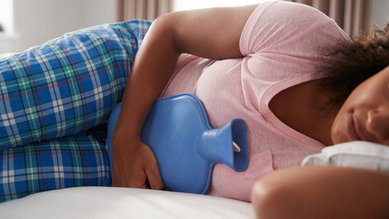
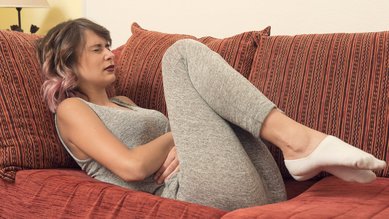
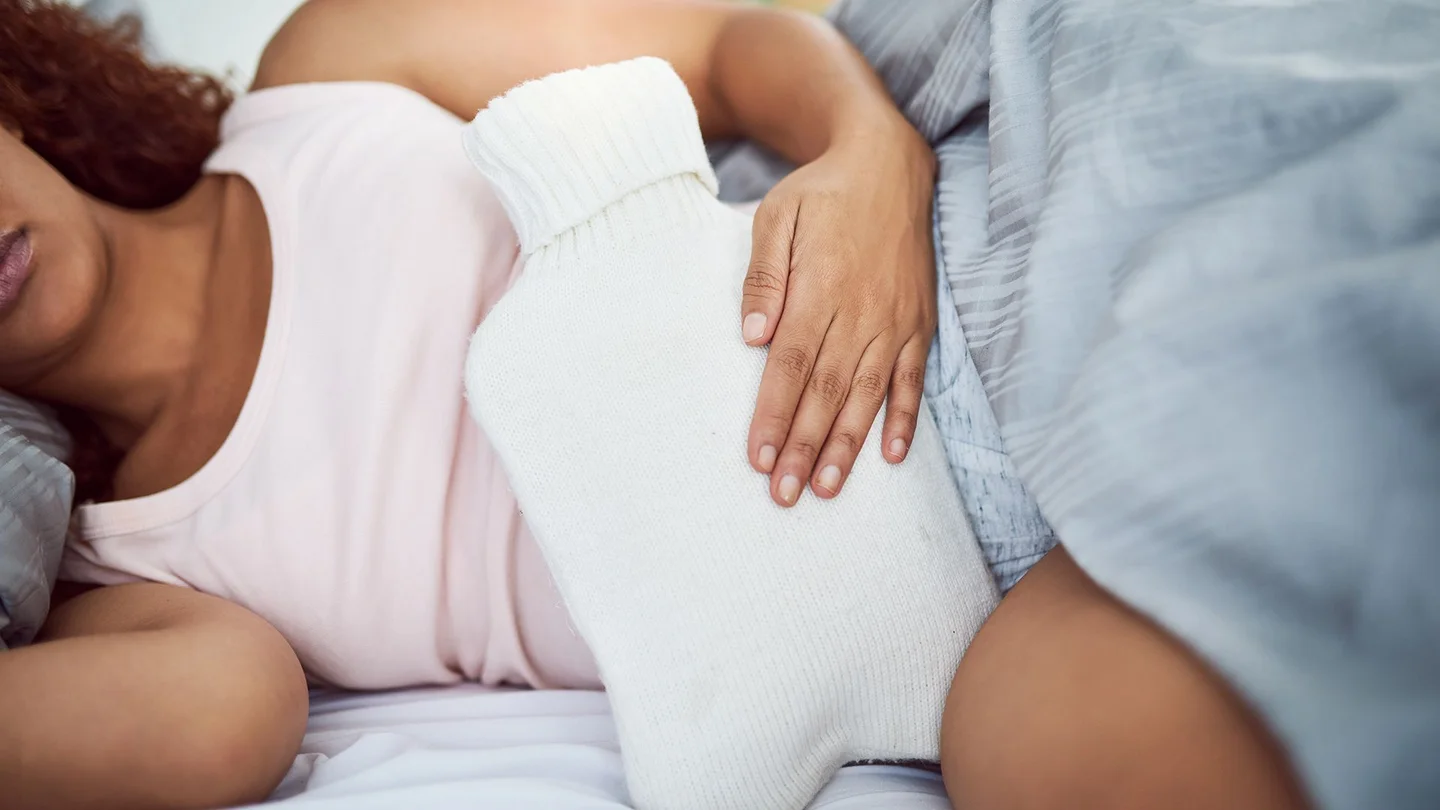
For many women, the days before their period are tough. Typical symptoms include stomach pains, headaches, irritability and tearfulness. Many also feel bloated or just generally unwell. What is described here is typical of premenstrual syndrome, or PMS for short.
Most women do not have bad PMS. They can be more or less relaxed about their problems. But some women are very badly affected by PMS. It is so bad that they are unable to carry out their everyday activities during this time. They can then alleviate the symptoms through various treatments and measures.
Which symptoms indicate premenstrual syndrome?
Premenstrual syndrome (PMS) is a combination of regularly recurring physical and psychological symptoms. They usually occur a few days to two weeks before a period.
Typical symptoms include breast tenderness and abdominal pain. Headaches, back ache, joint ache and muscle pains, water retention, sleeping and digestion problems, skin blemishes and a ravenous appetite may also occur.
In addition, some women also experience mood swings and have difficulty concentrating. Before their period, they often feel exhausted, irritable, listless, depressed, insecure or angry.
Premenstrual dysphoric disorder (PMDD) is a particularly severe form of PMS. It impacts the mind severely and can cause depression and feelings of anxiety.
What causes premenstrual syndrome?
There is no definitive explanation as to the cause of premenstrual syndrome (PMS). Hormonal fluctuations during the female cycle are probably responsible for the symptoms.
While the hormone level of women with PMS may not be changed, they may react more sensitively to progesterone by-products. The body mainly produces progesterone in the second half of the cycle, before the start of menstrual bleeding.
Experts also believe that there is an interaction between progesterone and the messengers in the brain. The chemical messenger serotonin appears to play a key role in this. Genetic predisposition and environmental factors probably affect PMS too.
How common is premenstrual syndrome?
Most women and girls occasionally experience isolated, mild PMS symptoms before their period. But they are not badly affected by them.
Around 20 to 40 percent of all women get multiple, and worse forms of, PMS symptoms. It affects them badly in their everyday life.

Around 3 to 8 percent of all females have a severe form of PMS. The symptoms, primarily psychological, are so bad that their life is severely impacted. This severe form of PMS is known as premenstrual dysphoric disorder (PMDD).
What is the outlook for people with premenstrual syndrome (PMS)?
Symptoms of premenstrual syndrome (PMS) are limited to the second half of the monthly cycle, after ovulation. That is when the body produces more of the hormone progesterone. At the same time, less of the female sex hormone estrogen is produced.
The PMS symptoms fade away once menstrual bleeding starts and a new cycle begins. The symptoms vanish entirely by the end of the period. They can then only reoccur after the next ovulation.
There are women who have symptoms in some cycles but not in others. The severity can differ hugely, and change as the years go by. It is impossible to predict how the symptoms will develop. It is only clear that the PMS will disappear with the final period at the menopause at the latest.
How is premenstrual syndrome diagnosed?
To find out whether the symptoms are caused by premenstrual syndrome, doctors ask about the woman’s symptoms and when they occur. The aim is also to rule out illnesses with similar symptoms, such as depression, thyroid conditions and irritable bowel syndrome.
Women can keep a diary in order to identify the symptoms during the cycle. All symptoms should be recorded for at least two to three months.
More information about PMS diaries can be found at gesundheitsinformation.de.
How is premenstrual syndrome treated?
To date, there are only few reliable studies dealing with the issue of what helps women with premenstrual syndrome. So the effectiveness of many treatments is still unclear.
Women and girls with PMS often use a range of products and methods to alleviate their symptoms. Even small lifestyle changes can have positive results – for example, more exercise, less alcohol and coffee, or a low-salt diet.
Relaxation techniques and acupuncture also seem to help some women. Others try herbal medicines and food supplements, for example, chasteberry (agnus castus), St. John’s wort, calcium and vitamin B6.
Important: A range of drugs can be considered for women whose symptoms are severe. However, many of these drugs have not been approved for PMS therapy and may have side effects.
The following drugs are often prescribed:
- Hormonal products like the pill or hormonal patches: these affect hormone levels and alleviate PMS and PMDD symptoms.
- Anti-depressants: SSRIs (selective serotonin reuptake inhibitors) can help when the PMS or PMDD comes with severe mental health symptoms.
- Painkillers: they can alleviate severe period pains and are usually well-tolerated. As yet there has been almost no research into whether they also help with PMS symptoms.
- Diuretics: these can be used if the patient is suffering from bad water retention.
Women who experience severe mental health symptoms can try cognitive behavioral therapy. However, it has not been established that this helps with PMS symptoms.
More detailed information about treatments for PMS symptoms can be found at gesundheitsinformation.de.
What can be done in everyday life in case of PMS symptoms?
Many women with premenstrual syndrome (PMS) benefit from taking things easier when symptoms occur. They take more breaks and relax more than usual. Helpful strategies might include going for a walk, having a warm bath, or a relaxed evening with a book or in front of the TV.
Some women talk to their partner or family about their symptoms. This can lead to them getting more understanding, attention and support during such times.
Other women fear that speaking out will lead to misunderstandings. For example, if they get irritable or angry, others might not take a problem seriously because they attribute their feelings to the PMS. There are also women who suffer from the prejudice that they are at the mercy of their hormones at such times, making them irrational and unpredictable.
- Beckermann MJ. Das prämenstruelle Syndrom - ein Konstrukt? In: Beckermann MJ, Perl FM (Ed). Frauen-Heilkunde und Geburts-Hilfe. Band 1. S. 502-527. Schwabe: Basel 2004.
- Busse JW, Montori VM, Krasnik C et al. Psychological intervention for premenstrual syndrome: a meta-analysis of randomized controlled trials. Psychother Psychosom 2009; 78(1): 6-15. doi: 10.1159/000162296.
- Canning S, Waterman M, Dye L. Dietary supplements and herbal remedies for premenstrual syndrome (PMS): a systematic research review of the evidence for their efficacy. 2006. In: Database of Abstracts of Reviews of Effects (DARE): Quality-assessed Reviews [Internet]. York (UK): Centre for Reviews and Dissemination (UK); 1995-.
- Dante G, Facchinetti F. Herbal treatments for alleviating premenstrual symptoms: a systematic review. J Psychosom Obstet Gynaecol 2011; 32(1): 42-51. doi: 10.3109/0167482X.2010.538102.
- Dennerstein L, Lehert P, Heinemann K. Global epidemiological study of variation of premenstrual symptoms with age and sociodemographic factors. Menopause Int 2011; 17(3): 96-101. doi: 10.1258/mi.2011.011028.
- Ford O, Lethaby A, Roberts H et al. Progesterone for premenstrual syndrome. Cochrane Database Syst Rev 2012; (3): CD003415. doi: 10.1002/14651858.CD003415.pub4.
- Kwan I, Onwude JL. Premenstrual syndrome. BMJ Clin Evid 2015: 0806.
- Lopez LM, Kaptein AA, Helmerhorst FM. Oral contraceptives containing drospirenone for premenstrual syndrome. Cochrane Database Syst Rev 2012; (2): CD006586. doi: 10.1002/14651858.CD006586.pub4.
- Marjoribanks J, Brown J, O'Brien PM et al. Selective serotonin reuptake inhibitors for premenstrual syndrome. Cochrane Database Syst Rev 2013; (6): CD001396. doi: 10.1002/14651858.CD001396.pub3.
- Mooney-Somers J, Perz J, Ussher JM. A complex negotiation: women's experiences of naming and not naming premenstrual distress in couple relationships. Women Health 2008; 47(3): 57-77. doi: 10.1080/03630240802134134. Erratum in: Women Health. 2009 Mar-May;49(2-3):262.
- O' Brien PM, Bäckström T, Brown C et al. Towards a consensus on diagnostic criteria, measurement and trial design of the premenstrual disorders: the ISPMD Montreal consensus. Arch Womens Ment Health 2011; 14(1): 13-21. doi: 10.1007/s00737-010-0201-3. Epub 2011 Jan 12.
- Sveinsdóttir H, Lundman B, Norberg A. Whose voice? Whose experiences? Women's qualitative accounts of general and private discussion of premenstrual syndrome. Scand J Caring Sci 2002; 16(4): 414-423. doi: 10.1046/j.1471-6712.2002.00077.x.
- Van Die MD, Burger HG, Teede HJ et al. Vitex agnus-castus extracts for female reproductive disorders: a systematic review of clinical trials. Planta Med 2013; 79(7): 562-575. doi: 10.1055/s-0032-1327831.

In cooperation with the Institute for Quality and Efficiency in Health Care (Institut für Qualität und Wirtschaftlichkeit im Gesundheitswesen) (IQWiG).
As at: