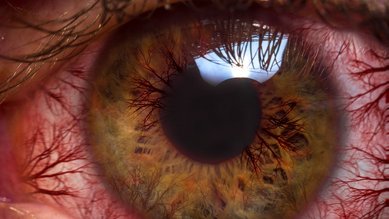
Lazy eye in children
ICD codes: H53 What are ICD codes?
Lazy eye frequently occurs in children. One eye sends the brain an image that is more blurred than the other. The brain favors the stronger eye and the child’s eyesight cannot develop properly. This article describes how the condition can be detected and treated.
At a glance
- In lazy eye, the eyes are constantly sending different images to the brain, preventing it from creating a uniform visual impression.
- If it occurs in childhood it can mean that the brain tends to favor the eye with the more acute signal.
- 60 to 70% of children who have a squint develop lazy eye, compared with just 2% of children who don’t.
- According to estimates, around 3% of all children and young people in Europe are affected.
Note: The information in this article cannot and should not replace a medical consultation and must not be used for self-diagnosis or treatment.
What is lazy eye?
The brain normally processes the images sent by both eyes in the same way. This is essential for developing optimal eyesight. In children, however, the brain sometimes favors one eye because it sends sharper images. In consequence, it neglects the images sent by the weaker eye, which prevents the eyesight from developing properly. Doctors refer to this condition as lazy eye or amblyopia (from the Greek for dimness of vision).
What are the signs of lazy eye?
If a child squints or an eye disease is suspected, it is important to see an eye specialist as soon as possible. If children find it hard to identify objects this can also be an indication of lazy eye. They will hold toys or other items close to their eye to see them clearly or continually turn their head to one side whilst doing so.
What causes lazy eye?
Lazy eye develops when the eyes are constantly sending different images to the brain, preventing it from creating a uniform visual impression. The most common cause of lazy eye is squinting (strabismus). Children who squint look straight ahead with one eye whilst the second eye looks in another direction and perceives an entirely different image. In these cases the brain screens out the images from the weaker or squinting eye to avoid double vision.
60 to 70% of children who have a squint develop lazy eye, compared with just 2% of children who don’t.

Lazy eye is often caused by refractive errors. This is where the image on the retina of one eye is blurred. There are three types of refractive error:
- Shot-sightedness: only close-up objects appear sharp.
- Far-sightedness: only distant objects appear sharp.
- Astigmatism: all objects appear blurred because the lens or cornea is deformed. This is sometimes referred to as irregular corneal astigmatism.
How common is lazy eye?
Lazy eye is especially common in children. In Europe, it is thought that about 3% of children and young people have lazy eye. This figure rises to 6% in preschool aged children. Lazy eye mostly develops before the age of 8.

How can lazy eye be detected early on?
Medical practitioners believe that eyesight develops mainly in the first five years of life. So any visual defect needs to be detected and treated as early as possible. This can help avoid a lifetime of defective vision, problems at school and with social development.
As a result, an additional screening test has been introduced for all pre-school children (U7a) with statutory health insurance. Its primary purpose is to detect any visual defect. The test complements the other pediatric medical check-ups (standard child wellness examinations) and is aimed at infants aged from around 34 to 36 months.
How is lazy eye diagnosed?
There are a number of ways an ophthalmologist can diagnose lazy eye in children:
- The doctor can use eye charts to test how well a child can see. The sight test used will vary depending on the age of the child. There are special tests for babies and infants.
- A mild squint cannot always be detected by the naked eye. Testing the eye position can be used to determine whether a child squints, for example using a test where one eye and then the other is covered. The doctor checks whether the other eye moves.
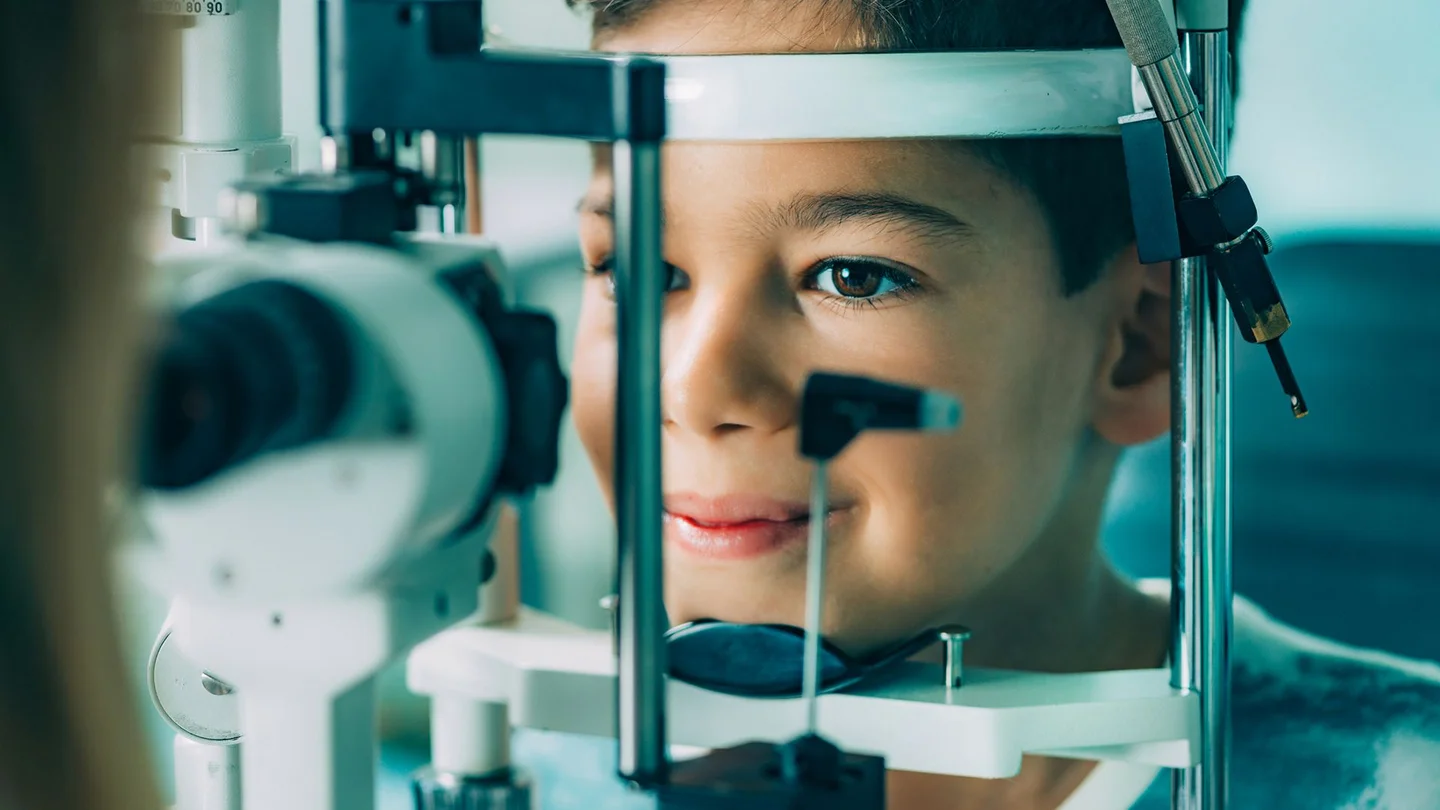
- A physical examination may be used to detect other reasons for a visual defect such as a cataract. This may include retinoscopy where a special instrument (retinoscope) projects a beam of light into the eye in order to test how the retina reflects the light. Different correction lenses are then placed in the light beam to measure the refractive power of the eyes precisely.
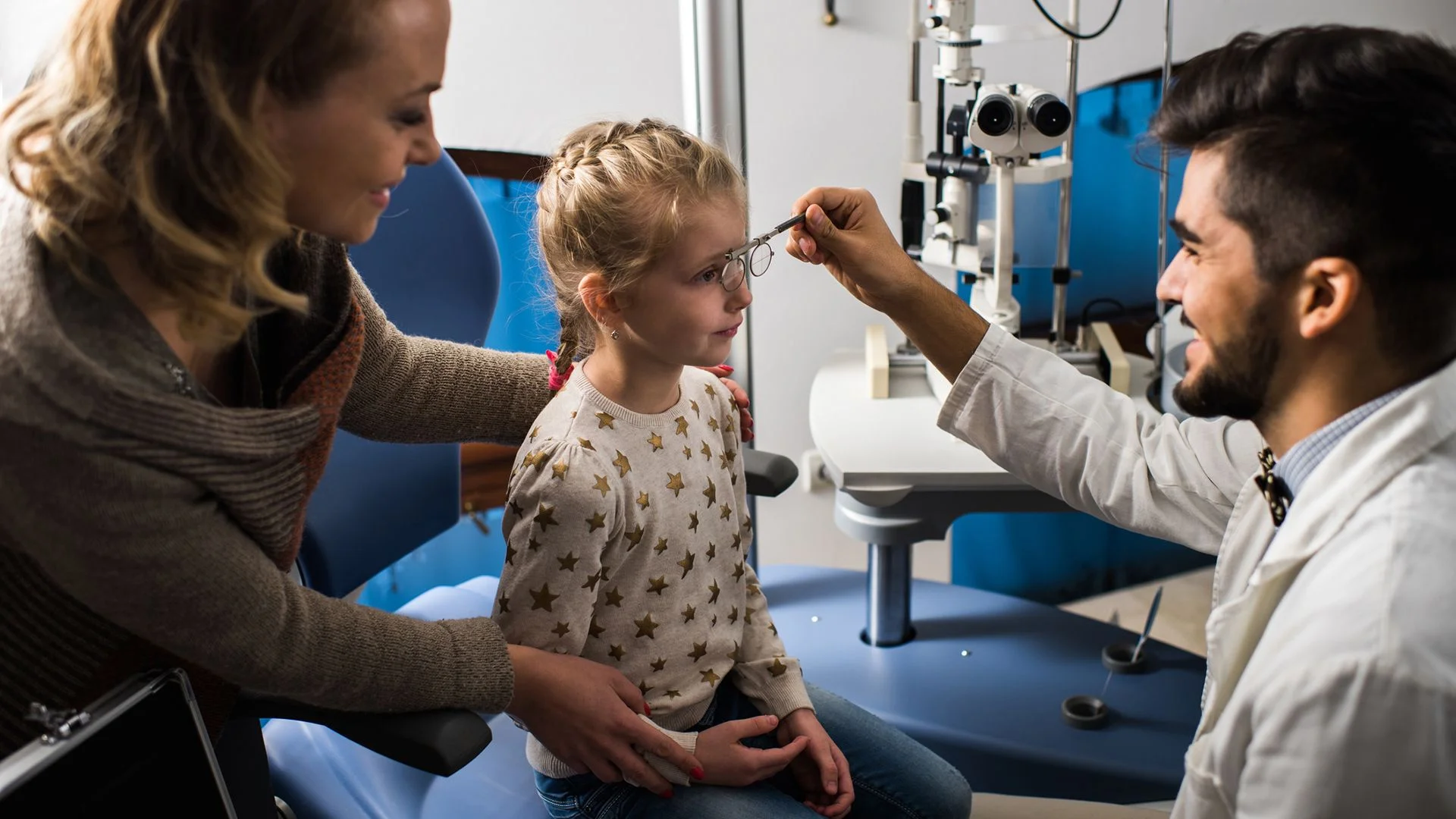
These tests are not generally dangerous. Patients are usually given eye drops to dilate the pupils before retinoscopy. These drops can sometimes cause a burning sensation in the eyes or a skin irritation.
How is lazy eye treated?
Lazy eye cannot be immediately corrected with glasses. However, there are a number of ways to improve vision in the weak eye. For example, the child can be prescribed glasses, the stronger eye can be temporarily covered or eye drops can be administered. In some cases, treatment only takes a matter of weeks. On the other hand, some children require lengthy treatment to achieve a good result. Fortunately though, lazy eye can be cured in most children.
If there is an additional cause of the lazy eye such as a drooping eyelid, this is treated first.
For more detailed information, such as how to treat lazy eye in children, visit gesundheitsinformation.de.
- Fu Z, Hong H, Su Z et al. Global prevalence of amblyopia and disease burden projections through 2040: a systematic review and meta-analysis. Br J Ophthalmol 2020; 104(8): 1164-1170.
- Gesellschaft für Neuropädiatrie (GNP). Visuelle Wahrnehmungsstörungen (Sk2-Leitlinie). AWMF-Registernr.: 022-020. 2017.
- Hashemi H, Pakzad RM, Yekta A et al. Global and regional estimates of prevalence of amblyopia: A systematic review and meta-analysis. Strabismus 2018; 26(4): 168-183.
- Institut für Qualität und Wirtschaftlichkeit im Gesundheitswesen (IQWiG). Früherkennungsuntersuchung von Sehstörungen bei Kindern bis zur Vollendung des 6. Lebensjahres: Abschlussbericht; Auftrag S05-02. 01.04.2008. (IQWiG-Berichte; Band 32).
- Jefferis JM, Connor AJ, Clarke MP. Amblyopia. BMJ 2015; 351: h5811.
- Pschyrembel online. 2023.
- West S, Williams C. Amblyopia in children (aged 7 years or less). BMJ Clin Evid 2016: pii: 0709.
- Zhang X, Wang J, Li Y et al. Diagnostic test accuracy of Spot and Plusoptix photoscreeners in detecting amblyogenic risk factors in children: a systemic review and meta-analysis. Ophthalmic Physiol Opt 2019; 39(4): 260-271.

In cooperation with the Institute for Quality and Efficiency in Health Care (Institut für Qualität und Wirtschaftlichkeit im Gesundheitswesen – IQWiG).
As at: