Bursitis
ICD codes: M70 What are ICD codes?
Bursitis occurs when too much pressure is placed on a bursa. The inflammation is painful and causes swelling, for example, around the knee or elbow.
At a glance
- Bursae are fluid-filled sacks of connective tissue.
- There are more than 100 bursae in the body, many around the joints.
- Bursitis can restrict mobility and be very painful.
- It can happen when too much pressure is placed on a bursa.
Note: The information in this article cannot and should not replace a medical consultation and must not be used for self-diagnosis or treatment.
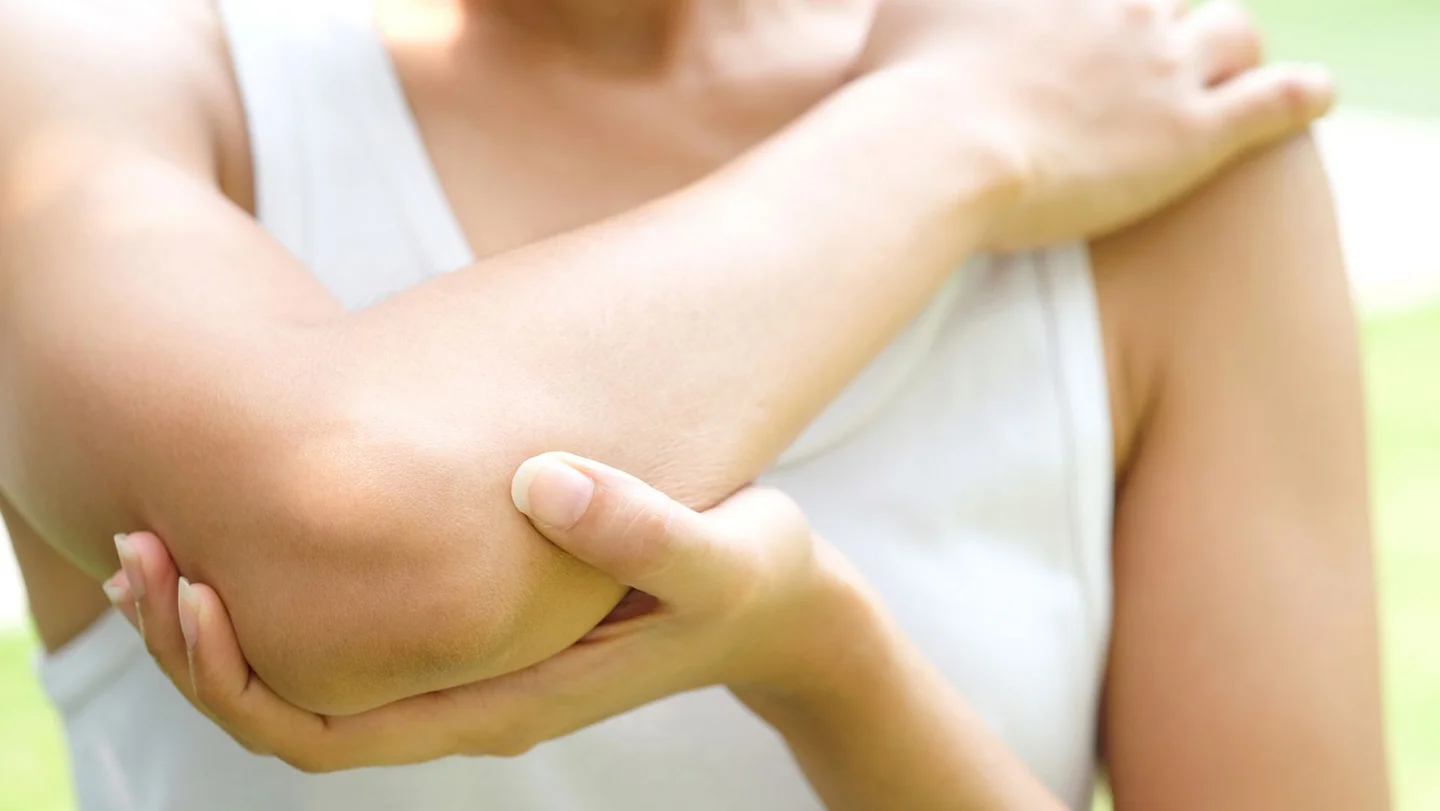
What is bursitis?
Bursitis comes from the Latin word for bag, “bursa” (plural: bursae). It can restrict mobility and be very painful. Bursitis can happen when too much pressure is placed on a bursa.
Bursae are fluid-filled sacks of connective tissue. They cushion parts of the body that are exposed to lots of friction or pressure. For example, when a person puts their elbows on a hard tabletop the bursae act as small cushions to stop the bones from pressing too hard on the skin. There are more than 100 bursae in the body, often located around the joints.
Bursitis can also be caused by an infection (usually a bacterial infection).
What are the symptoms of bursitis?
When a bursa becomes inflamed, more fluid collects in it than usual, causing it to swell. Doctors refer to this as an effusion. The swelling is easy to detect by observation or palpation, particularly where the bursa is just under the skin.
The swollen area is painful when rested but particularly so during movement or when external pressure is exerted on it. It may also become red and feel warm to the touch. Other symptoms may include high temperature and a general feeling of discomfort.
What causes bursitis?
A bursa often becomes inflamed due to an injury – caused by a hard knock, for example – or due to frequent excessive rubbing or pressure.
This is why bursitis is more common in certain professions such as tilers who often spend time kneeling on hard ground, which can cause bursitis of the kneecap.
Cleaners or tradespeople, such as carpenters, roofers and gardeners, are also at a higher risk of developing bursitis. Some sports such as volleyball, or spending long periods of time working at a desk, can also increase the likelihood of developing bursitis.
Bursitis can also occur when pathogens such as bacteria enter the bursa, for example because of an injury. But it is often unclear how the pathogens have entered the bursa.
Sometimes, inflammatory diseases such as gout or rheumatic fever also spread to the bursae.
How common is bursitis?
Every year, at least 1 out of every 10,000 people gets bursitis in the knees or elbows. A third of cases of bursitis are caused by bacteria.

Bursitis often affects middle-aged men. This may be because they are more likely to have jobs that increase the likelihood of bursitis.
The inflammation clears up after two to three weeks in many cases, provided that the affected area is rested. However, bursitis may also be permanent, for example if people continue pursuing the activity that causes it.
Chronic conditions such as diabetes or rheumatic fever can also hinder recovery or increase the inflammation.
How is bursitis diagnosed?
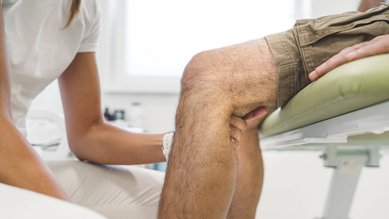
Bursitis is easy to detect if the bursa affected is just below the skin.
These sites are painful, swollen and tender. Reddened skin or skin that is warmer than usual also indicate inflammation of the bursae.
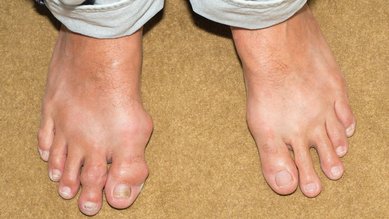
Bursitis is most common in the knees, elbows, feet, shoulders and hips.
For diagnostic purposes it’s important to check whether the inflammation is caused by pathogens such as bacteria. Potential signs of this are a high temperature or a wound near the inflammation site.
The doctor will insert a cannula (hollow needle) to take a sample of fluid from the bursa and send it to the laboratory for testing to clarify the cause of the problem.
Blood tests can also help to clarify the cause. They can show, for example, whether the bursitis is caused by a condition such as gout.
Ultrasound scans and X-rays or other imaging techniques can be used to exclude other causes such as bone or joint injuries. They can also be used to investigate whether the bursitis has already caused damage to surrounding tissue.
How is bursitis treated?
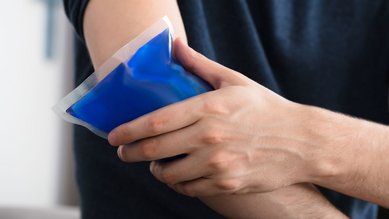
Doctors recommend above all moving the swollen area as little as possible and not placing it under any more strain to allow the bursitis to clear up. Cool compresses or painkillers can also be helpful.

Once the inflammation has subsided, people should avoid overexerting themselves so as to prevent a relapse. People who frequently work on the ground can use aids such as knee pads. People can also take specialist advice on what other measures will help, ideally from an occupational therapist or occupational health specialist.
If the condition does not improve in spite of these measures, or the inflammation frequently recurs, cortisone may sometimes be injected into the bursa. If the bursa is permanently inflamed it is usually surgically removed.
If the inflammation is caused by a bacterial infection, treatment with antibiotics is often enough. If it is not, doctors will often quickly recommend surgery. Cortisone is not used to treat bacterial bursitis, as it would actually cause damage in this case.
If the bursitis is caused by conditions such as gout or rheumatic fever, other types of medication may be required.
For more detailed information about how to treat bursitis, visit gesundheitsinformation.de.
- Baumbach SF, Lobo CM, Badyine I et al. Prepatellar and olecranon bursitis: literature review and development of a treatment algorithm. Arch Orthop Trauma Surg 2014; 134(3): 359-370. doi: 10.1007/s00402-013-1882-7.
- Lippert H. Lehrbuch Anatomie. Urban und Fischer: München 2017.
- Niethard FU, Pfeil J, Biberthaler P. Duale Reihe Orthopädie und Unfallchirurgie. Thieme: Stuttgart 2014.
- Pschyrembel Online. 2021.
- Rinkel WD, Schreuders TA, Koes BW et al. Current evidence for effectiveness of interventions for cubital tunnel syndrome, radial tunnel syndrome, instability, or bursitis of the elbow: a systematic review. Clin J Pain 2013; 29(12): 1087-1096. doi: 10.1097/AJP.0b013e31828b8e7d.

In cooperation with the Institute for Quality and Efficiency in Health Care (Institut für Qualität und Wirtschaftlichkeit im Gesundheitswesen) (IQWiG).
As at: