Skip navigation
gesund.bund.de - Reliable information for your health gesund.bund.de - Reliable information for your health
  • Deutsch
  • English
  • Türkçe
  • Русский
  • عربي
Sprache Language Dilim Язык اللغة
Search
  • Display format Display format
  • Sign language Sign language
  • Simple language Simple language
  • Bookmark list Bookmark list (0)
 
Skip navigation
  • Healthcare

    • Healthcare

    • The healthcare system
    • Health literacy
    • Help and advice
    • Patient rights
    • Self-help
    • Services and benefits

    • Health insurance
    • Benefits for those with health insurance
    • Prescription drugs
    • Prevention and screening
    • Out-of-hospital intensive care
  • Care

    • Topics

    • Long-term care insurance
    • Care benefits
    • Family carers
    • Everyday care and home life
  • Digital health

    • Digitization in healthcare

    • Health and digitization
    • Telemedicine
    • Digital applications

    • Electronic health record (ePA)
    • Electronic medical data cards (eGK)
    • Health apps (DiGA and DiPA)
    • E-prescriptions
    • Electronic sick leave notice
  • Healthy living

    • Staying healthy

    • Diet and exercise
    • Saving lives and helping people
    • Managing addiction
    • Environment and health
    • Life stages

    • Growing up healthily
    • Workplace health
    • Pregnancy and birth
    • Health in old age
  • Conditions

    • Topics

    • Respiratory system
    • Eyes
    • Circulatory and lymphatic systems
    • Reproductive organs
    • Ear, nose and throat
    • Skin
    • Cardiovascular system
    • Hormones
    • Immune system
    • Head and nervous system
    • Psyche
    • Muscles, bones and joints
    • Kidneys and urinary tract
    • Digestion and metabolism
    • Teeth and gums
    • Special topics

    • Allergies
    • coronavirus
    • Infections and infectious diseases
    • Cancer
    • Conditions A–Z
  • Services

    • Information

    • Emergency numbers
    • ICD and OPS codes
    • Conditions A–Z
    • Glossary
    • Infection radar
    • Media library
    • Search functions

    • Doctor search
    • Hospital search
    • Pharmacy search
 
  • Display format Display format
  • Sign language Sign language
  • Simple language Simple language
  • Bookmark list Bookmark list (0)

Wisdom teeth

Read out loud

These functions require cookies. Go to Settings

  • Content

  • At a glance
  • Definition
  • Prevalence
  • Outlook
  • Diagnosis
  • Treatment
  • Sources

ICD codes: K00 K07 K07.3 What are ICD codes?

The wisdom teeth are found at the very back of the mouth, at the end of each row of teeth. Having them extracted is often unpleasant and may have side effects. Do wisdom teeth always need to be taken out? Even if they’re not causing any problems?

At a glance

  • The wisdom teeth are found at the very back of the mouth, at the end of each row of teeth.
  • Often, wisdom teeth are not fully developed until the age of 18 to 24.
  • They only cut through the gums – if at all – once they are fully developed.
  • Many people find wisdom teeth bothersome because there often isn’t enough space in the mouth to accommodate them, and they can cause symptoms.
  • Wisdom teeth are a remnant from our primitive ancestors who had larger jaws and more teeth.
  • Today, most jaws are simply too small to accommodate wisdom teeth. However, they don’t always need to be extracted. 

Note: The information in this article cannot and should not replace a medical consultation and must not be used for self-diagnosis or treatment.
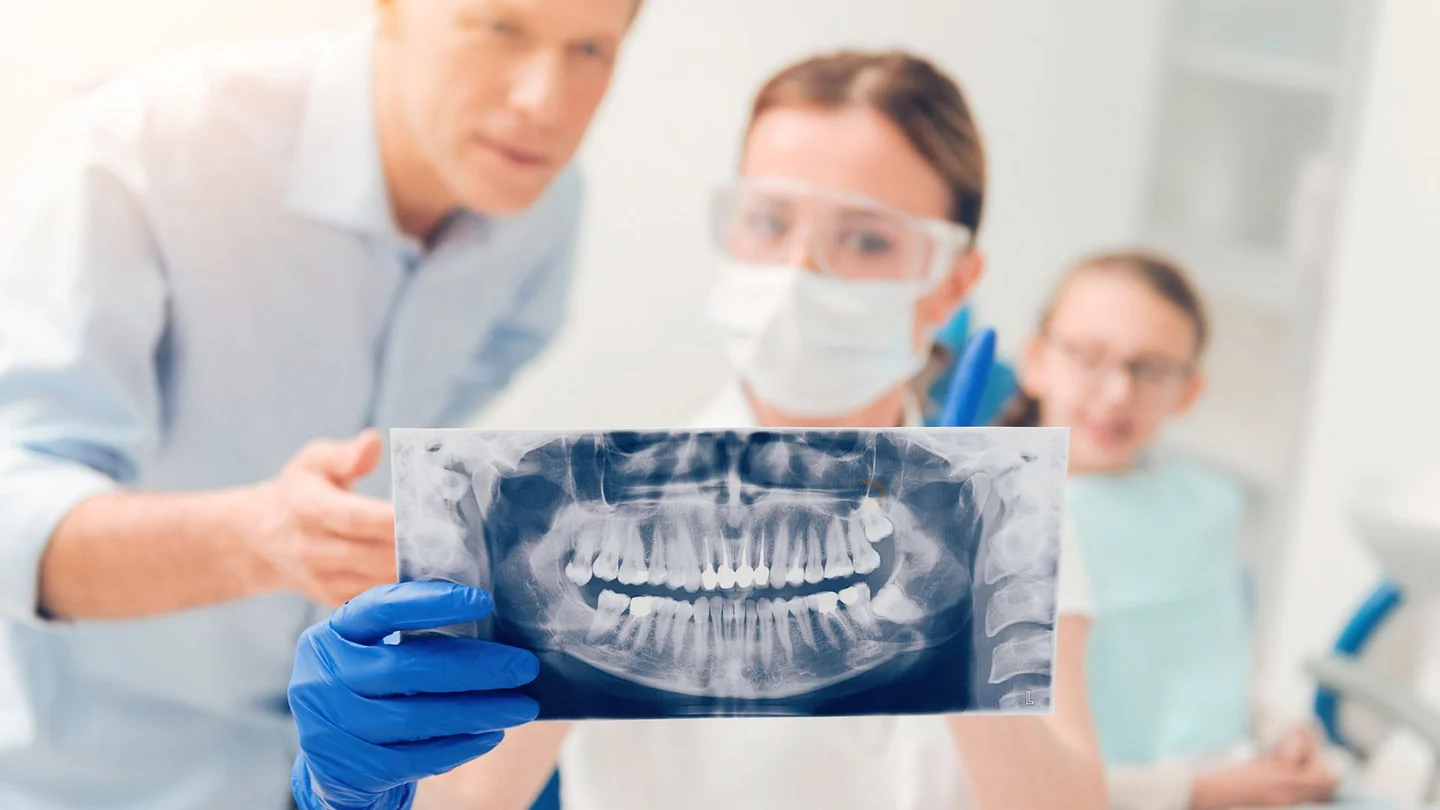
Eine Ärztin, die Mundschutz und Schutzbrille trägt, hält ein Röntgenbild eines Gebisses zur Ansicht der Weisheitszähne in den Händen. Eine Ärztin, die Mundschutz und Schutzbrille trägt, hält ein Röntgenbild eines Gebisses zur Ansicht der Weisheitszähne in den Händen.

What are wisdom teeth?

The wisdom teeth are found at the very back of the mouth, at the end of each row of teeth. They are often not fully developed until the age of 18 to 24. They only cut through the gums – if at all – once they are fully developed.

Many people experience discomfort in their mouth due to wisdom teeth. That’s because often there isn’t enough space in the mouth to accommodate these teeth and they can cause symptoms.

Wisdom teeth do not always cause problems.

Wisdom teeth are a remnant from our primitive ancestors who had larger jaws and more teeth. Today, most people’s jaws are too small for these extra teeth. In the past, wisdom teeth were always extracted.

These days, however, dentists are not so quick to pull wisdom teeth, as they don’t always cause problems. There are also complications associated with the extraction of wisdom teeth.

Does everyone have wisdom teeth?

Humans usually have four wisdom teeth – two in the upper jaw and two in the lower jaw. However, they do not always erupt into the mouth: in around 80 of every 100 young adults, at least one wisdom tooth remains in the jaw. Sometimes, a wisdom tooth only partially emerges. In this case, the crown still remains somewhat covered by the gum or the tooth does not emerge into the mouth to the same extent as the other teeth.

What problems can wisdom teeth cause?

In many cases, wisdom teeth that have not or that have only partially erupted do not cause any problems. However, they can also lead to pain, swelling or gum inflammation. What’s more, adjacent teeth can be damaged and the risk of caries (tooth decay) can increase. 

Similar occurs when wisdom teeth erupt: sometimes, they join the end of the row of teeth without issue. However, they can also cause other teeth to shift, grow at an angle or lead to inflammation or other complications.

How do dentists determine whether wisdom teeth are likely to cause problems?

If someone suspects that their wisdom teeth could be causing problems they should visit a dentist. During the visit, the dentist will begin by asking the patient about any possible symptoms. They will then examine the inside of the mouth (the oral cavity) and the jaw. An X-ray is taken to show the exact position of the wisdom teeth in the jaw.

By performing a thorough examination, the dentist will be able to more accurately predict whether the wisdom teeth are likely to cause problems or whether they will fit normally into the jaw.

How are problematic wisdom teeth treated?

Wisdom teeth that cause complications are usually extracted. Surgery may or may not be required, depending on whether the wisdom teeth have already broken through the gum or are still in the jaw.
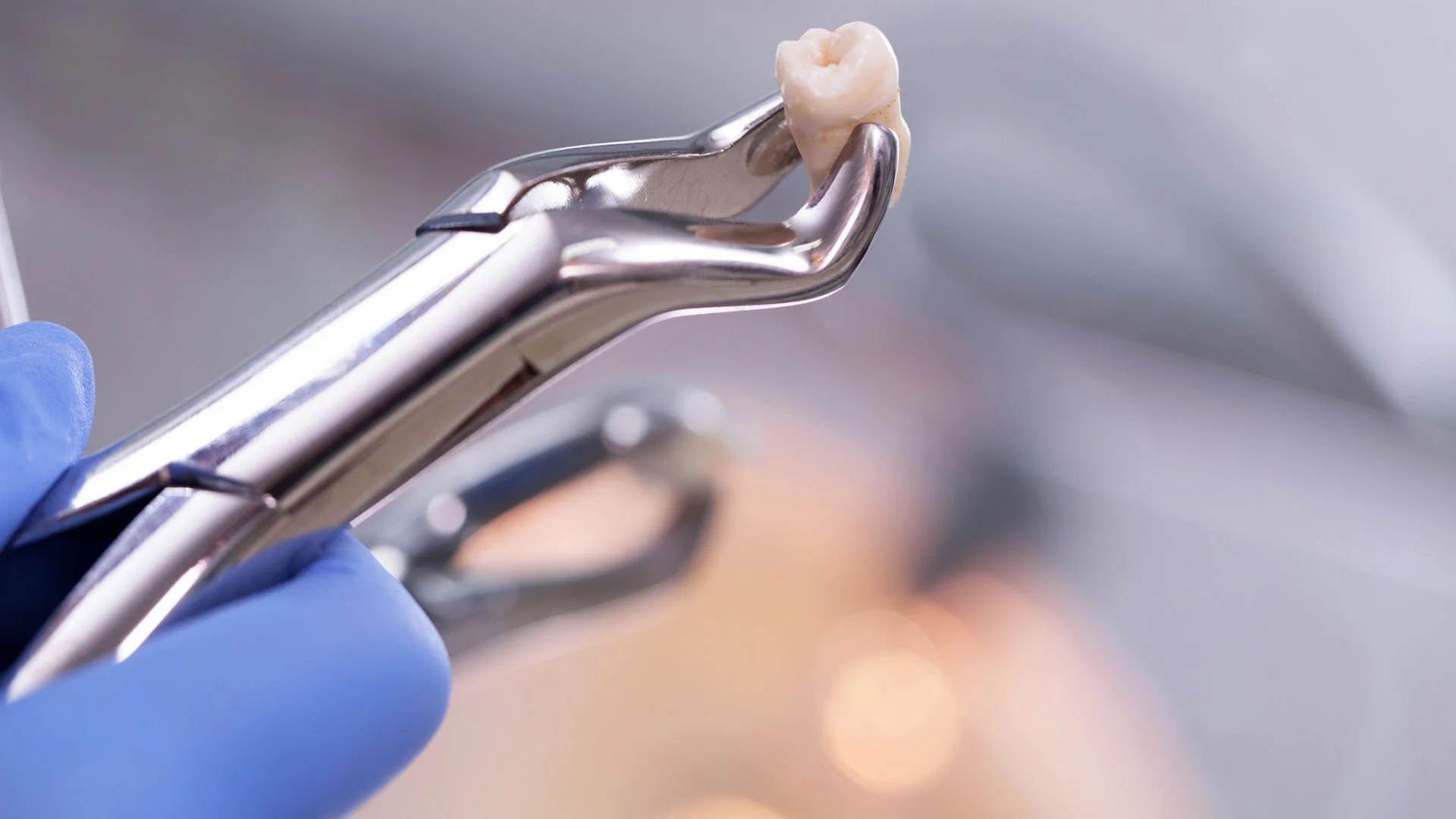
placeholder طبيب أسنان يرتدي قفازات طبية ويحمل في يده ملقط أسنان. وعند رأس الملقط، بين المواضع النشطة، يوجد ضرس عقل.

In the past, wisdom teeth were almost always pulled, even if they were causing no problems. Today, however, extraction is only recommended if problems arise or complications are foreseen.

More detailed information, for example about when wisdom teeth need to be extracted, is available at gesundheitsinformation.de.

  • Deutsche Gesellschaft für Mund-, Kiefer- und Gesichtschirurgie (DGMKG), Deutsche Gesellschaft für Zahn-, Mund- und Kieferheilkunde (DGZMK). Operative Entfernung von Weisheitszähnen (S2k-Leitlinie). AWMF-Registernummer 007-003. 08.2019. Aufgerufen am 17.10.2024.
  • Dodson TB, Susarla SM. Impacted wisdom teeth. BMJ Clin Evid 2014: pii: 1302. Aufgerufen am 17.10.2024. 

Badge

In cooperation with the Institute for Quality and Efficiency in Health Care (Institut für Qualität und Wirtschaftlichkeit im Gesundheitswesen – IQWiG).

As at: 17.10.2024

Did you find this article helpful?
Thank you for your feedback!
Thank you for your additional comments!
Sorry, your response could not be submitted due to a technical error.

Get informed Recommended articles

Gingivitis and periodontitis

Gingivitis is usually harmless and is soon gone again. But sometimes the inflammation spreads and damages the periodontium. Then it is called periodontitis.

Find out more

Caries (tooth decay)

Caries is a tooth disease. It develops through plaque bacteria, sweet foods and poor oral hygiene. Caries damages the teeth and can be painful.

Find out more

Tooth and jaw misalignments

In tooth or jaw misalignments, the teeth are clearly shaped differently than they are for most people. Braces can be used to correct them.

Find out more

Back to top
Logo - Bundesministerium für Gesundheit Logo - Bundesministerium für Gesundheit

gesund.bund.de A service from the Federal Ministry of Health.

Useful links

  • Topic overview
  • User advice
  • Website overview

Services

  • Help and advice
  • Accessibility
  • Report an accessibility barrier

About us

  • About gesund.bund.de
  • Quality assurance
  • Our partners
  • Contact

Important emergency numbers

  • Fire and ambulance services 112 112
  • Non-emergency medical assistance 116117 116117
  • Emergency numbers

Certifications

  • afgis-Qualitätslogo mit Ablauf 2026/03: Mit einem Klick auf das Logo öffnet sich ein neues Bildschirmfenster mit Informationen über Bundesministerium für Gesundheit (BMG) und sein/ihr Internet-Angebot: gesund.bund.de/
  • Logo DNGK 2025-2026
  • BIK - BITV-konform (geprüfte Seiten), zum Prüfbericht

© Copyright 2026 Bundesministerium für Gesundheit Data protection Legal notice